
Lighting that works from pavement to till point
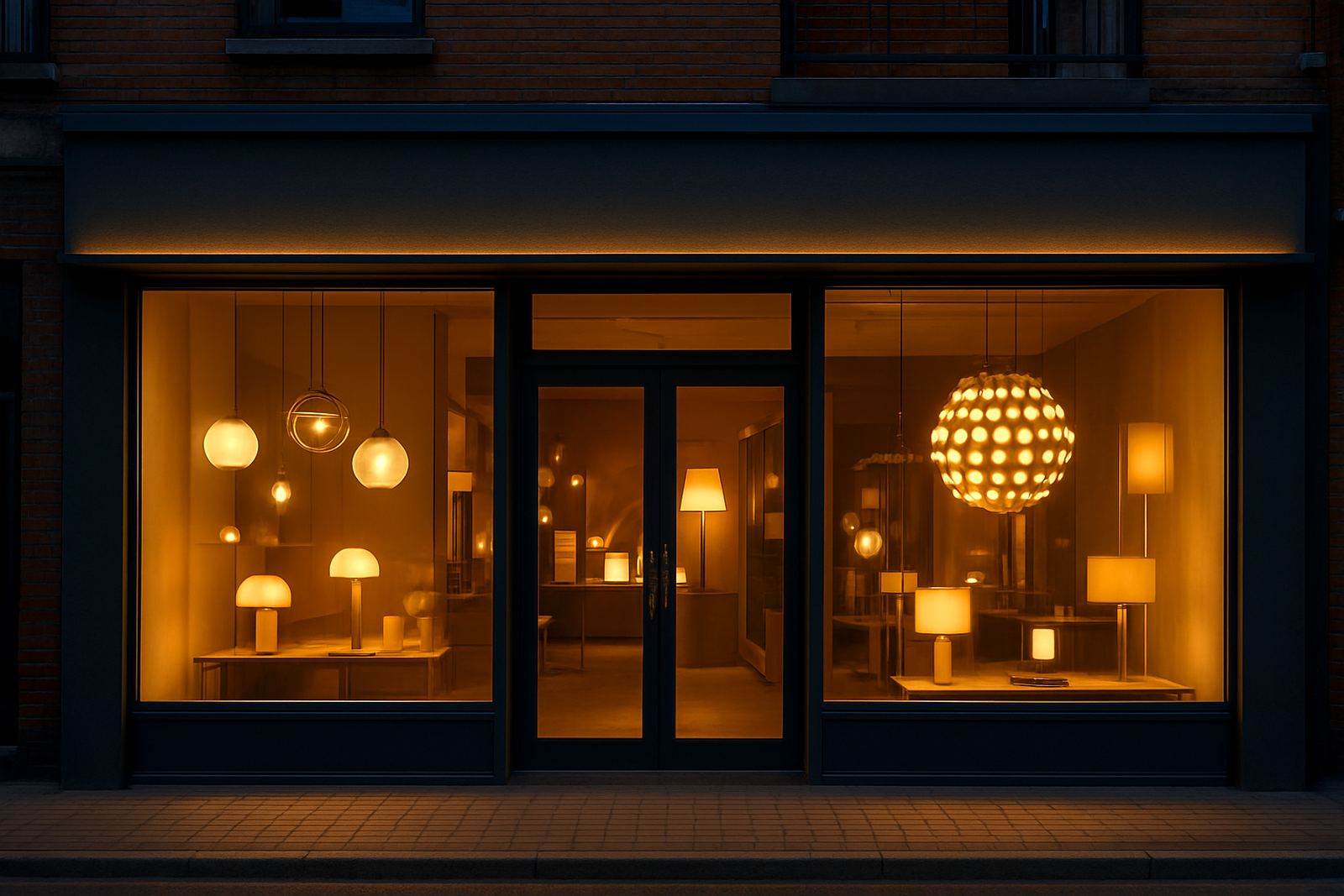
A good shopfront starts with the way people see your business from across the road. In Rosebank, Sandton, Pretoria, Cape Town, Durban and Umhlanga, the best results come from lighting that guides the eye to the entrance, window displays and signage without washing out the brand colours. For retail strips, corner sites and street-facing tenants, the aim is simple: make the frontage feel active after dark and legible in daylight too.
Shopfront lighting needs to balance visibility and control. Too little light and the frontage disappears at 6pm. Too much and the glazing reflects traffic, the signage blooms out, or the interior looks flat. The right layout gives depth, highlights texture and makes the goods inside feel worth stopping for. On coastal sites, fittings and fixings also need to cope with humidity, salt air and wind driven rain, especially in Durban and Umhlanga.
Typical equipment used on shopfront projects
Most shopfront schemes use a mix of linear fittings, spotlights, trimless recessed units and sign illumination. The exact set depends on whether the frontage is glass heavy, has a canopy, has brick or timber details, or needs night-time security lighting over the entry. We usually plan for dimming, zoning and maintenance access from the start so you are not left with dead spots or awkward lifting later.
- Linear LED profiles for fascia lines, canopy edges and display shelves visible from outside
- Adjustable spotlights for mannequins, feature products and textured materials
- Wall washers for signage and brick or plaster facades
- Downlights at entry points for safer movement and better face recognition
- Outdoor-rated drivers and controls for retail frontages exposed to weather
- Time clocks, sensors or scene controls for trading hours and after-hours settings
When the frontage must keep working during outages, we also look at low-wattage circuits, inverter-compatible loads and emergency lighting positions. That way your shopfront still has presence even if the mains goes off for two hours, which is a common reality in many parts of South Africa.
How we plan the layout before anything is fitted
Lighting plans for shopfronts should start with the viewing angles. We look at how the frontage is seen from the pavement, from cars in traffic, and from the opposite side of the street. Then we map where the eye should land first: sign, entry, window display, then product groupings. If the glass is highly reflective, fitting positions and beam angles become even more important, because one wrong angle can turn your display into a mirror.
A proper plan also deals with ceiling heights, soffits, power positions and cleaning access. If you are fitting into a new build or a landlord-controlled centre, there may be municipal or centre management rules on drilling, cable routes and external fixings. In older suburban buildings, we often need to work around shallow ceilings, uneven facades and patchy wiring. A good lighting layout avoids guesswork and keeps the installation neat, practical and serviceable.
- Measure the frontage in metres, not estimates
- Mark signage height, door swing and window bay widths
- Check where existing power and controls are already available
- Set beam spreads to match display depth and ceiling height
- Plan for maintenance so lamps and drivers can be reached safely
Common mistakes that make a frontage look weaker
One of the biggest mistakes is treating shopfront lighting like general office lighting. A shopfront needs drama and direction, not just even light. Another common issue is using fittings that are too cool in colour temperature, which can make warm materials and skin tones look harsh. In food, fashion and lifestyle retail, that difference matters because customers decide quickly whether a store feels inviting.
We also see fronts where the sign is bright but the entrance is dark, or the window display is lit but the brand name disappears. That kind of imbalance makes a business feel unfinished. Poor aiming is another problem. If the fittings are installed without post-install focusing, the light often lands on the glass instead of the merchandise. Then there are the practical mistakes: outdoor fittings with the wrong IP rating, no allowance for maintenance, and no plan for power interruptions. Those issues cost more later, because they show up in customer complaints, flicker and early failures.
Budget ranges for shopfront lighting in Rand
Budget depends on frontage size, number of circuits, fixture quality and whether you need control gear, scenes or emergency backup. A small street-level frontage with basic entry lighting and a simple sign wash can start from about R35 000 to R75 000. A medium retail frontage with layered display lighting, sign lighting and external fittings often sits between R85 000 and R180 000.
For larger retail fronts, multi-bay glass facades or premium restaurant-facing shopfronts, budgets commonly range from R200 000 to R450 000 and above. Those projects may include mockups, custom detail work, more complex controls and coordinated installation timing after trading hours. If the site has difficult access, or if the building needs extra weather protection and electrical upgrades, allow more. Cheaper is not always cheaper when a failed fitting needs lifting from a ladder every few months.
As a rule, it is better to spend on the front elevation first, then add decorative layers if the budget allows. A well-placed sign wash and entry scheme usually gives more return than over-lighting every surface.
What shop owners should ask before signing off
Before work starts, ask how the scheme will look at 5pm, 8pm and during a load-shedding event. Ask which fittings are weather-rated, which ones are suitable for coastal conditions, and how maintenance will be handled after installation. It also helps to know whether the design allows for future changes, such as a new sign face, a fresh paint colour or a remodel of the window display. Small details like these can save money later and keep the frontage looking current.
At Illumin8d, shopfront projects are usually handled with concept design, fixture specification, layout plans, control design, installation coordination and post install focusing. That means the lighting is not treated as an afterthought. It is planned with the brand, the space and the trading pattern in mind, so the frontage works for customers in the evening and still holds up in bright daylight.
- Confirm the daily trading hours and after-hours lighting requirement
- Decide whether the frontage needs security-friendly light levels
- Check if signage, glazing or canopy changes are part of the project
- Allow for future maintenance and replacement access
- Set a realistic budget before buying fittings piecemeal
A good shopfront should sell before the door opens
When a frontage is lit properly, it does more than help people find the store. It tells them the business is open, organised and worth entering. That is especially important in busy nodes like Rosebank, Sandton and central Johannesburg, where customers are moving quickly and judging many shops at once. Lighting gives a shopfront its first conversation with the street.
For shopfronts across South Africa, the best results come from a lighting plan that respects the site, the brand and the practical realities of the building. Get the angles right, choose fittings that suit the weather and plan for power interruptions, and the frontage will work hard every evening. Even a simple scheme can make a noticeable difference when it is properly thought through.