
When a patio needs proper lighting
A patio usually has more than one job. It may be a braai area, a dining spot, a waiting space for guests or a quiet place to sit after work. Good lighting has to support all of that without washing out the courtyard or shining straight into people’s eyes.
In Rosebank, Sandton, Pretoria and Midrand, many patios face boundary walls, paving and planted edges that disappear at night. In Cape Town, Durban and Umhlanga, the challenge is often coastal humidity and wind driven dust. We design for those conditions by choosing fittings, mounting points and control options that suit the site, not just the view in daylight.
For many clients the first issue is simple: the patio feels too dark, or one light near the door is doing all the work. That leaves steps, edges and seating areas in shadow. A better plan spreads light in layers so the space feels calm and usable, even during load-shedding backup operation.
Typical fittings for a patio lighting set-up
The right fixture mix depends on the size of the patio, ceiling height, wall finishes and whether the area is fully covered. A small townhouse patio may only need a few careful points, while a restaurant terrace could need multiple zones and dimming control.
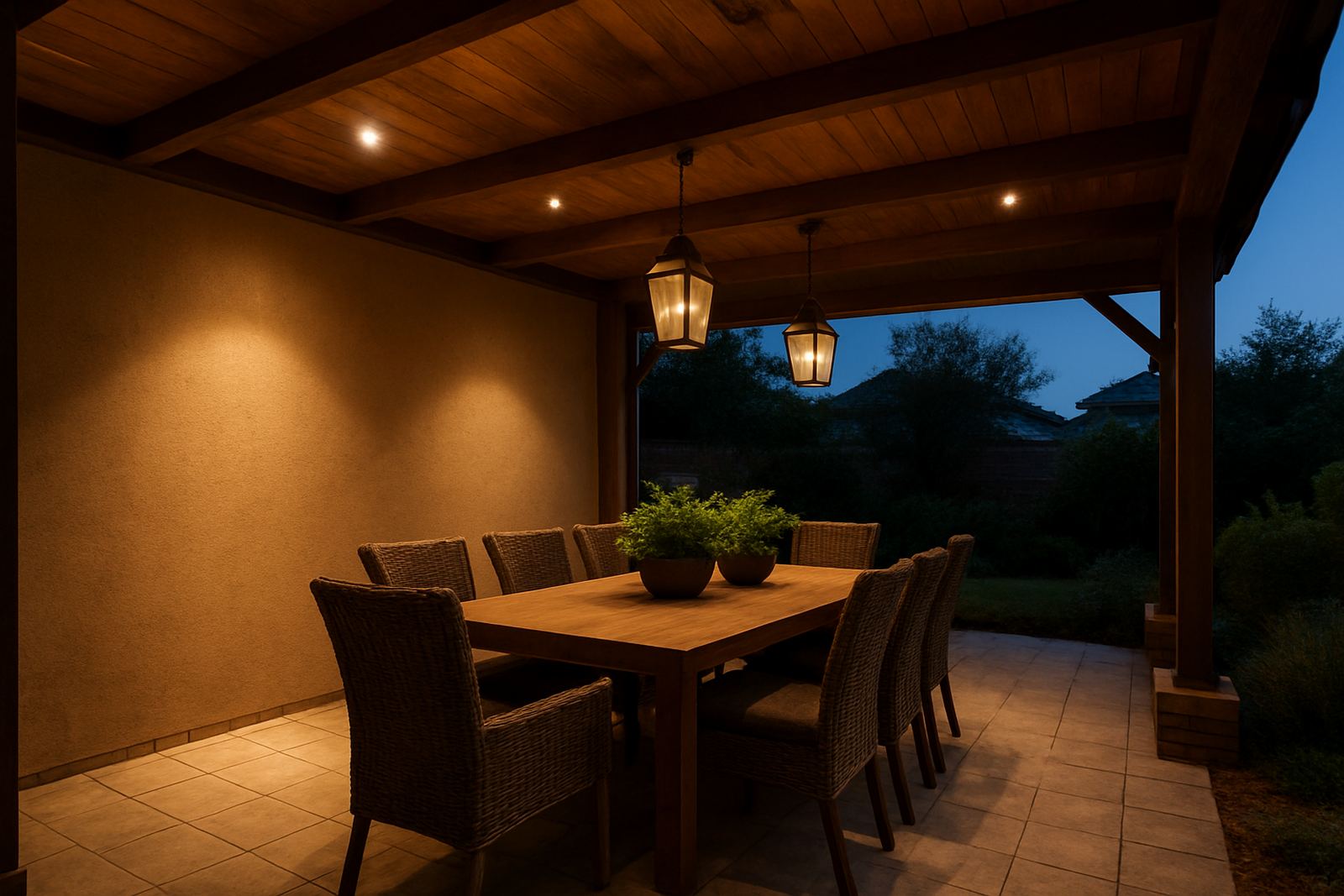
- Recessed downlights for covered ceilings and pergolas
- Wall lights for circulation and feature walls
- Linear LED profiles under benches or handrails
- Spike or planter lights for garden edges and screening
- Step lights for safe movement on levels and stairs
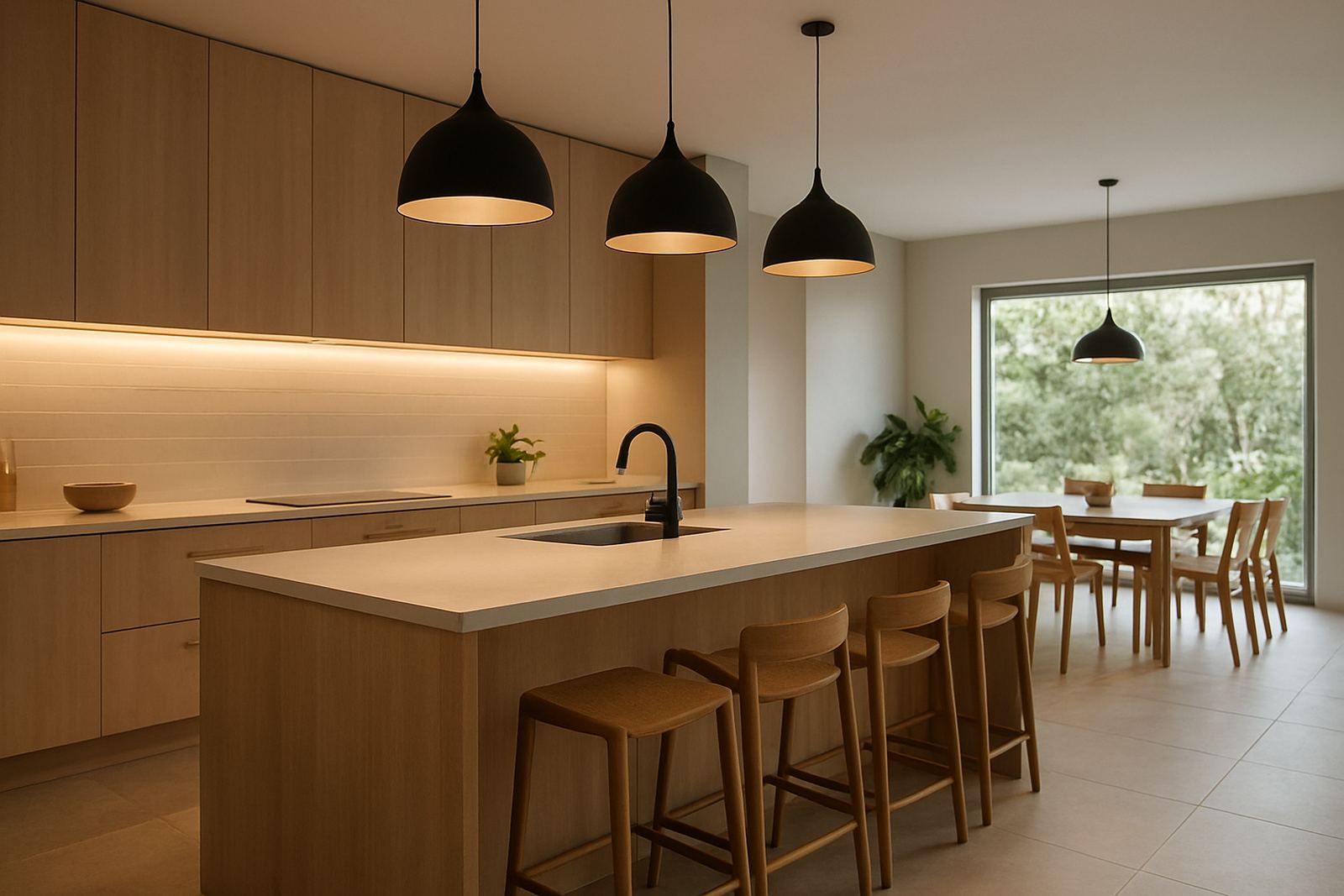
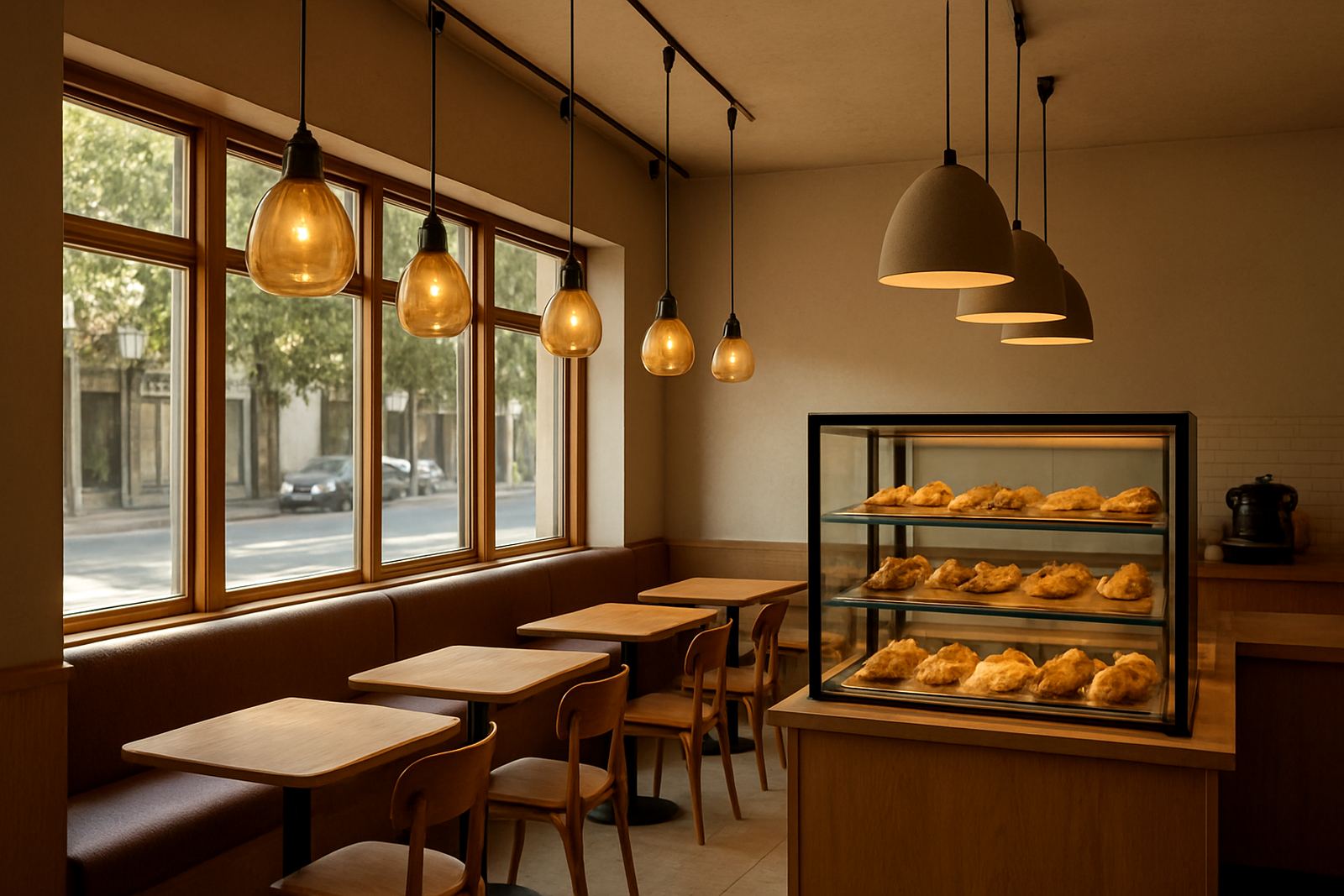
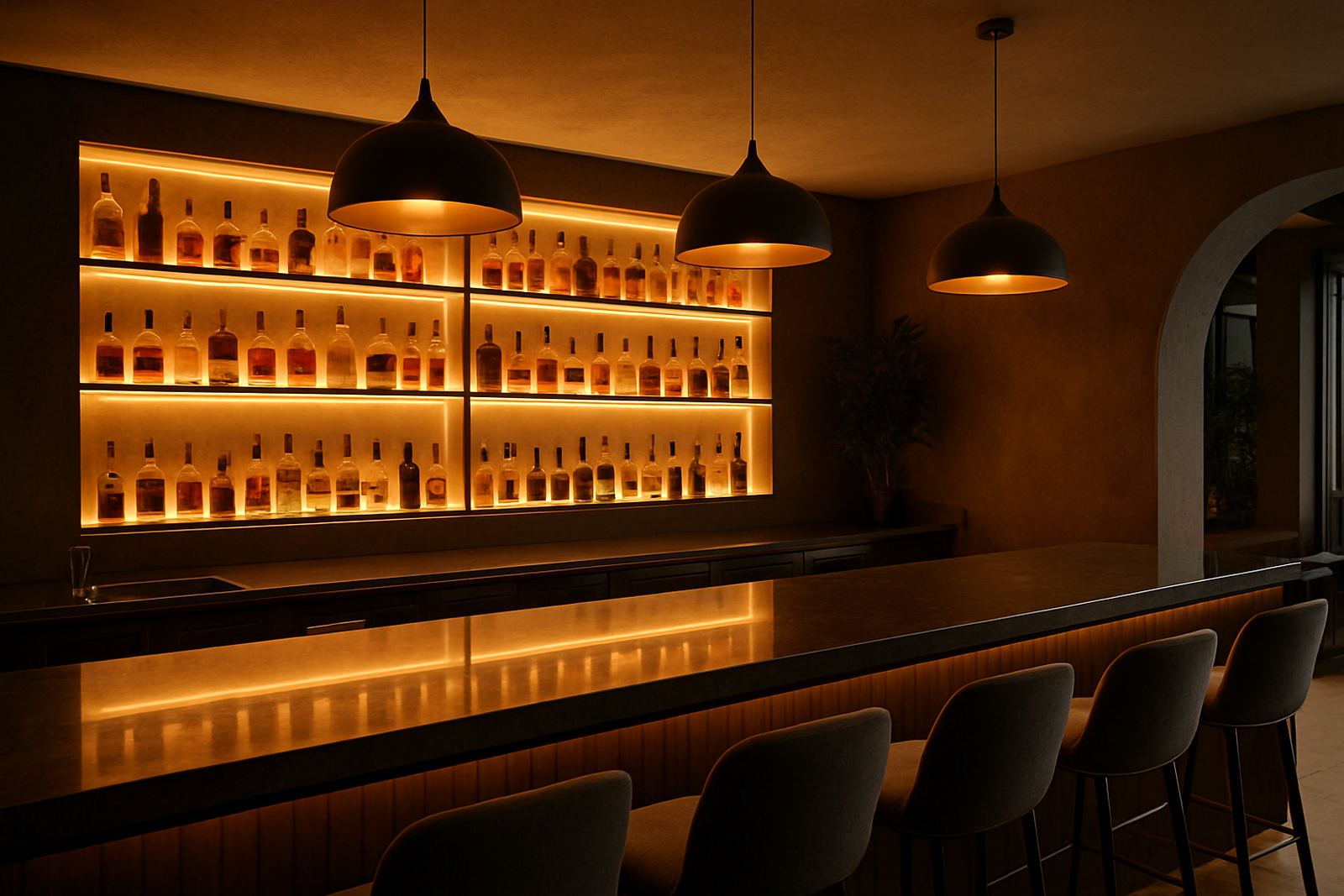
- Decorative pendants for dining tables where head height allows
We also look at weather rating, glare control and colour temperature. Warm white light is often best for patios because it feels softer on skin and works well with timber, stone and painted plaster. In coastal areas, fittings with better corrosion resistance are worth specifying from the start.
How we plan a patio layout that feels right at night
Layout is where patio lighting either works well or becomes annoying. We start by mapping the actual use of the space: where people sit, where they walk, where the table moves, where doors open and where the garden begins. That lets us avoid dark patches and overlit areas.
For homes, we often separate the patio into three parts: task light for dining or food prep, ambient light for general comfort and accent light for walls, plants or architectural details. For restaurants, we add wayfinding between entrances, smoking areas, toilets and outdoor seating so guests move naturally without asking for directions.
Control planning matters too. A dimmer on one circuit is not enough for a larger patio. Separate switching lets you run the full scheme for events, or only a few low level fittings for a quiet evening. During municipal power interruptions, we also consider which fittings can operate on inverter supply and which should stay off to protect batteries.
Common patio lighting mistakes we see
Many patios are lit with too few fittings or with the wrong beam spread. That creates harsh pools of brightness and leaves the rest of the space dull. Another common issue is placing fittings too high, which removes any feeling of intimacy and makes faces hard to see.
We also see fittings installed without thinking about maintenance. Outdoor lighting gets dirty quickly from dust, pollen and coastal air, so access for cleaning matters. If a luminaire is mounted where nobody can reach it, it will be neglected and the space will slowly lose light output.
- Using cool white light that feels clinical at night
- Ignoring step edges and changes in level
- Mixing too many fitting styles in one small area
- Leaving controls too complicated for daily use
- Choosing decorative fittings without outdoor protection
- Forgetting backup lighting during load-shedding
Another mistake is placing downlights directly above seating, which can cause glare on faces and reflective tabletops. A better approach is to light around the seating zone and use reflection from walls or soffits where possible. It feels softer and less tiring on the eyes.
Budget ranges for patio lighting projects
Budget depends on the size of the patio, number of circuits, installation access and whether the site needs new cable runs or control gear. For a small residential patio, clients often spend between R12 000 and R35 000 for a basic but well-planned lighting package. That may include design input, a handful of fittings and installation coordination.
Mid-range patio projects usually sit between R35 000 and R85 000. This is common where there are several lighting zones, step lights, feature wall lighting and dimming controls. For larger homes, restaurants and hospitality spaces, budgets can move from R85 000 to R250 000 or more depending on fixture count, custom details and site complexity.
We always advise clients to budget for the whole system, not only the fittings. Cable routing, waterproof accessories, control components, testing and post-install focusing all affect the final result. It is often better to reduce the number of fittings slightly and use higher quality placement and control.
How Illumin8d approaches patio projects
We work from Rosebank, Johannesburg and support projects across Johannesburg, Pretoria, Cape Town, Durban and Umhlanga. Our process begins with a site lighting audit or concept discussion, then we develop layout plans, fixture specification and control design for the space.
For patio work, the design stage often includes mockups and sample checks so the client can see how the light will sit against paving, walls or planting. We also coordinate installation and final focusing, because the angle of a fitting makes a real difference once the sun goes down.
Led by Mandla Ndlovu, our team brings together design, technical planning and site coordination. That matters on outdoor projects where a small detail like a waterproof joint, a dimmer setting or a poorly aimed beam can change how the entire area feels. If your patio needs to work harder after dark, the right plan makes all the difference.