
Lighting that suits the pace of a cafe
A cafe is a working space first, then a social space. Morning trade needs clear light at the counter and till, lunch service needs calm but practical seating light, and late afternoon calls for warmer tones that keep people comfortable without making the room feel dim. In Johannesburg, Pretoria, Cape Town, Durban and Umhlanga, the best results usually come from combining general light, task light and a few strong feature points rather than filling the room with one type of fitting.
For most cafes, the lighting brief should start with the floor plan and the customer journey. Where do people enter, queue, order, collect, sit and pay? Which parts need to draw attention, and which parts should sit quietly in the background? Once those points are set, the fixtures can be chosen to support flow, reduce glare and make the room easy to read at all hours.
- Warm white light for seating areas, usually around 2700K to 3000K
- Cleaner white light for counters, menu boards and service points
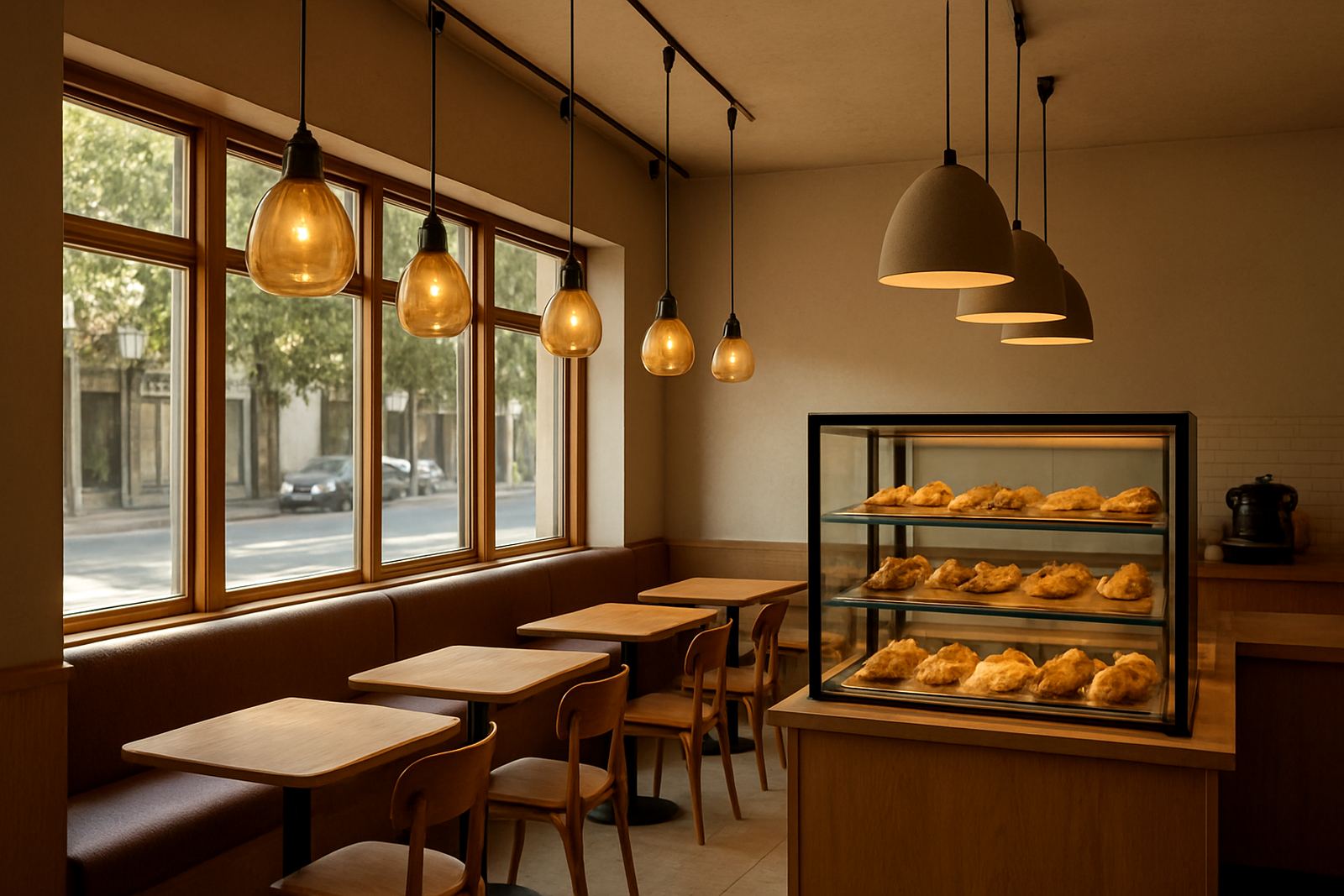
- Accent spots for pastry displays, retail shelves and feature walls
- Dimmer control for different trading periods and evening mood
Typical fittings used in cafe projects
A good cafe fit-out normally uses a mix of recessed fittings, small directional spots, decorative pendants and strip lighting where needed. The exact set depends on ceiling height, ceiling type, the amount of natural light and whether the cafe has a bakery counter, retail shelfing or a visible prep area. In coastal towns like Durban and Umhlanga, fittings and mounting details should also suit humidity, salt air and regular cleaning.
At Illumin8d, fixture specification is usually tied to the actual use of the room. A table area may need soft pools of light, while a display fridge or cake counter needs stronger, well-aimed light so products look fresh and properly defined. Poorly chosen fittings can cause reflections on glass, harsh shadows on faces or dark corners that make the space feel smaller than it is.
- Directional downlights for general coverage and circulation paths
- Track or spot systems for flexible aiming over counters and displays
- Pendants over communal tables or long banquettes
- LED strip lighting under shelves, benches and display plinths
- Emergency and backup planning for load-shedding sensitive operations
Planning the layout before the electrician starts
Cafe lighting should be planned with the joinery, ceiling and power layout before installation begins. If the counter changes after the electrical points are set, the whole room can end up with a light that is slightly off-centre or aimed at the wrong surface. That is a common and costly mistake. Layout plans, fixture spacing and control design help avoid this by showing exactly where each fitting lands and what it is meant to do.
For a small cafe in Rosebank or Sandton, the right layout can make a 40 square metre room feel organised instead of cramped. In a larger corner site, the plan may need separate scenes for street-facing trade, indoor seating and a takeaway zone. Post install focusing is also important, because even a well drawn plan can look wrong if the beam angles are not set properly on site.
Good planning also helps with operational issues. During load-shedding, for example, a cafe may want only key lights on battery backup so the counter still functions while the seating area can be dimmed or switched off. That keeps the service point usable without wasting power.
- Map the order queue, till, display and seating zones first
- Check ceiling height, window glare and reflective surfaces
- Separate customer mood lighting from task lighting at the counter
- Allow for dimming scenes for breakfast, lunch and evening service
- Include access for cleaning and future maintenance
Display, counter and menu areas need different treatment
The counter is often the busiest point in a cafe, so it needs clear, even light that helps staff handle payment, packaging and drinks prep without squinting. Menu boards should be legible from the queue, and pastry cabinets need light that makes colour look natural rather than yellow or flat. If the lighting is too cool, food can look uninviting. If it is too warm, whites in cups, packaging and menu graphics can shift in an awkward way.
Feature lighting can also support the brand. A cafe with a strong identity may want a statement pendant cluster, a lit wall sign or a soft wash on textured plaster, timber or brick. The key is restraint. Too many feature points can make the room feel busy and reduce the calm atmosphere people want while they sit and talk.
For shopfronts, the outside view matters just as much as the interior. A cafe visible from the pavement or parking area should have enough front light to read as open, welcoming and safe after dark, especially in winter when trading ends early.
Common cafe lighting mistakes to avoid
One of the biggest mistakes is treating the whole cafe as one room with one lighting level. A bright all-over scheme often feels harsh, while a very warm dim scheme can leave staff struggling to see what they are doing. Another common problem is placing fittings only where the ceiling grid allows, instead of where the furniture and counters actually sit.
Glare is another issue. Bare lamps over seating, low pendants above head height or spots aimed at polished surfaces can create discomfort very quickly. In busy urban areas, where cafes compete hard for repeat visits, the wrong lighting can quietly push people out sooner than intended.
Budget is often where compromises show up. If the allowance is too tight, owners may cut control gear, dimming or proper aiming, then spend more later correcting the space. For most cafes, it is better to spend carefully on the areas customers see first and the points staff use all day.
- Do not use one colour temperature everywhere
- Do not ignore glare on glass, polished tops and screens
- Do not leave the counter too dark compared with the seating area
- Do not skip dimming or scene control if trading hours vary
- Do not place feature lights before the furniture layout is confirmed
What cafe lighting budgets look like in Rand
Budget ranges depend on size, ceiling height, number of fittings and whether the job includes design, mockups, control setup and installation coordination. A small cafe refresh may only need a few carefully chosen fixtures and a basic rework of the lighting positions. A full new fit-out with custom details, display lighting and controls will sit much higher.
As a practical guide, a light update for a compact cafe can start from about R25,000 to R60,000 for fixtures and basic planning, excluding major electrical changes. A mid-sized cafe with layered lighting, dimming and display detail often sits between R60,000 and R180,000. Larger flagship cafes, especially those with custom joinery, feature pendants and detailed scene control, can run from R180,000 to R400,000 plus, depending on specification and installation scope.
We work across Rosebank, Sandton, Pretoria, Midrand, Cape Town, Durban and Umhlanga, and the right spend depends on the business model as much as the room size. A takeaway-led site needs a different approach from a slow-dwell cafe with long seating times, so the budget should match how the space earns its money.
How Illumin8d handles cafe projects
Illumin8d designs architectural and decorative lighting for cafes, shopfronts and hospitality spaces across South Africa. Our process starts with concept design and a lighting audit, then moves through fixture specification, layout plans, control design and 3D lighting visuals where needed. We also assist with mockups and samples, installation coordination and post install focusing so the final result matches the intended look and use.
For cafe owners, that means the lighting can support the brand without becoming fussy or difficult to maintain. The aim is a room that feels welcoming, works under pressure and still looks good in the evening when the last table is sitting for one more coffee.
If you are fitting out a new cafe or improving an existing one, the best time to sort the lighting is before the joinery and ceiling work is locked in. That saves time, avoids rework and keeps the final result under control.