
Lighting that supports colour work and client confidence
In a salon, the light over a colour station can change the result of a cut, tint or toner. If the space is too cool, too warm, or uneven, stylists can miss undertones and clients may leave with a result that looks different in daylight. Good salon lighting keeps skin tones natural, hair colour clear and mirrors useful, while still making the room feel calm and inviting.
We plan salon lighting around the real work being done at each point in the room. That means strong task lighting for colour bars and mirrors, softer ambient light for waiting areas, and accent light where you want the brand to feel more refined. In Rosebank and Sandton salons, this often needs to fit within a compact footprint, while in Durban and Umhlanga you also need fittings that cope with coastal humidity and salt in the air.
For many salons the right answer is not more light, but better placed light. A ceiling full of fittings can still leave dark patches at the mirror. The aim is balanced light that lets your team work accurately without glare in the eyes or harsh shadows on the face.
Common salon equipment and where it works best
A salon usually needs a mix of direct and indirect fittings, with different beam angles and mounting positions. We look at the equipment set first, then match it to the layout so the lighting supports each service area properly.
- Linear ceiling fittings for general ambient light along the main circulation line
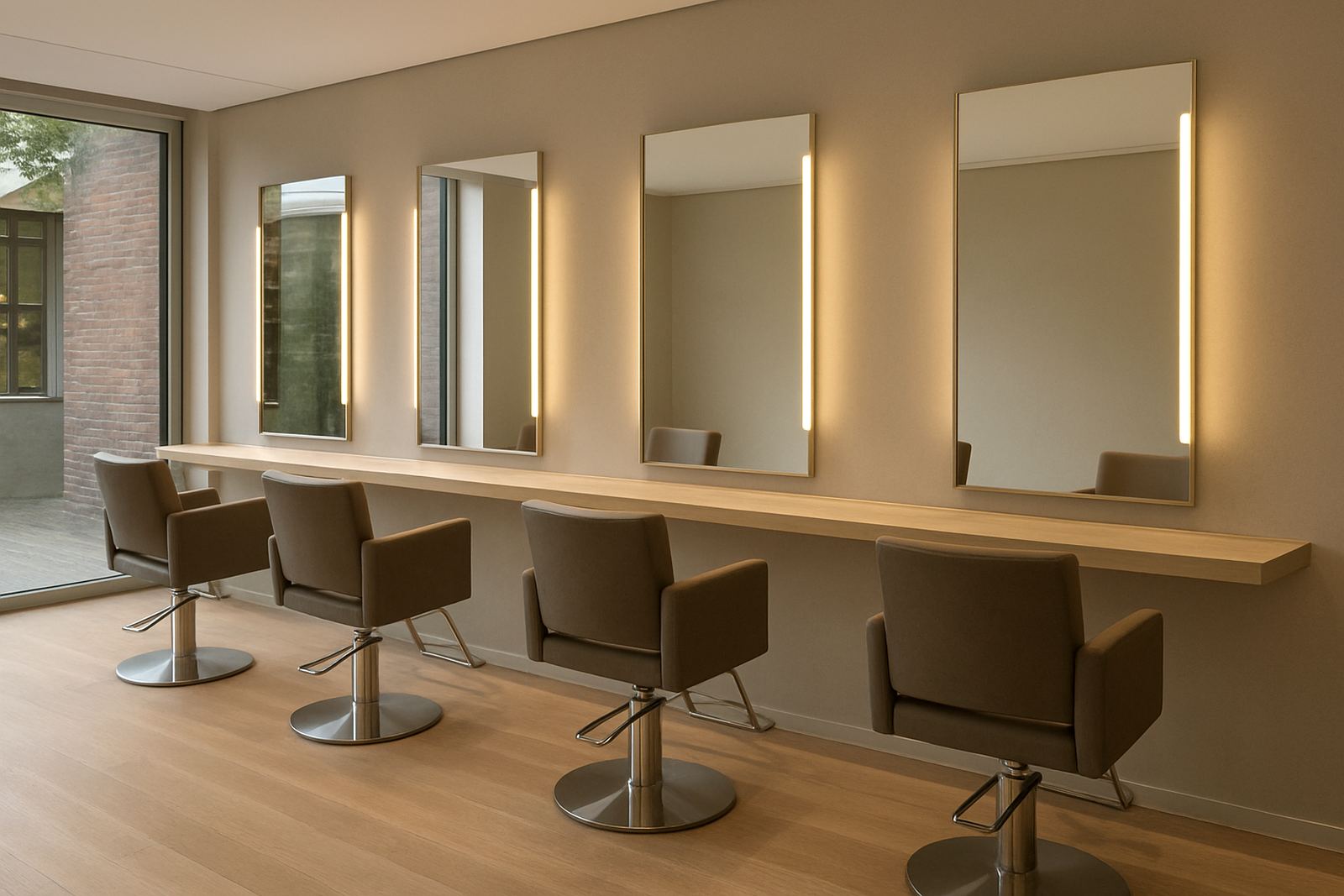
- Mirror side lights or vertical wall fittings to reduce face shadow and give even colour reading
- Spotlights for product shelves, feature walls and reception counters
- Suspended fittings above waiting zones where ceiling height allows it
- Low glare task lights for colour mixing tables and backwash areas
- Emergency and backup lighting for safe movement during load-shedding
In larger salons, lighting control is often worth the extra spend. A simple scene setup can give you brighter levels for early morning trade, softer light for late appointments and a low-energy mode for quieter periods. In smaller salons, a well planned fixed layout can still do the job well if the fitting positions are accurate and the colour temperature is chosen carefully.
Planning a salon layout that feels open, not harsh
Salon lighting works best when it follows the service flow. Start with the entrance, then the reception point, styling stations, basin area, retail shelves and back-of-house spaces. The first impression should be warm and tidy, but the work zones must stay bright enough for close detail. We usually map the floor plan first, then check ceiling height, window positions and existing wiring before finalising the layout.
Ceiling height matters more than many owners expect. A low ceiling can create glare if the fittings are too close to the mirror line, while a higher ceiling may need narrower beams to avoid wasted light. Where natural light comes in from the front or side, we balance that daylight with the artificial light so the room does not shift from one side to the other during the day. That is especially important in south facing spaces or where tinting on shopfront glass changes the colour of daylight.
We also look at the finish of the room. Glossy tile, mirrors and polished counters can reflect too much light, so the fitting choice and angle must be measured carefully. Matte wall paint and warm timber details help soften the atmosphere, but they still need enough light to keep the space looking clean.
Mistakes that make salon lighting work against you
One of the most common mistakes is using the same light everywhere. A reception area, shampoo station and colour bar do not need the same brightness or beam type. Another mistake is relying on ceiling spots alone, which often leaves shadows under the chin and around the hairline. It can look stylish at first, then become tiring for staff after a few long shifts.
We also see salons choose warm decorative light that flatters the room but hides true colour. That creates problems when a blonde tone pulls too yellow or a brunette shade reads darker than expected. On the other hand, very cool light can make skin look flat and the interior feel clinical. The best balance is usually a neutral white range, chosen for the task rather than the trend. It should feel pleasant, not blue.
Another issue is poor maintenance planning. In busy salons, fittings gather dust and hair spray build-up faster than expected. If the design uses hard to reach fixtures or non standard lamps, upkeep becomes a job instead of a quick routine. We try to keep access simple, so the salon can stay neat without losing a half day to basic maintenance.
Budget ranges for salon lighting in Rand
Salon lighting budgets vary with size, ceiling type and how much of the wiring needs to be changed. A small salon fit-out with a careful mix of general and task lighting may start from around R35,000 to R65,000 for the lighting scope, excluding major electrical upgrades. A medium salon with multiple workstations, feature lighting and control zones often sits between R75,000 and R180,000. Larger or premium salons in high footfall areas such as Sandton, Umhlanga or Cape Town can run from R200,000 upwards if the project includes custom fittings, dimming and integration with backup power.
It helps to budget for the full picture, not just the fittings. Installation coordination, electrical changes, sample approvals, mockups and post-install focusing all affect the final result. If the salon has older wiring or a mixed-use building, allowance should also be made for compliance checks and any landlord requirements. In some cases municipal or building management rules will affect when work can happen, especially in busy retail centres.
Good salon lighting does not have to be excessive. A measured spend on the right fittings and controls will usually outperform a larger budget used in the wrong places.
How Illumin8d approaches salon projects across South Africa
Illumin8d works from Rosebank, Johannesburg and supports salon projects across Johannesburg, Pretoria, Midrand, Cape Town, Durban and Umhlanga. Our team includes Mandla Ndlovu, Ayesha Patel, Johan van Wyk, Lerato Mokoena, Sibusiso Dlamini and Nokuthula Khumalo, which means each project gets design thinking, technical checks and practical coordination from the start. We look at the space as a working salon first, then shape the lighting to suit the brand and the services offered.
For salon owners, the process usually starts with a site lighting audit or concept design, followed by fixture specification, layout plans and control design. If needed, we prepare 3D lighting visuals, mockups and samples so you can see the effect before installation. During the fit-out, we coordinate with the installer and return for post install focusing where final adjustments are needed. That final step matters, because even a well planned layout can look off if the fittings are not aimed properly.
Whether you are setting up a new salon in Pretoria or upgrading an existing floor in Durban, the goal is the same: accurate colour work, a welcoming atmosphere and lighting that holds up in daily use.