
What the Waterfall showroom needed from the lighting
The client was a premium home and lifestyle showroom in Waterfall, serving homeowners, designers and trade buyers who come in to compare finishes, sizes and samples. Their existing lighting was uneven across the floor. Some display bays looked flat, while other spots were too bright and caused reflection on gloss surfaces and glass. Product labels were hard to read in places, especially late in the afternoon when natural light shifted through the frontage.
The brief was clear: make the merchandise easier to read, create stronger emphasis on featured displays and improve the sense of order without making the room feel harsh. They also wanted a solution that would suit weekday trade traffic, weekend browsing and the realities of load-shedding. The showroom needed good visual comfort, sensible energy use and a layout that would be easy to maintain over time.
- Town: Waterfall, Midrand
- Client type: Home and lifestyle showroom
- Main issues: glare, flat displays, poor product legibility
- Key aim: a cleaner customer journey and better focus on merchandise
The site conditions we worked around
We started with a site lighting audit and measured the current levels across the main walkways, feature walls, shelves and till point. The showroom had a mixed ceiling set-up with several service zones, so we had to work around existing bulkheads, cabling routes and a few areas where there was limited access above the ceiling line. The client did not want a full strip-out. That meant the new plan had to fit into the existing structure with minimal disruption.
There was also a practical operating issue. During power interruptions, the space still needed enough light for staff to assist customers safely and to keep product detail visible. We therefore planned the refresh with efficient LED fittings and zones that could be prioritised if only part of the room was on backup supply. In a showroom, that matters more than people think because a dark corner can make the whole floor feel closed off.
- Measured and mapped light levels across display and circulation areas
- Checked ceiling access, power points and existing switching groups
- Reviewed reflective surfaces, shelf depths and product heights
- Planned for power interruption handling and easy maintenance
Our lighting approach for the refresh
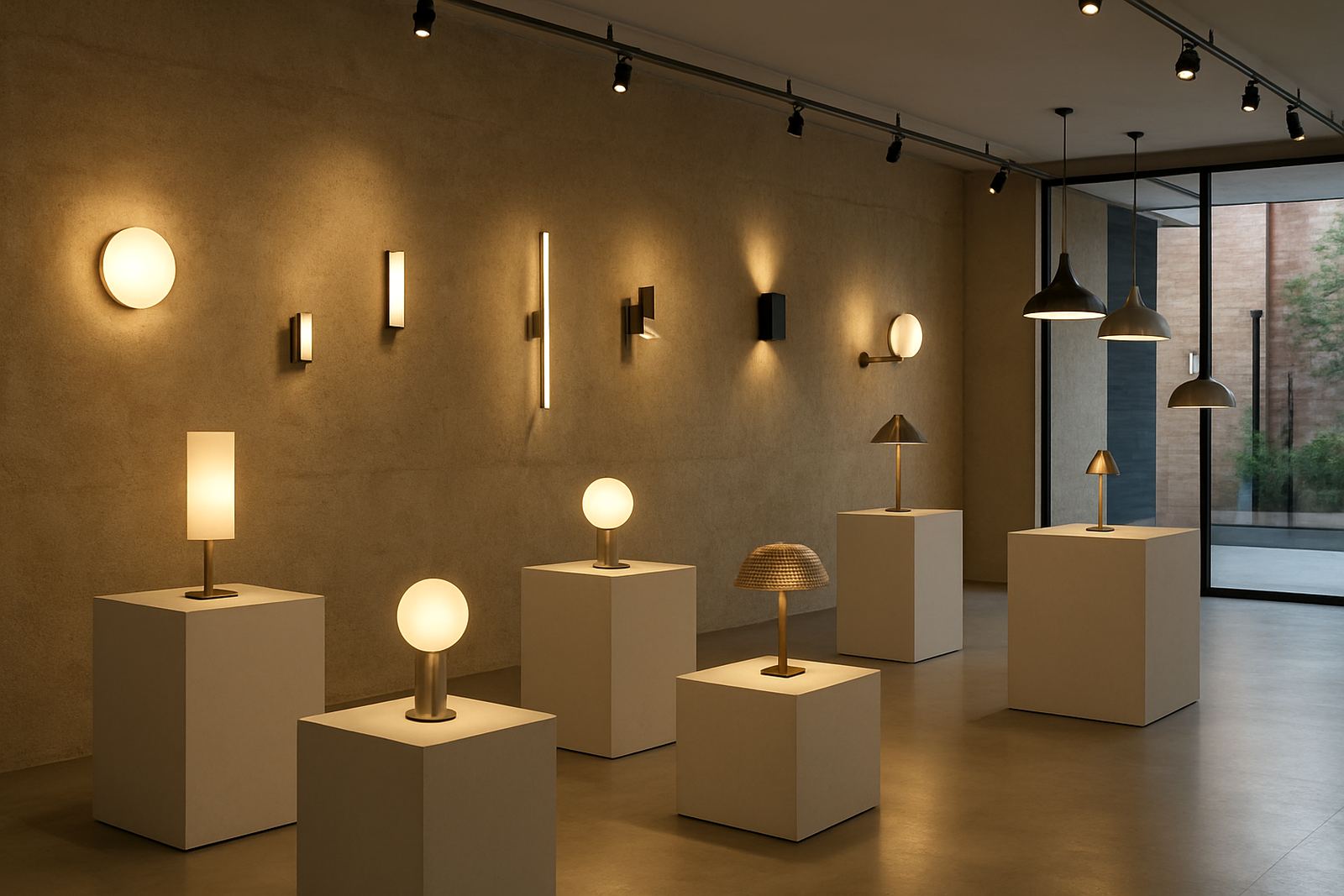
The main shift was to add controlled accent lighting to guide the eye. We used adjustable LED spot fittings for key display walls and selected linear light for certain shelf runs where the products needed even front illumination. The idea was not to flood the entire showroom with light, but to build layers. That gave the floor more depth and made the featured ranges stand out without glare.
We specified fittings with a colour temperature of 4000K to keep whites accurate and finishes looking true. A colour rendering index of 90+ was selected where detail mattered most, especially for textured surfaces, painted pieces and materials with subtle colour variation. Beam angles were matched to the display height, with narrower beams for highlight points and wider beams for broader product zones. Dimming was included on selected circuits so the showroom could adapt between busy daytime trading and quieter appointment-led visits.
To keep the look tidy, we coordinated the fixture positions with the shop layout so the light worked with the merchandise, not against it. We also considered how the frontage reads from the street. That first impression is important in Waterfall where customers often compare several showrooms in one trip and decide quickly which space feels worth their time.
Specification details and install coordination
Once the design was approved, we handled fixture specification, layout plans and installation coordination. The sequence had to be managed carefully because the showroom continued trading during the refresh. We split the work into stages so the team could keep parts of the floor open while other areas were being wired, fitted and focused. That reduced disruption and kept the client operational.
Our technical design lead worked with the project coordinator and site installation manager to confirm circuit groupings, ceiling fixing points and the final aiming positions. After installation, we returned for post install focusing so the light landed on the right parts of each display. This is where the result really comes together. A fitting on paper is one thing, but if it is aimed a few degrees off, the shelf can still read badly.
- Custom layout plans for feature walls, circulation paths and tills
- LED spot fittings for accent and directional emphasis
- Linear fittings for shelf runs and display consistency
- Dimming on selected zones for trading flexibility
- Post install focusing to fine-tune every key display
Timeline from first audit to handover
The full project ran over 4 weeks from the first site audit to final handover. Week one was the survey and brief refinement. Week two covered concept design, fixture schedules and control zoning. Week three was installation coordination and on-site work in phases. Week four was focusing, testing and small adjustments after the team had used the showroom under trading conditions.
The pace worked well because the client needed a practical outcome without shutting the doors. We kept communication tight and made sure the handover was straightforward for the staff. No one wanted a complicated system that only one person could manage. The controls had to be simple, reliable and suitable for everyday use by the sales team.
- Week 1: site audit and lighting measurements
- Week 2: concept design and fixture specification
- Week 3: staged installation and control setup
- Week 4: focusing, testing and final sign-off
What changed once the new lighting was on
The difference was immediate. Product edges were clearer, finishes read better and customers could move through the showroom without feeling like they were working harder than they should to see what was on display. The accent lighting gave the room a more organised rhythm, which helped with browsing and made featured pieces feel more deliberate. Staff also reported that the sales conversation improved because people could compare products with less confusion.
Another gain was the way the space now feels at different times of day. In the morning, the showroom opens cleanly and evenly. In the afternoon, the added accent keeps the displays readable instead of letting the ambient light wash them out. The result is not flashy. It is better controlled, easier to navigate and more suited to the kind of customer journey a serious showroom needs.
If we were doing the job again, we would take the same approach: start with measured light levels, protect the live trading environment and use accent layers to make the product speak for itself. That is usually the right answer for a showroom in Waterfall where customers expect detail, clarity and a neat finish, not just more light.
Key facts
| Project location | Waterfall, Midrand |
|---|---|
| Project type | Showroom lighting refresh |
| Timeline | 4 weeks |
| Main lighting level | 4000K neutral white |
| Colour rendering | CRI 90+ |
| Services used | Concept Design, Site Lighting Audits, Fixture Specification, Layout Plans, Control Design, Installation Coordination, Post Install Focusing |