This Pretoria East salon needed lighting that showed hair colour honestly at the chair, while still feeling calm and flattering at the mirror. Illumin8d planned a layered scheme that balanced task light, ambient light and control for long trading hours.
A Pretoria East salon with two very different lighting needs
The client was a busy independent salon in Pretoria East, serving walk-in and booked appointments for cuts, colour work and styling. Their existing fittings left the work area patchy and harsh, while the waiting zone felt flat and grey. The brief was simple in principle but particular in execution: colour-accurate task lighting for stylists, then a softer client-facing mood that still looked clean in daytime and after load-shedding recovery.
The space had a mix of mirror stations, wash points and a small retail shelf area, so one level of light would not work across the full floor. We also had to work around reflected glare from mirrors, limited ceiling service points and a practical installation window so trading could continue with minimal disruption.
Town: Pretoria East
Space type: salon with service stations, wash area and reception
Main need: accurate colour rendering at mirrors without a clinical feel
Secondary need: easy control for daytime, evening and outage recovery
What the brief asked for, and what was getting in the way
The salon team wanted clients to leave with confidence in the colour they were seeing at the chair. That meant avoiding the common problem of cool, flat light that hides tone shifts and makes warm blondes or copper shades read incorrectly. At the same time, the owner did not want the room to feel like a treatment lab. It had to be welcoming, especially at the reception counter where first impressions matter.
The main constraints were mirror reflection, mixed ceiling heights and the need to keep cabling tidy in a finished interior. There was also a concern around power interruptions. In Pretoria and the wider Tshwane area, load-shedding can interrupt bookings and spoil the mood if lighting returns in a jarring way, so we factored in a control approach that allowed the team to bring light back gradually.
Mirror glare had to be reduced, not just brightened over
Task zones needed a high colour rendering level for hair work
Ambient zones needed warmer tone and lower intensity
Controls had to be straightforward for salon staff, not complicated
Our lighting plan for mirrors, wash points and waiting area
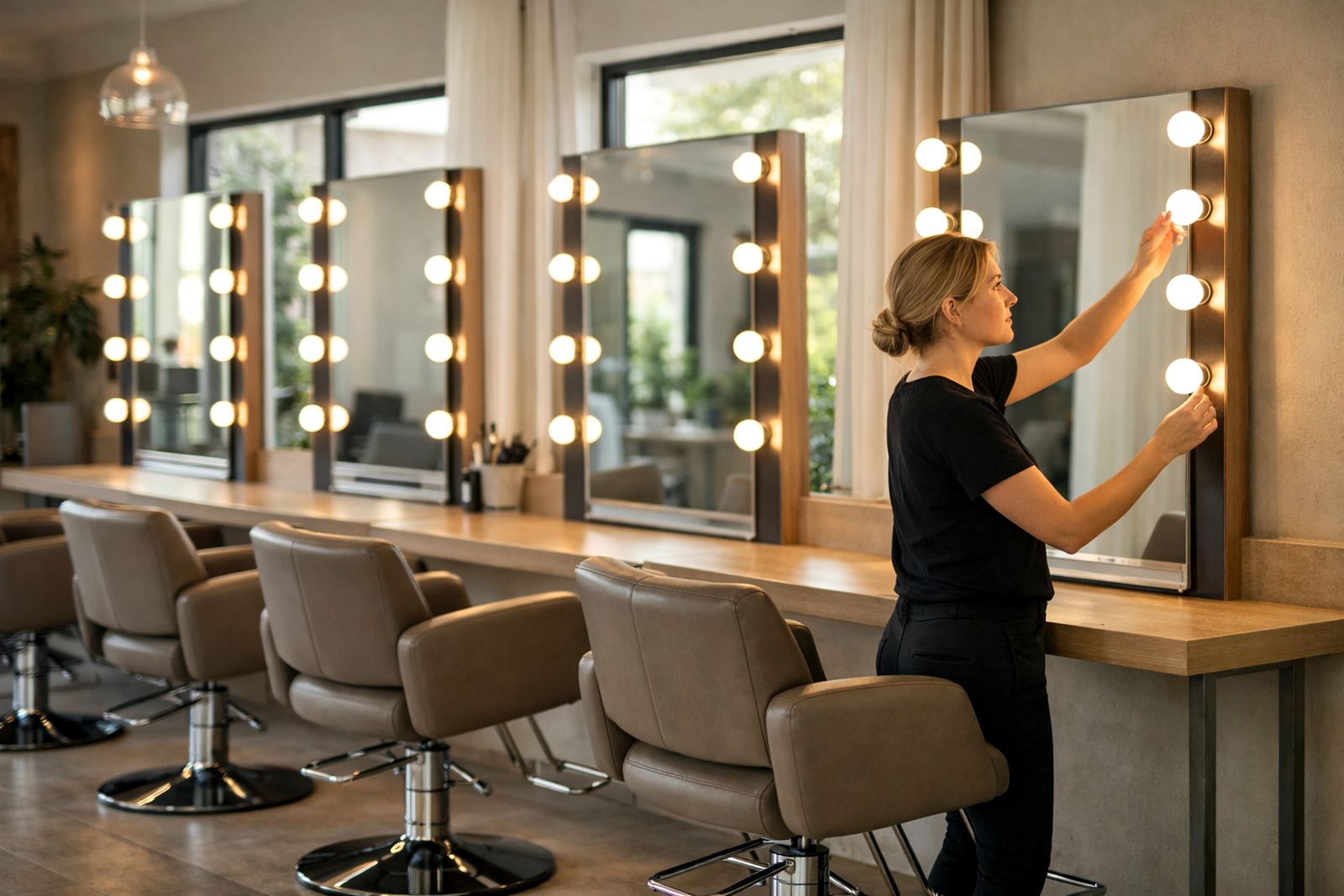
We set out a layered scheme with three lighting types working together. At the stations, we specified linear and downlight-style fittings with a neutral white output of 4000K and a CRI of 90+ so hair colour, skin tone and product shades could read properly. The fittings were positioned to wash faces evenly from both sides rather than only from above, which cut shadow lines around the eyes and chin.
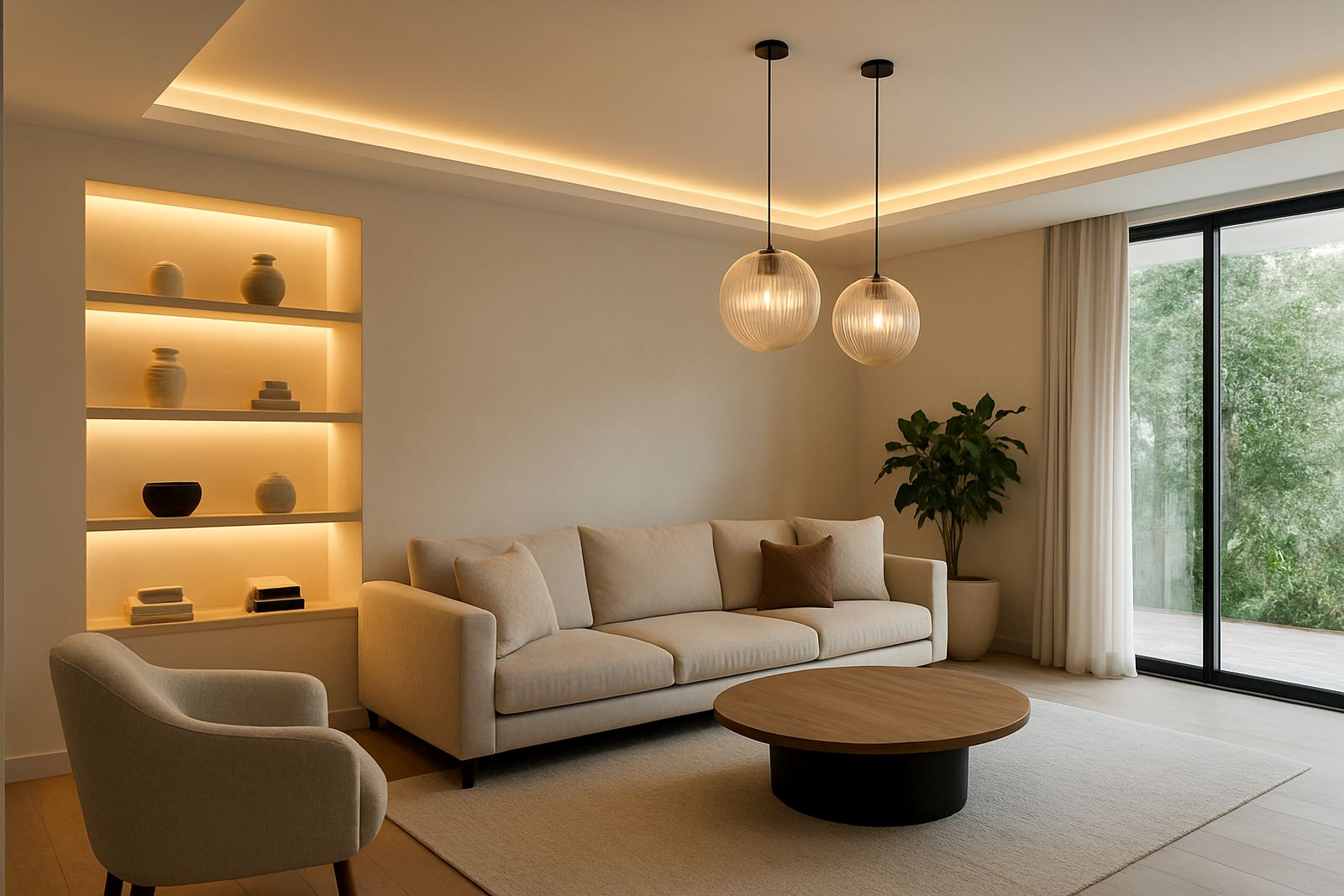
In the client seating and reception zones, we dropped the colour temperature to 3000K for a softer welcome. That area used dimmable decorative fittings with diffused output, giving the room more depth and a calmer feel. The retail shelf was given a tighter accent layer so products stood out without making the front counter too bright. We also included localised task light at the wash area, with shielding to keep direct glare away from reclining clients.
Task light: 4000K, CRI 90+, even face illumination at mirror stations
Client area: 3000K dimmable ambient lighting for a softer feel
Controls: zoned switching so the salon can run different scenes through the day
Glare control: diffusers and careful aiming to reduce mirror hot spots
Site lighting audit, fixture spec and layout work
Before any final placement was confirmed, we carried out a site lighting audit to check ceiling points, reflected surfaces and the light levels already available from daylight. Pretoria East gets strong sun for much of the year, so the scheme had to hold up in bright morning conditions and still feel balanced later in the day. We mapped out the stations, measured working distances and checked where light spill was affecting the mirrors.
From there, we developed the layout plans and fixture specification. The team prepared the control design so the client could separate mirror lighting, reception, retail and wash zones. We also issued mockup guidance for the key fitting positions, which helped the salon owner compare output before final sign-off. One small but important detail was matching the beam spread to the mirror width, because a beam that is too narrow can create streaks across the face.
The proposed fittings were selected for easy maintenance and long service life, which matters in a commercial space that runs daily and cannot afford frequent lamp changes. The result was a practical plan that worked with the ceiling structure instead of forcing it.
Four weeks from concept to handover
The project ran over four weeks from first brief to completion. Week one was the audit and concept stage, including measurements and initial zoning. Week two covered fixture specification and layout refinement. In week three we coordinated ordering, checked finish details and prepared the installation sequence. Week four was on site coordination, aiming and final focusing once the fittings were in place.
Installation had to be handled around salon trading times, so our team kept the work tidy and phased. Sibusiso Dlamini coordinated the site installation work, while Johan van Wyk checked the technical detail on beam aim and control settings. Lerato Mokoena managed the programme and client updates, which kept decisions moving without delays. The final focusing was especially important at the mirrors because even a few degrees off can throw the balance out.
Duration: 4 weeks
Process: audit, concept, layout, specification, installation coordination and focusing
On-site priority: keep disruption low and maintain access for staff
Final step: adjust output after night testing and daytime checking
What changed once the lights were switched on
The difference was immediate. Stylists could now read hair colour more accurately at the chair, and the client seating area felt gentler and more comfortable. The owner noticed that the room no longer felt overexposed in some spots and dull in others. Instead, the light supported the work and the atmosphere at the same time.
The retail shelf became easier to browse, and the front counter looked cleaner without pulling focus away from the service stations. The salon also gained better day-to-evening control, which matters in a city where appointments can run late and the sun drops quickly in winter. Most importantly, the lighting now supports repeatable results, which is what a professional salon needs every day, not just on opening week.
If we were doing it again, we would keep the same layered structure and spend just as much time on aiming and glare control. That is the part clients notice most when they sit in the chair, even if they do not use the technical language for it.
What we would carry into the next salon fit-out
For salons in Pretoria, Johannesburg or Durban, the lesson is the same: one general light level is rarely enough. Mirror work, reception, wash points and retail all ask for different treatment. The best result comes from planning each zone for its actual use, then setting the control system so staff can change the mood without calling for help every time the schedule changes.
For this project, the strongest choices were the neutral task light at the mirrors, warmer ambient light for the client-facing areas and a simple zoned control setup. That combination kept the room practical and inviting. It also gave the owner a lighting scheme that can be maintained easily, which is essential in a commercial space with daily foot traffic and a full diary.
Best practice: plan for functions, not just ceiling positions
Keep mirror light even and colour-true
Use warmer light where clients sit and wait
Choose controls that staff can use without training every day
Key facts
Project
Pretoria East Salon
Location
Pretoria East, Tshwane
Timeline
4 weeks
Task lighting
4000K, CRI 90+
Ambient lighting
3000K dimmable
Services
Site Lighting Audit, Concept Design, Fixture Specification, Layout Plans, Control Design, Installation Coordination, Post Install Focusing
What our Lighting Design customers say
Verified Google reviews
Questions we get asked
Why was 4000K used at the styling stations?
It gave the team a neutral white working light with strong colour accuracy, which is better for checking hair tone and skin finish at the mirror.
How did you reduce glare in the salon?
We used diffused fittings, careful aiming and a layered layout so light reached the face evenly without harsh mirror reflections.
Can this kind of setup help during load-shedding?
Yes, because the zoned control approach makes it easier to return the room to a usable light level without shocking the space or the client.