
A guesthouse entrance that needed clearer night-time direction
The property is a small guesthouse in Brooklyn, Pretoria, with a front garden, pedestrian approach and a vehicle drop-off point used by guests arriving at different hours. The existing lighting left the path unevenly lit, which made the gate, steps and entry court harder to read at night. In winter, when guests often arrive after 18h00, that became a real issue for both comfort and safety.
The owner wanted a more polished first impression without making the front of the property feel over-lit. The scheme needed to suit a residential street, respect neighbours, and cope with Pretoria’s strong summer sun, dust and seasonal storms. It also had to work during load-shedding, so the layout had to make good use of limited backup power and avoid wasteful fittings.
What we measured and tested on site
We started with a site lighting audit and recorded the key circulation points, the height of the boundary wall, the planting beds, and the positions where glare could spill towards bedrooms. We also checked the existing cable routes and determined where the old fittings could be kept or replaced. A practical layout was drawn up to give the arrival path a clear sequence from gate to door.
- Entry path lighting at low level to guide movement without creating harsh contrast
- Warm white colour temperature selected for a softer hospitality feel
- Downward light control to reduce glare from the street and neighbouring windows
- Weather-rated fittings for outdoor use in a Pretoria garden setting
- Maintenance access planned so lamps and drivers can be reached without disturbing planting
We also confirmed the levels at the front stoep and the step edges, since those were the places most likely to cause uncertainty after dark. A small typo in the previous setup was that some fittings were simply too bright for the space, which made the dark areas feel darker by contrast. That was corrected by balancing output across the approach instead of pushing more light into one point.
The lighting package supplied for the entry and garden
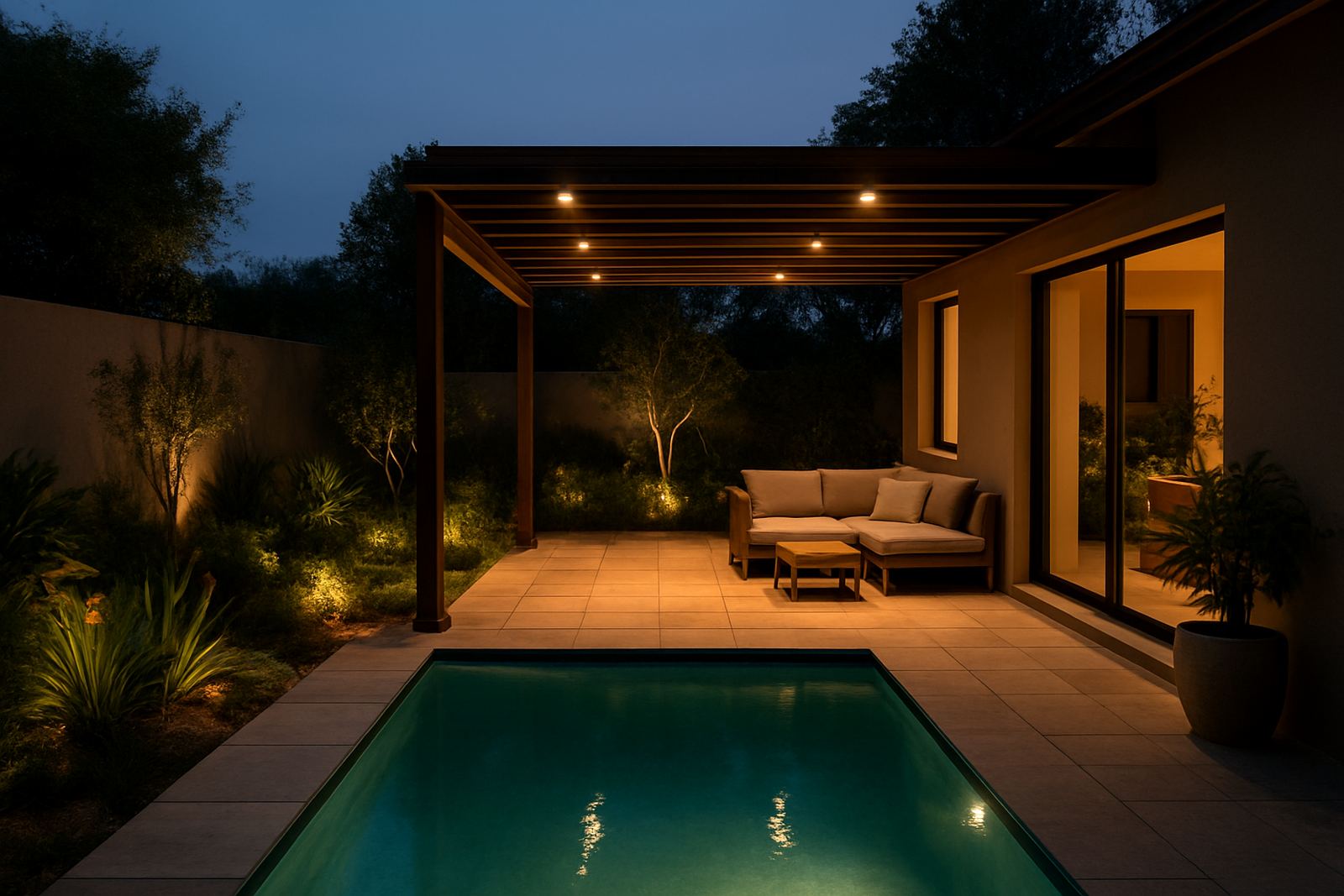
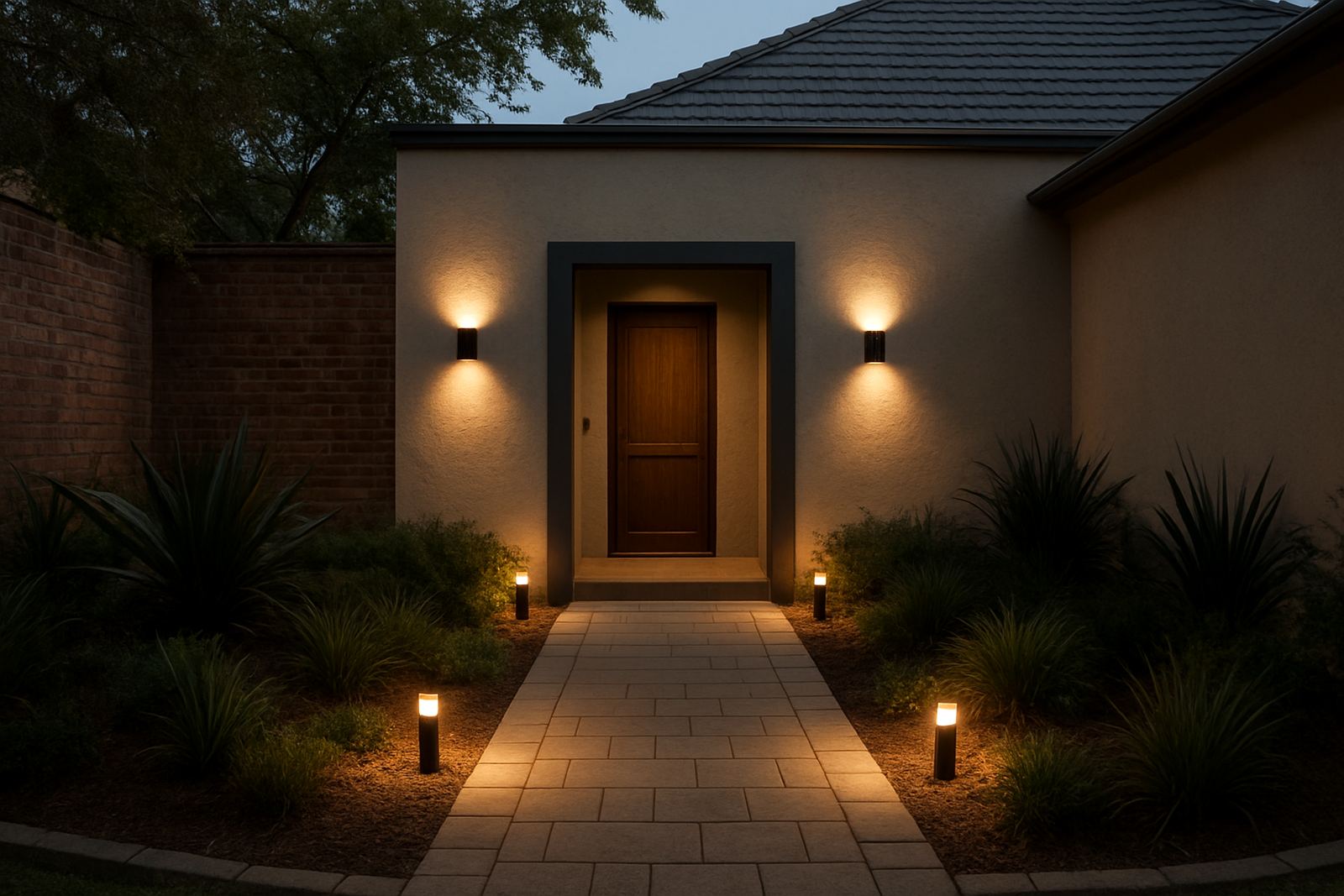
The supply and design package included fixture specification, layout plans, control design and installation coordination. The scheme used compact fittings that sat quietly in the planting and at low wall positions, with selected accent points to frame the doorway and trees near the front boundary. The result was a layered composition that felt natural, not overworked.
Key items supplied and coordinated were:
- Low level path lights for the garden approach
- Wall-mounted accent fittings for the entry wall and stoep face
- Directional spot fittings for selected planting and architectural features
- Timers and switching logic to keep night use simple
- Installer guidance for cable runs, fixing positions and final aiming
We kept the fixture finishes neutral so they would not fight with the building materials, boundary wall and established planting. The goal was for the lighting to support the property rather than become the first thing a guest notices. It had to feel easy and quiet, even when arriving late at night after a long drive from OR Tambo or from elsewhere in Gauteng.
Working around load-shedding and everyday guest use
One of the main constraints was that the guesthouse needed reliable lighting without placing too much pressure on backup power. That meant keeping the wattage sensible and avoiding unnecessary overlap between fittings. We also had to work around guest bookings, so the installation plan was broken into manageable stages to minimise disruption to check-ins and housekeeping.
The team coordinated the sequence over three weeks. Week one covered audit, measurements and design confirmation. Week two was used for supply coordination, cable preparation and marking out positions. Week three covered installation support, final aiming and post-install focus. The handover was straightforward because the controls were kept simple and the lighting zones were clearly separated.
- Three-week project programme from survey to final focus
- Minimal interruption to guest access and daily operations
- Low energy layout suitable for backup supply during outages
- Outdoor gear selected for Pretoria heat, dust and rain
What changed after the new lighting went in
The biggest change was wayfinding. Guests could now see the approach clearly from the gate, identify the steps and recognise the entry point without hesitation. That reduced confusion at night and made arrivals feel calmer. The front of the property also looked more ordered and cared for, which matters in hospitality where first impressions begin at the curb.
From the owner’s point of view, the upgraded scheme improved both appearance and day-to-day use. The garden no longer disappeared into darkness, and the guesthouse could welcome late arrivals with far less uncertainty. It also meant staff did not need to leave every light on all night, which helped with running costs.
In practical terms, the lighting gave the property a better balance between security, comfort and presentation. The result was not dramatic for the sake of it, but it was noticeable to every guest who arrived after dark. That is usually the right measure for a guesthouse entry: people should feel guided, not watched.
What we would repeat on a similar guesthouse project
If we were approaching a similar entry and garden project again, we would keep the same sequence: audit first, then decide where light is truly needed, then simplify the controls. That keeps the scheme honest and avoids over-lighting areas that are already visible. We would also continue to use warm colour temperatures for guest-facing spaces because they flatter finishes and make exterior areas feel less harsh.
We would repeat the emphasis on maintenance access too. Outdoor lighting only stays useful if fittings can be cleaned, adjusted and replaced without damage to walls or planting. For guesthouses in Johannesburg, Pretoria, Cape Town, Durban or Umhlanga, that practical thinking matters just as much as the visual result.
Illumin8d handled this Brooklyn brief as a combination of design judgement and on-site coordination, which is usually the best way to handle small hospitality entrances. The project did not need a complicated control system or a long list of fixtures. It needed the right light in the right places, and a calm finish that guests could trust every evening.
Key facts
| Project type | Guesthouse entry and garden lighting |
|---|---|
| Town | Brooklyn, Pretoria |
| Timeline | 3 weeks from site audit to final focus |
| Scope | Concept design, fixture specification, installation coordination, post-install focusing |
| Lighting style | Warm white, low-glare layered exterior lighting |
| Key outcome | Clearer wayfinding and a more welcoming arrival experience |