
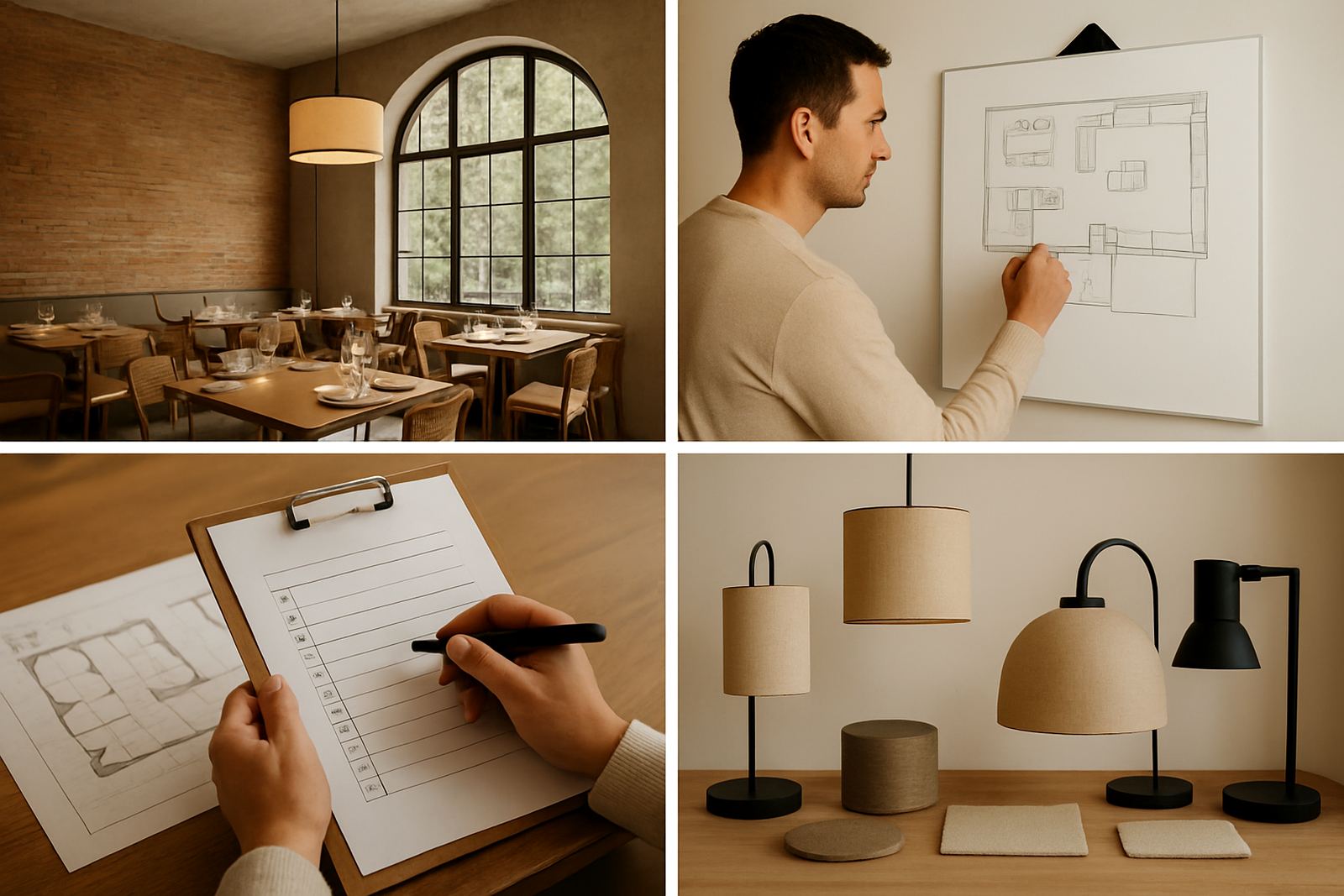
1. Start with the dining experience you want to create
Before choosing fittings, define the mood for each part of the restaurant. A breakfast spot in Rosebank may need brighter, cleaner light than a dinner venue in Umhlanga, while a steakhouse in Pretoria might want warmer pools of light over each table. The point is not just to make the room look attractive, but to make it easy to order, eat and move around without glare or dark spots.
Check the space in daylight and after dark. South African venues often have mixed conditions through the day, especially where strong sun hits the frontage and load-shedding changes how the room feels at night. If you are planning a new fitout or refreshing an old one, start by listing what each zone must do.
- Tables need comfortable light for faces and food.
- Bars need enough brightness for menus, glassware and staff service.
- Kitchens need clear task light over prep and wash areas.
- Entrances need enough visibility for safety and wayfinding.
- Passage areas need steady light with no harsh shadows.
2. Check table lighting for comfort, colour and control
Table lighting carries the most weight in a dining room. It should flatter the food, support conversation and avoid shining straight into guests eyes. Start by checking whether each table gets its own light pool, or whether the room depends on general ceiling lighting only. If the room feels flat, the food can look dull and the service area can feel unfinished.
Use warm white light in most dining areas, but keep it consistent across the room. Colour mismatch between pendants, wall lights and track fittings can make the space feel messy. Dimmer control is worth the extra spend because a restaurant may need brighter levels for lunch and lower levels for dinner, and the shift can happen fast when the crowd changes.
- Make sure guests can read the menu without squinting.
- Check for glare on tabletops, polished surfaces and glass.
- Keep pendant height high enough for clear sightlines across the room.
- Confirm that table edges and chairs are visible when staff move through.
- Test dimming at both low and medium levels, not only full brightness.
3. Review bar and service point lighting for speed and accuracy
The bar needs more precision than the dining room because staff are working with bottles, tills, drinks menus and sometimes a coffee station. Light should fall evenly across the worktop and back bar so the team can read labels and count stock without strain. In busy venues, poor bar lighting slows service and creates mistakes, especially when the room is full and the pace picks up.
Look at both decorative and task light together. A bar can have character, but it still needs enough output for safe service. If the bar front is dark or the shelving is overlit, balance it out with controlled light to stop the area from feeling harsh. In coastal towns like Durban and Umhlanga, also check fittings for humidity and corrosion resistance, because salty air can shorten the life of exposed components if they are not specified properly.
- Check that glass shelving does not reflect into the staff sightline.
- Make sure POS areas are bright enough for cash handling and card payments.
- Review under-shelf light for bottle displays and bottle labels.
- Confirm that bar staff can clean fittings without special tools.
4. Make kitchen and back-of-house lighting practical and safe
The kitchen is not the place for mood lighting. This area needs clear, even illumination so the team can prep food, read labels, clean surfaces and avoid accidents. Shadows over prep counters, sinks or hot equipment can lead to mistakes, so the layout should be checked from the cook line, wash-up area and cold storage route. Good kitchen light also helps with hygiene inspections and day-to-day cleaning.
Ask whether fittings are positioned to avoid heat, steam and grease build-up. In some older buildings around Johannesburg and Pretoria, kitchens have been expanded in stages, which can leave uneven coverage or odd patchy spots. Review the entire back-of-house flow, from delivery door to storage to prep to pass, and make sure each step has enough light to work safely.
- Keep prep counters bright and shadow-free.
- Check the pass for clear visibility of plated food.
- Make sure switches and controls are easy to reach but protected from splashes.
- Confirm that cleaning staff can access fittings for regular maintenance.
5. Test entrances, circulation routes and outdoor edges
Guests form an impression before they even sit down. The entrance should be easy to find from the street, with enough light to show the door, signage and host point. If the frontage is too dark, people can walk past without realising the restaurant is open. If it is too bright, the space can feel harsh and unwelcoming. The aim is simple visibility with a calm first step inside.
Circulation routes matter just as much. Check passageways, steps, toilets and service paths for even lighting and no trip hazards. If the venue has a terrace or street-facing edge, make sure outside areas are lit without spilling too much light into neighbouring properties, especially in areas with municipal requirements or shared buildings. In mixed-use centres, this can be an easy point of complaint if it is ignored.
- Stand at the entrance at night and see what a guest sees.
- Check for dark corners near doors, stairs and toilet access.
- Look for light spill onto adjacent tenants or residential units.
- Make sure emergency exits stay visible during power cuts.
6. Confirm controls, maintenance and load-shedding planning
Even the best lighting plan needs sensible controls. A restaurant should be able to adjust the room for lunch, dinner, private functions and cleaning without complicated steps. If the controls are confusing, staff will avoid using them properly and the room will never feel right. Keep the system simple enough for everyday use, with clear labelling and logical zones.
South African restaurants also need to plan for load-shedding and backup power. Check which lights must stay on during outages, what can dim down, and what should come back on automatically. A good checklist also includes routine maintenance, because dust, grease and vibration can all change how fittings perform. Regular post-install focusing helps keep the room looking sharp, and a small adjustment can make a big difference.
- Label lighting zones clearly for staff training.
- Set different scenes for trading hours and cleaning.
- Decide which circuits stay live on backup supply.
- Schedule bulb, driver and fitting checks at least quarterly.
- Keep spare parts and basic records for each area.
7. Final sign-off before opening day or relaunch
Before you open, walk the restaurant as if you are the first customer. Sit at several tables, stand at the bar, pass through the entrance and move into the kitchen if possible. Check whether the room feels balanced, whether menus are easy to read and whether any fittings need a final tweak. A small adjustment to beam angle or dimming level can solve a problem quickly.
Use this final question set as your sign-off: can guests see where to go, can staff work efficiently and does the lighting support the style of the restaurant without overpowering it? If the answer is yes across all zones, the lighting plan is doing its job. If not, fix the weak points before service starts, not after the first full weekend.