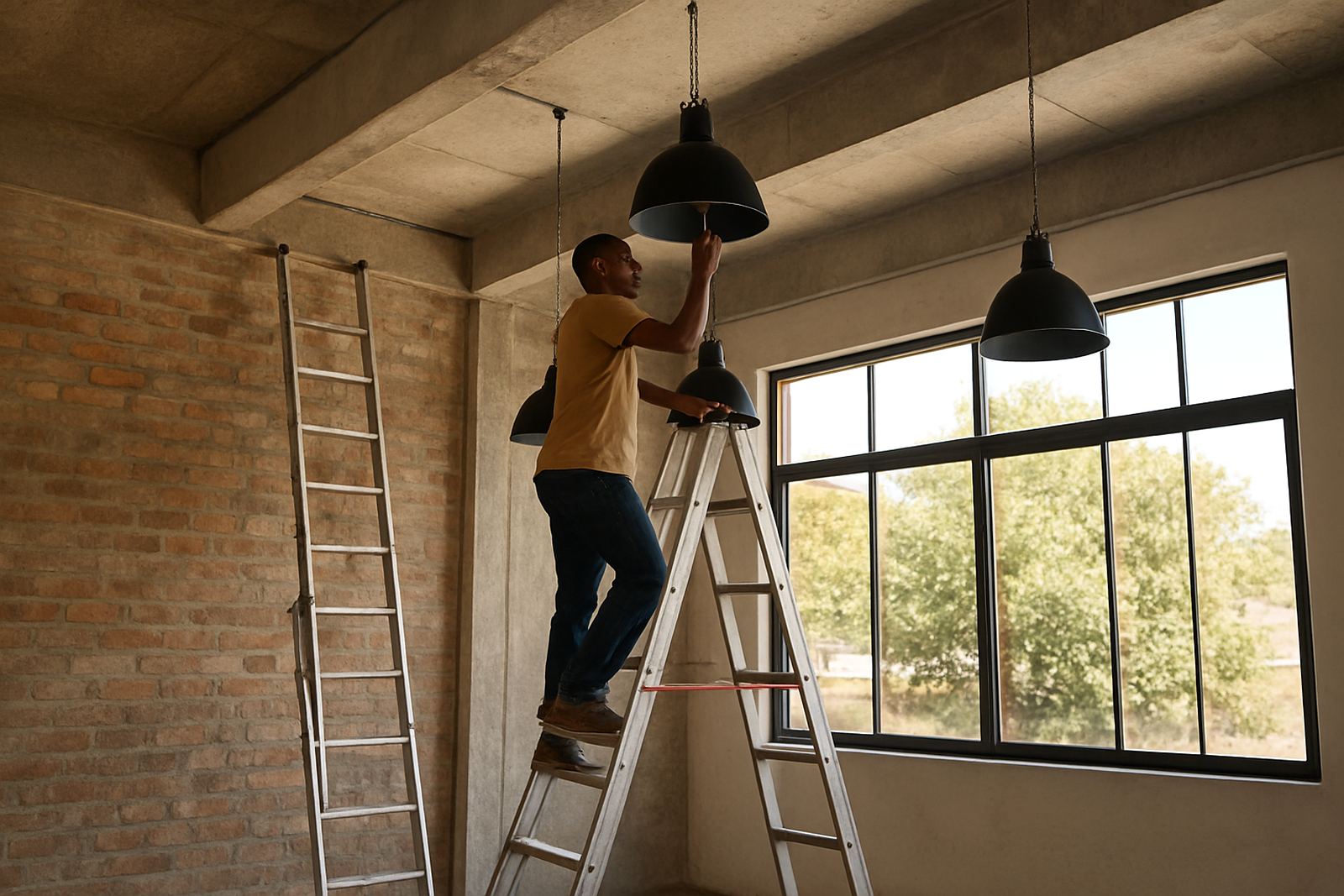
Start with access before the first fitting goes up
Maintenance planning should begin while the lighting is still being designed. If a fitting is mounted too high, tucked behind signage, or blocked by joinery, cleaning and lamp replacement become slow and costly. In shopfronts and restaurants, that can mean ladders in trading hours, avoidable downtime, and extra labour every time a fault appears. In homes, poor access often leads to neglected fittings that collect dust and lose output over time.
For projects in Rosebank, Sandton, Pretoria, Midrand, Cape Town, Durban and Umhlanga, we look at the site conditions first. Coastal humidity can affect metal parts and terminals, while city centre locations may need service access that works around security grilles, canopies or limited parking. The aim is simple: make sure every fitting can be reached, cleaned and checked without disrupting the space more than necessary.
Match the upkeep plan to the type of space
A small home and a busy restaurant do not need the same service plan. A shopfront may need frequent cleaning of display spots, window wash coordination and checkups after trading changes. Restaurants often need attention to warm decorative lighting, pendant alignment and dimming controls that affect ambience during service. Homes may need less frequent visits, but still benefit from a clear schedule for high ceilings, outdoor fittings and feature lighting.
We usually define the plan around how the space is used, how much dust or grease is present, and how often staff can give access. That way, the maintenance schedule supports the business instead of interrupting it. It also makes it easier to budget for labour, replacement parts and any future changes to the layout.
- High traffic retail: monthly visual checks and quarterly cleaning
- Restaurants and bars: regular dimmer, sensor and fitting checks
- Homes: seasonal cleaning and annual inspection of key circuits
- Coastal sites: tighter inspection intervals for corrosion and moisture
Build a cleaning schedule that protects the finish
Dust, cooking residue and insects all reduce light output. On decorative fittings, dirty glass or diffusers can change the colour of the light and make the space feel tired. On architectural fittings, blocked lenses reduce beam control and can leave walls, shelves or signage looking uneven. A cleaning plan should list which fittings need dry dusting, which can be wiped with a damp cloth, and which require a trained technician to open and service.
It helps to note the finish of each fitting as well. Powder-coated parts, polished metal, frosted glass and textured shades all need different handling. Using the wrong cleaner can stain the surface or leave marks that are hard to remove. If the lighting is installed near kitchens, entrance doors or sea air, cleaning intervals should be shorter and a quick visual check should happen before the next service visit.
Keep spares and controls simple to support service visits
Lighting systems are easier to maintain when the components are standardised. That means choosing fittings, drivers, lamps and controls that are simple to identify and replace. Keep a clear record of what is installed, where it is located, and how each circuit is controlled. If something fails after load-shedding, a power surge or a cleaning incident, the maintenance team should know exactly what to check first.
We recommend keeping a small spares list for each project, especially where the lighting is part of the customer experience. That list might include spare lamps, drivers, clips, lenses or mounting parts. It can also include the control details for dimming zones, timers or occupancy sensors. A good record avoids guesswork and keeps downtime low, which matters in any space that trades daily.
- List each fitting by area, type and mounting height
- Record control zones, dimming methods and circuit numbers
- Keep spare lamps, drivers and fixings on site where practical
- Store cut sheets, warranty notes and service dates together
Plan for safe access and realistic service windows
Some maintenance jobs can be done from floor level. Others need ladders, access equipment or a short shutdown of the area. The plan should state who gives access, what hours are allowed, and whether trading, deliveries or kitchen service will continue during the work. For a retail site, a short early-morning window may work best. For a restaurant, service may need to happen before opening or after close. For homes, it may be tied to a weekend visit or a time when the family is out.
Safety matters as much as speed. If access points are not planned, staff can end up reaching over counters or moving furniture just to get to a failed fitting. That creates risk and slows the job down. Clear access notes, safe isolation points and agreed work areas help the technician get in and out without confusion or delay, and with less chance of damage.
Review the plan after installation and after the first season
The first few months will show how the lighting behaves in real use. Some fittings may need a slight re-aim, some controls may need fine tuning, and some areas may turn out to collect more dust than expected. A review after installation helps confirm whether the service schedule is realistic or if it needs to change. This is especially useful after winter in Johannesburg, after summer humidity on the coast, or after a busy trading period when the space has had heavy use.
A proper review should cover output levels, access, cleaning frequency, control performance and any wear on fittings or fixings. If the plan is working, it should be easy to keep the lighting looking right without constant attention. If it is not, the adjustments should be made early, before small issues become expensive ones.
- Check light levels in key areas after the first season
- Confirm that all service points are still reachable
- Adjust cleaning intervals for dust, grease or moisture
- Update the record if fittings or controls were changed