Lighting That Makes Bottle Walls Easy to Read
Wine display lighting is used to draw the eye to bottles, labels, cellar features and tasting nooks without washing out the room. In restaurants, private homes and boutique retail spaces, the right light helps guests read labels, notice depth in the display and appreciate the finish of timber, stone or steel around it. The aim is warm accent lighting that feels considered, not harsh. In many Johannesburg and Pretoria spaces, this also means making sure the display stands out under bright daytime glare and still feels intimate after dark.
At Illumin8d, we plan wine display lighting around the actual shelving, bottle spacing and viewing height. A neat bottle wall in Sandton does not need the same approach as a cellar alcove in Umhlanga or a double-volume display in Cape Town. Beam spread, colour temperature and mounting position all matter. If the light lands too flat, the bottles disappear into reflection. If it is too warm or too strong, the labels look muddy. The right balance gives the display shape and depth while keeping the room comfortable for diners and guests.
What Wine Display Lighting Usually Includes
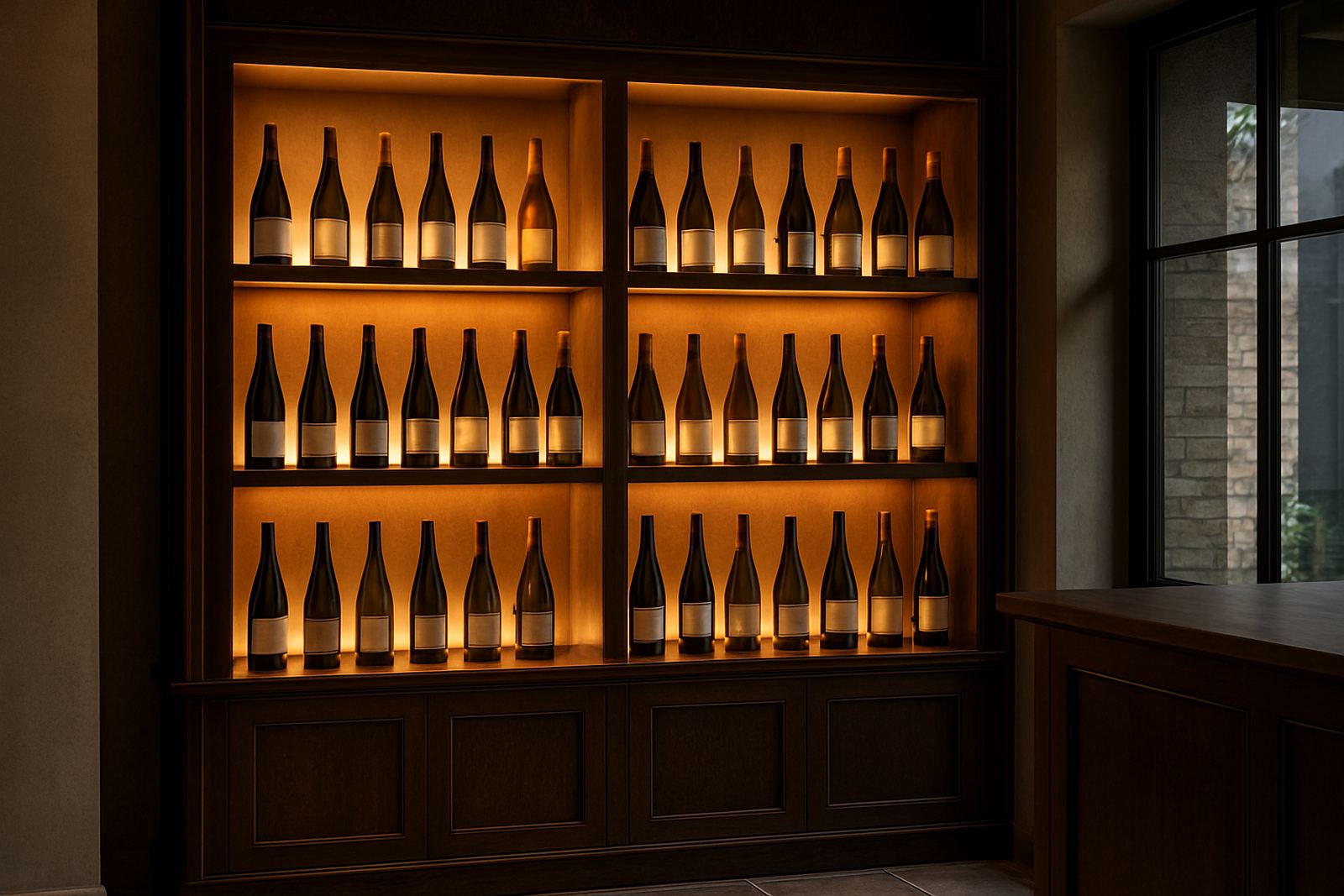
Most wine display lighting systems use low-voltage linear fittings, compact spot fittings or concealed strip lighting fixed within shelving, recesses or capping details. The fitting choice depends on the size of the display and how visible the source may be. For cellar walls and feature racks, a concealed strip can wash the back panel evenly. For highlighted labels or hero bottles, small adjustable spots give better focus. In some projects, a mix of both gives the cleanest result.
- Linear strips for shelf edges, back panels and vertical runs
- Mini downlights or spots for feature bottles and signage
- Warm white output between 2700K and 3000K for a softer look
- High colour rendering so reds, ambers and glass finish correctly
- Low-glare control for seating areas and tasting counters
- Dimmable options for day, evening and late service settings
For homes, this often means a discreet finish that sits quietly in the joinery. For restaurants, the system needs to cope with daily cleaning, heat from nearby kitchens and the lighting moods that change through service. In a wine shop or tasting room, the display may also need stronger contrast so product presentation stays crisp in bright ambient light.
Sizes, Lengths And Control Options
Wine display lighting is usually specified to suit cabinet runs, shelving modules and wall heights rather than a single standard size. Common lengths include 300 mm, 600 mm, 900 mm and 1200 mm fittings, with custom lengths available for longer bottle walls. For tighter joinery details, slim fittings with a shallow profile are often preferred so the source stays hidden and the wine remains the focus. Where a display is wide or multi-tiered, fittings can be joined in runs for a cleaner appearance.
Control is just as important as size. In some homes, a simple dimmer is enough. In restaurants and hospitality spaces, independent zoning is often better so the wine wall can run brighter during setup and softer during dinner. Some projects also benefit from scene control, where the display, general lighting and table lighting can be adjusted separately. That makes service easier and gives the room more flexibility when the weather changes or load-shedding affects the evening rhythm.
- Standard fitting lengths: 300 mm, 600 mm, 900 mm, 1200 mm
- Custom cut options for joinery and cellar panels
- Single-zone dimming for simple home installs
- Multi-zone control for restaurants and retail displays
- Surface, recessed or concealed mounting depending on carpentry
Where Wine Display Lighting Works Best
This type of lighting suits bottle walls, cellar entrances, bar back displays, private dining rooms, tasting counters and home entertainment spaces. It also works well in hospitality venues where the wine selection is part of the brand story. A well lit display can help a restaurant in Rosebank or Cape Town create a stronger first impression at the entrance, while a home cellar in Midrand or Durban can feel more ordered and more inviting for guests.
Wine display lighting is especially useful where the bottles sit behind glass, within open shelving or against textured finishes. It can also help soften darker rooms where natural light is limited. Coastal towns like Umhlanga and Durban call for careful material selection, since humidity can affect metal finishes and fixings over time. In dry inland areas, the key issue is usually heat build-up and ensuring the system works well with air conditioning and evening load-shedding routines.
- Restaurants and wine bars
- Home cellars and entertainment rooms
- Hotel lounges and tasting areas
- Wine shops and bottle feature walls
- Showrooms and private hospitality spaces
Installation, Power And Practical Requirements
Most wine display lighting systems are installed as part of the joinery or interior fit-out, so the carpentry, cable routes and driver positions need to be planned early. Low-voltage systems are usually preferred because they run cooler and allow more flexible placement in tight shelf details. Drivers or transformers must be positioned where they can be reached for servicing, not buried behind fixed panelling where access becomes difficult later. That matters in restaurants and homes alike.
Power needs vary by the size of the display and the number of zones. A small home wall may only need a modest circuit, while a large cellar feature may need several drivers and separate controls. For load-shedding planning, it is often worth considering backup power for the wine display and nearby bar lighting if the room needs to keep trading. In some municipal projects, the electrical layout must also align with inspection and compliance requirements before final handover. We look at the lighting position, cable runs, ventilation around drivers and the finish of the surrounding cabinetry so the result is tidy and practical.
- Plan wiring before joinery is closed up
- Keep drivers accessible for maintenance
- Allow for dimming and scene control if required
- Check ventilation around power gear
- Confirm backup power needs for trading hours
Caring For The Display And Keeping It Looking Good
Wine display lighting needs very little day-to-day care, but regular checks help it stay even and clean. Dust on fittings or glass can dull the effect quickly, especially in restaurants and open entertainment areas. A gentle clean with a soft dry cloth is usually enough for the visible parts. If the display is in a coastal area like Umhlanga or Cape Town, it is worth checking for corrosion on fixings and brackets during routine maintenance. In humid spaces, the surrounding joinery should also be inspected for swelling or movement.
Servicing should include a check on dimmers, driver temperatures and any flicker or uneven output. If a bottle wall starts to look patchy, the cause is often not the fitting itself but a loose connection, dirty diffuser or a driver nearing the end of its service life. It helps to keep spare parts and a record of the fittings used, especially on larger hospitality projects. That makes future repairs quicker and less disruptive for the venue.
What To Confirm Before You Order
Before ordering wine display lighting, confirm the shelf dimensions, the number of bottle rows, the mounting surface and how much of the fitting can be seen from the room. Also check whether the display needs a warm decorative effect or stronger retail-style presentation. The answer affects beam angle, output and control. If the display is behind glass, glare control becomes important. If the bottles are open to the room, the fitting finish and placement become even more visible.
It is also worth checking whether the project needs installation coordination, mockups or samples before final sign-off. For some clients, a quick on-site lighting audit helps identify reflection issues before the joinery is completed. For others, a 3D visual and sample section makes it easier to decide between a softer cellar feel and a brighter bar display. Get the measurements, power points, control preferences and finish details sorted early. It saves time and avoids rework later on.
- Shelf width, height and depth
- Number of bottle rows and display zones
- Warmth level and dimming preference
- Visible or concealed fitting finish
- Need for samples, mockups or site audit
Key facts
| Light output | Low to medium output for accent and display use |
|---|---|
| Colour temperature | 2700K to 3000K warm white |
| Control | Dimmable, single zone or multi-zone options |
| Mounting | Surface, recessed or concealed in joinery |
| Lengths | 300 mm, 600 mm, 900 mm, 1200 mm and custom |
| Use areas | Wine walls, cellars, bars, restaurants and homes |