What Neon Flex Is And Why It Works Indoors And Out
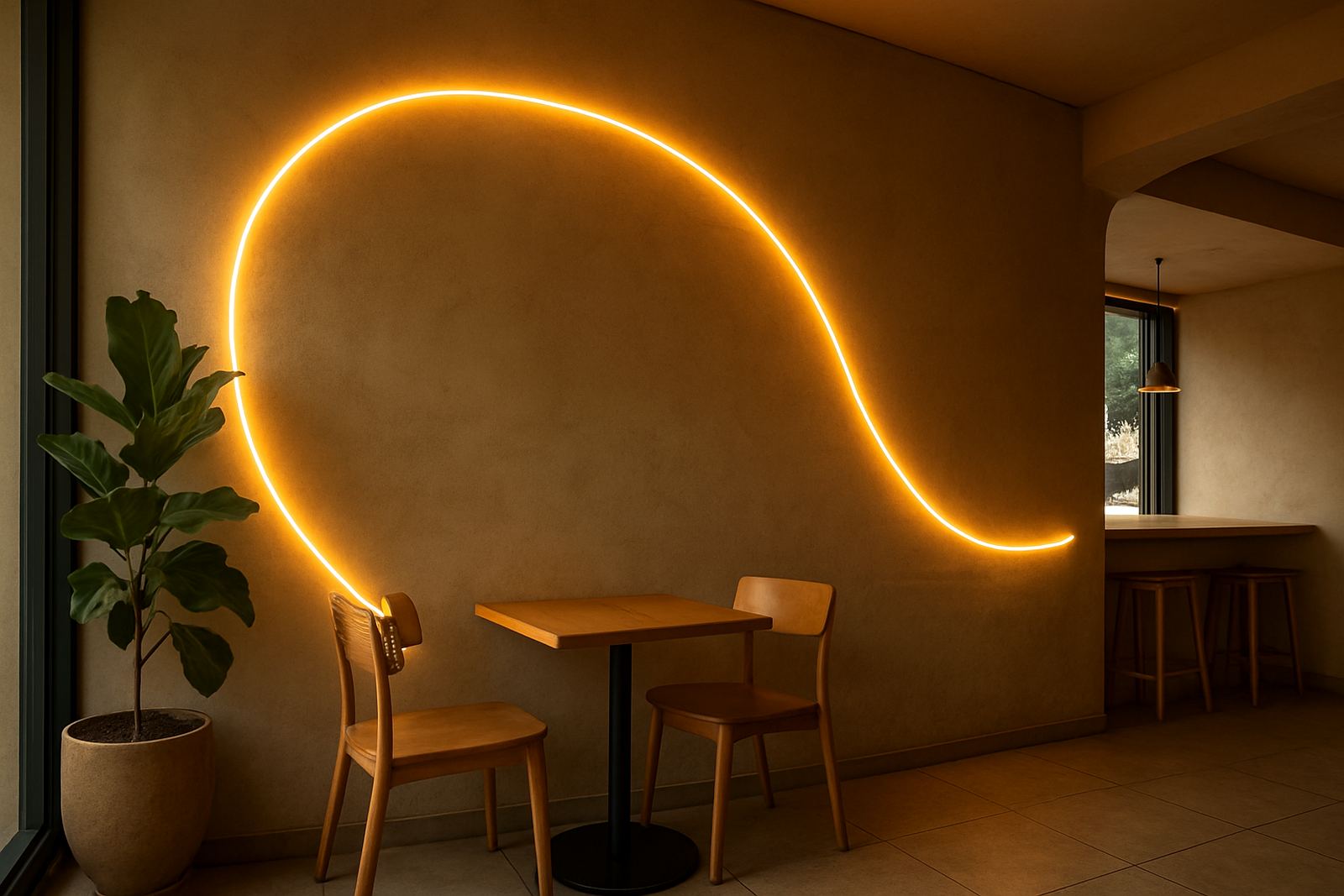
Neon flex is a flexible LED product with a smooth outer sleeve that spreads light into a continuous line. It is used where you want the look of neon, but with lower power draw, cooler running and easier shaping around curves, corners and lettering.
For South African sites, that matters. In Rosebank and Sandton retail strips, it can bring a frontage to life without adding heavy load to the electrical system. In restaurants and bars, it gives a strong visual marker for a counter, bottle display or wall logo. At home, it works well on feature walls, stair details and braai areas, provided the installation is suitable for the location.
- Uses low-voltage LED technology, so it is easier to manage during load-shedding planning.
- Can be formed into letters, outlines, bands and simple graphics.
- Suitable for indoor and outdoor use when the correct rating and fixings are specified.
Sizes, Colours And The Shape It Can Take
Neon flex is available in different widths and bend directions, which affects how tight the curves can be. A slimmer profile suits fine lettering and detailed outlines. A wider profile gives a bolder glow for shopfront bands, bar fronts and larger logos. The colour choice also changes the effect, from warm white for hospitality to bright colours for promotional edges.
We specify the product around the design, not the other way round. If a sign needs to read clearly from across a road in Pretoria or a busy corner in Cape Town, the line thickness and brightness must be set for distance. For smaller interior features in Umhlanga or Durban, a softer output may be better so the light does not overpower the room.
- Typical widths include narrow, medium and wide profiles.
- Common colour temperatures range from warm white to neutral and cool white.
- Coloured options are used for brand accents, wayfinding and decorative effects.
- Can be cut at marked intervals only, so design lengths should be checked before ordering.
Where Neon Flex Suits Best In Commercial And Home Settings
Neon flex suits places that need a visible detail with a clean edge. In restaurants, it can define a cocktail bar, host stand or wall graphic. In shopfronts, it can outline a logo, window frame or entry feature. At home, it works in entertainment rooms, bedrooms, passage walls and covered patios. It is especially handy where a flat panel sign would feel too heavy.
In coastal areas like Durban and Umhlanga, the fixing method and enclosure need careful attention because humidity and salt air can shorten the life of poor quality fittings. In Johannesburg and Pretoria, where heat and dust are common concerns, the driver placement and cable runs should be planned so maintenance stays simple. A neat result comes from good detailing at the start, not after the installer has already started drilling.
- Shopfronts that need a bright identity line after dark.
- Bars and restaurants wanting mood lighting with branding.
- Homes needing a decorative feature that stays tidy and practical.
- Indoor and sheltered outdoor areas where the line can be mounted securely.
Power Supply, Control Options And Load-Shedding Planning
Neon flex normally runs on low-voltage DC power through a driver matched to the length and wattage. It does not use gas, and there is no need for tube filling or high-voltage glass fittings. That makes it easier to specify for a modern electrical layout, but the driver and power routing still need proper sizing.
For retail and hospitality sites, we often suggest separating the neon flex circuit from general lighting so it can be switched on only when needed. Dimming or simple on-off control can be built into the design depending on the use case. If the site has backup power or inverter supply, the total wattage and start-up load should be checked before sign-off. In a few cases the design is fine but the electrician has undersized the feed, and then the glow is uneven or the driver runs hot.
- No gas supply is required.
- Uses a matched LED driver, transformer or power supply.
- Can be connected to switches, timers or dimming controls where suitable.
- Should be checked against backup power capacity if the site uses inverter support.
Installation Details That Keep The Line Straight And Safe
Good installation is what makes neon flex look crisp rather than loose or wavy. The mounting surface needs to be level and stable, with fixing points set out before the line is installed. For external work, the route must allow for weather exposure, moisture and cable protection. For internal work, the finish should hide joins, cables and driver positions as much as possible.
We also check access. If the fitting is high up on a shopfront or over a bar, the installer needs a safe way to reach it again for service or replacement. In some buildings, especially in central Johannesburg or older mixed-use properties, municipal or landlord rules affect drilling, cable routing and external signage approval. It is best to confirm this before manufacture starts, not after the panels are made.
- Allow enough depth or backing space for the profile and cable entry.
- Keep drivers in a ventilated, accessible position.
- Use the correct clips, channels or mounting track for the profile size.
- Check weather rating if the product is going outside or near exposed openings.
Care, Servicing And What To Check Before You Order
Neon flex is fairly easy to care for, but it still needs a sensible maintenance plan. Dust and grime can dull the output over time, so a gentle clean with a soft cloth is usually enough. Avoid harsh chemicals, abrasive pads or direct pressure on the illuminated face. If the site is near the coast, check the fixings and seals more often because humidity can work its way into weak points.
Before you order, confirm the exact shape, colour, length and mounting method. It helps to know whether the product will be indoors or outdoors, whether it needs to bend around tight corners, and whether it must be seen in daylight or only after dark. We also recommend checking the power point location, driver access and any signage rules for the building. A quick review at the start can save time and cost later on, and it keeps the final result tidy.
- Measure the full run and add allowance for cut points and terminations.
- Confirm warm white, cool white or coloured output before manufacture.
- Check whether the installation is indoor, sheltered or exposed to weather.
- Make sure the electrician has space for the driver and control gear.
Key facts
| Product type | Flexible LED neon-style linear light |
|---|---|
| Typical use | Shopfronts, bars, restaurants, homes and feature walls |
| Power | Low-voltage DC via matched driver or power supply |
| Colour options | Warm white, neutral white, cool white and selected colours |
| Mounting | Surface fixed with clips, channel or profile depending on design |
| Service notes | Dust clean, check seals, inspect driver access and cable protection |