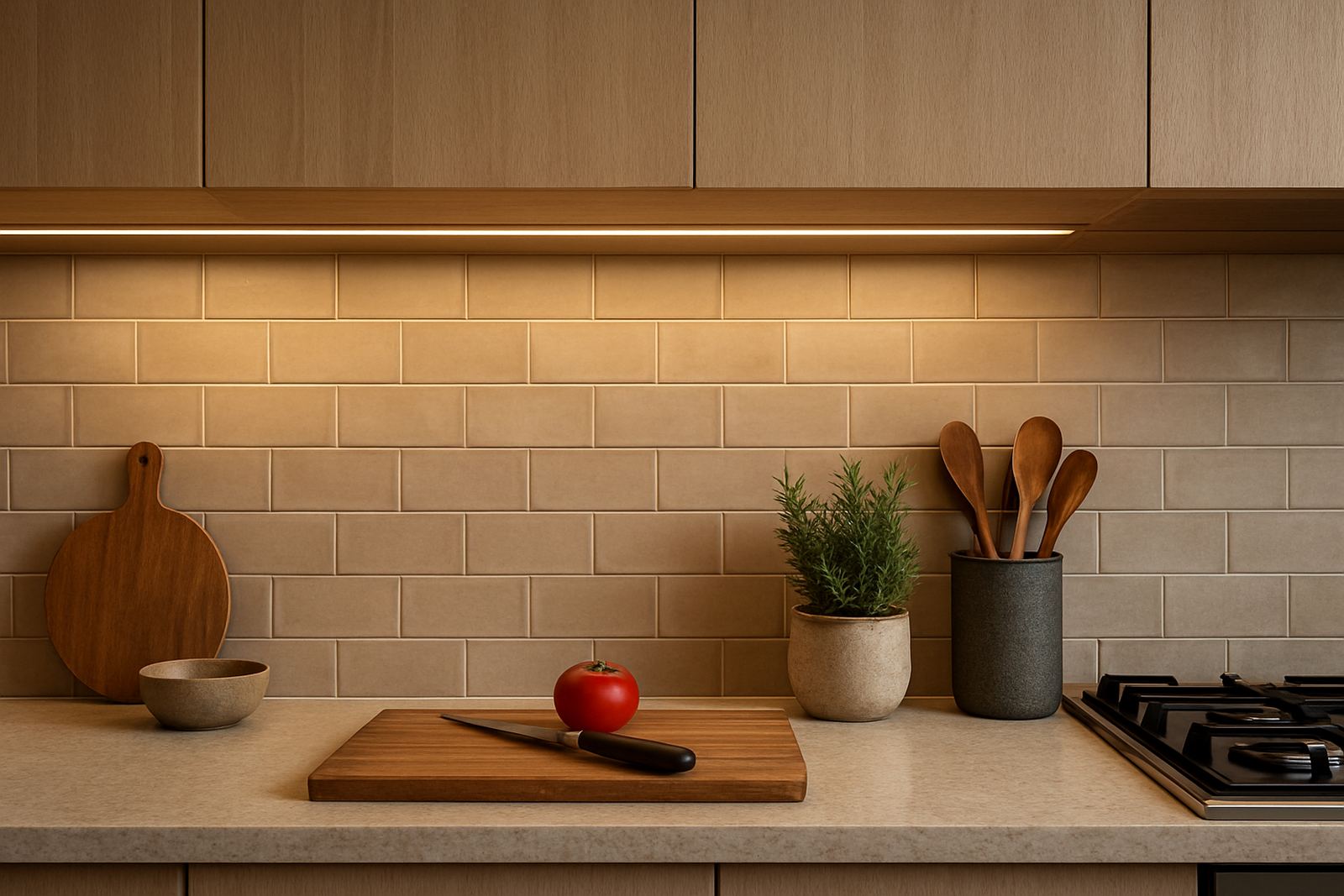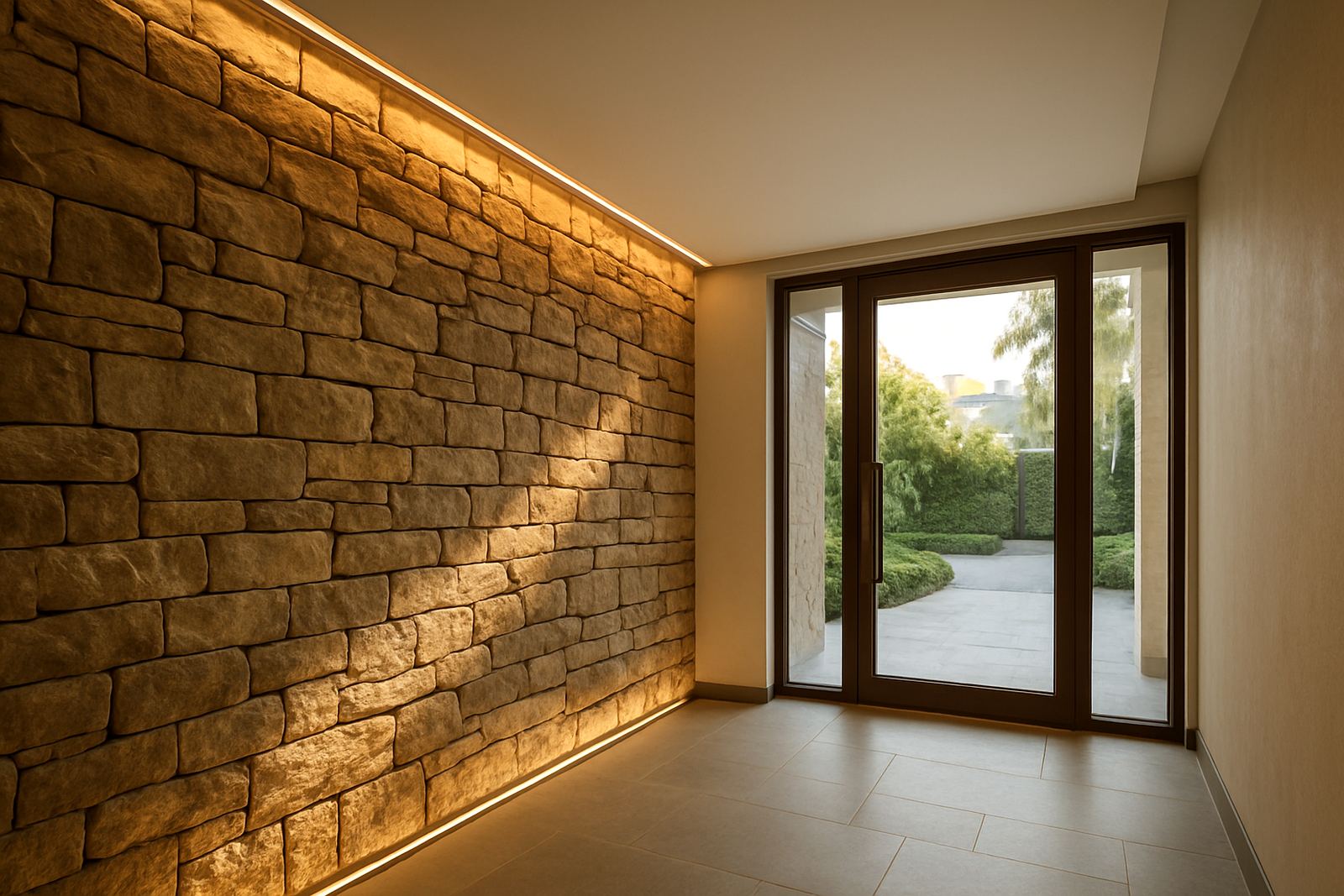
What wall washers do and why they matter
Wall washers are fittings arranged to throw a broad, even beam across a vertical surface instead of putting one bright spot in the middle. That wide spread brings out texture in face brick, cladding, raw plaster, concrete and timber, and it can make a narrow passage, stoep or dining room feel more open. In retail, a washed wall helps signage, artwork and displays read properly after dark. In homes, it gives a calmer finish than harsh downlight only.
For South African sites, the value is practical as well as decorative. In Johannesburg and Pretoria, wall washers often need to cope with long evenings, security lighting and load shedding changeovers. In coastal areas like Cape Town, Durban and Umhlanga, fittings must handle humidity and salt in the air. The right wall washer keeps working without yellowing, flicker or patchy output, and that matters when a brand frontage or feature wall needs to look right every night.
Common sizes, beam spreads and fitting styles
Wall washers come in compact fixtures for tight soffits and larger architectural units for long façades. The right size depends on mounting height, wall finish, and how far the fitting sits from the surface. A shallow shopfront canopy may only need a small linear unit, while a restaurant courtyard or double-volume wall can take a longer body with stronger output.
- Length options: common sizes include 300 mm, 600 mm, 900 mm and 1200 mm linear units
- Beam spread: wide asymmetric or batwing type distribution for even coverage
- Colour temperature: 2700K for warm hospitality, 3000K for softer residential use, 4000K for clearer retail work
- Finish: black, white, silver or custom architectural finish where needed
- Mounting: surface mounted, recessed or concealed in a reveal, depending on the detail
Output also matters. A small feature wall may need only modest lumens, while a large restaurant courtyard or double storey frontage may need far more. The aim is even coverage without hot spots. If the wall is rough or highly textured, a slightly higher output can help the surface read properly, because deep texture eats light very quickly.
Where wall washing works best indoors and outdoors
Wall washers suit places where surface finish is part of the look. Shopfronts use them to draw the eye across signage, pillars and display walls. Restaurants use them to soften hard edges and make brick or plaster feel warmer. In homes, they work well on stair walls, entrance halls, dining areas, passage ends and garden walls seen from inside. They also help on artwork walls where a wide, even wash avoids glare on framed pieces.
Outdoors, wall washers are useful on perimeter walls, courtyards and entrance features. In places like Midrand, Sandton and Rosebank, they are often used on commercial façades where the building needs presence after dark but cannot rely on too much glare. On the coast, we usually look at corrosion resistant housings and proper sealing because moisture will shorten the life of poor fittings very quickly. A good wall washer should look neat in daylight too, because these fittings are usually visible in the scheme and not just after sunset.
- Shopfronts and retail façades
- Restaurants, bars and coffee shops
- Entrance walls, passages and staircases
- Courtyards, boundary walls and landscaping features
- Art walls and reception areas
Installation details, wiring and power requirements
Most wall washers are LED fittings and need standard electrical supply, with drivers matched to the fitting. There is no gas requirement. On new work, the electrician should provide the correct cabling, switching and protection at distribution board level, while the lighting layout must allow for spacing, aiming and access for future service. For exterior work, weather rating matters. A sheltered indoor unit is not suitable for an exposed wall, and a coastal installation usually needs better sealing and material choice.
Placement is critical. If the fitting sits too close to the wall, the wash can look bright in one area and dull in another. Too far away and the beam can spill where it should not. As a rule, the projection and mounting height should be planned together. We also check for paint colours, because dark feature walls absorb more light than pale ones, and gloss finishes can create glare. During installation, the wall should be square, the fittings level and the aiming accurate, otherwise the finish will look off even when the product is correct. A neat cable route matters too, especially in visible hospitality spaces where detail counts.
Care, cleaning and servicing in South African conditions
Wall washers need very little day to day care, but they do benefit from regular cleaning and occasional checking. Dust, cooking residue, coastal salt and insects can all reduce output over time. A soft cloth and mild cleaner are usually enough for lenses and housings. Avoid harsh chemicals, scouring pads or high pressure washing, because that can damage seals and coatings.
For busy commercial sites, we recommend a planned service check every 6 to 12 months. That check should include lens cleaning, bracket tightening, driver performance, seal inspection and a look at any moisture ingress or heat discolouration. If a fitting starts to flicker, dim unevenly or show yellowing, it should be inspected promptly. Many problems start small, and one loose connection can affect a whole section of wall lighting. In homes, checking after a power surge or load shedding event is worth doing too, since electronics can be sensitive to sudden changes.
- Clean lenses with a soft, dry or lightly damp cloth
- Check seals after heavy rain or coastal mist
- Look for flicker, dimming or colour shift
- Keep access panels clear for servicing
What to check before placing an order
Before ordering wall washers, confirm the wall size, mounting height and the finish you want to show. The same fitting can perform very differently on smooth paint compared with rough brick. You should also decide whether the goal is decorative only, wayfinding, security support or a mix of all three. That decision affects beam spread, output and control method.
It helps to have these details ready:
- Wall width and height in metres
- Mounting position, above or beside the wall
- Indoor, outdoor or coastal exposure
- Preferred colour temperature and dimming need
- Power source, switching points and any timer or sensor control
- Finish of the wall, such as plaster, brick, stone or timber
If you are fitting out a shopfront in Johannesburg or a restaurant in Cape Town, it is also worth checking municipal and landlord rules on external visibility, brightness and sign integration. In homes, check whether the wall washer will be seen from bedrooms or neighbours, because spill light can become a nuisance. Getting those details right before supply saves time, avoids waste and gives a cleaner result on site.
Key facts
| Product type | Architectural wall washer for indoor and outdoor feature lighting |
|---|---|
| Typical sizes | 300 mm, 600 mm, 900 mm and 1200 mm linear units |
| Beam distribution | Wide asymmetric wash for even vertical coverage |
| Colour temperature options | 2700K, 3000K and 4000K |
| Ingress protection | Indoor and weather rated options available, depending on location |
| Dimming and control | On/off, dimmable and control compatible options available |