Tight beams that make shelves work harder
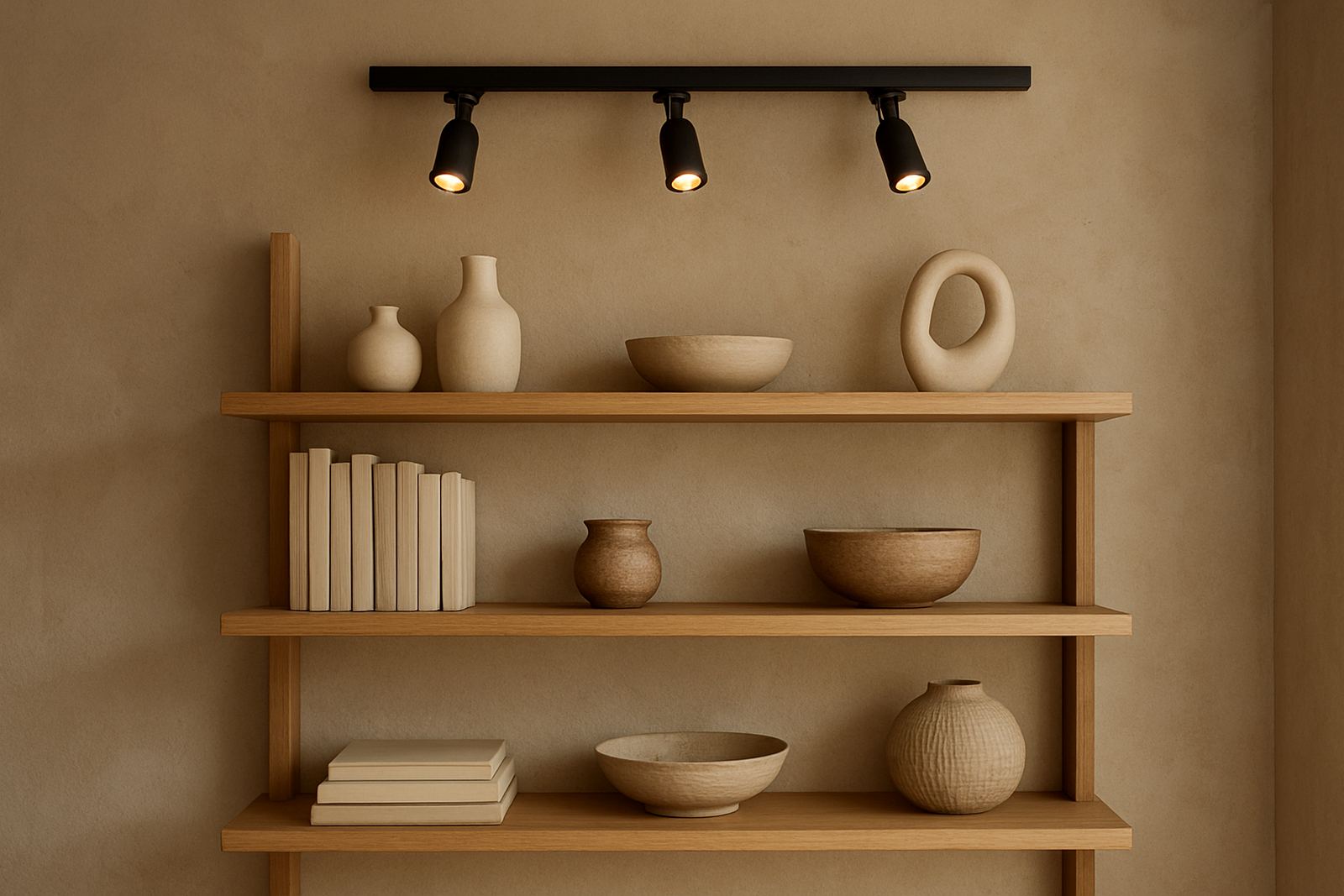
Shelf spotlights are small directional fittings designed to throw a concentrated beam onto a specific product, bottle, book, artwork or object. On a retail shelf, that means the eye goes straight to the item you want noticed first. In a home or hospitality setting, it creates depth and separation so the shelf reads as a feature, not just storage.
These fittings are usually chosen when the shelf is narrow, the ceiling is not high enough for larger downlights, or the display needs more control than general lighting can offer. A good shelf spotlight can make a dull bay of shelving look considered and costly, even when the items are simple. In Johannesburg and Pretoria we often use them for retail walls with mixed stock, while in Cape Town and Umhlanga they are common in interiors where clean detailing matters.
- Focuses light on a single shelf or object group
- Reduces spill light into walkways and neighbouring displays
- Helps keep product colour and texture visible
- Works well for both open shelving and recessed display niches
Sizes, beam angles and finish choices that suit the shelf
Most shelf spotlights are compact, with heads or modules typically between 20 mm and 60 mm in diameter, depending on the fitting style and output needed. The beam angle is just as important as the size. A narrower beam of around 10 to 24 degrees gives a crisp highlight on a single item, while a wider 36 to 60 degree beam can wash a full shelf bay more evenly.
For premium retail shelves, a low-glare trim and a swivelling head are usually preferred so the fitting can be aimed without washing light across the room. Warm white around 2700 K to 3000 K suits timber, leather and hospitality spaces, while 3000 K to 4000 K is often better for fresh retail stock, stone displays and neutral interiors. Black, white and brushed metal finishes are common, with matte finishes helping to keep the fitting discreet.
- Compact heads for 1 to 2 metre shelf runs
- Adjustable fittings for changing display layouts
- Options for dimming and grouped control
- Low-glare trims for a cleaner visual line
Where shelf spotlights fit best in South African interiors
These fittings suit shopfronts, bottle displays, feature shelving, restaurant niches, home libraries and built-in joinery. They are especially useful where shelves sit against a dark wall or in a room with load-shedding friendly backup lighting, because the narrow beam keeps the display visible without needing to flood the whole space. In coastal areas like Durban and Umhlanga, enclosed or better sealed fittings are often preferred to help manage humidity and airborne salt.
For restaurants, shelf spotlights work well behind bars, above wine storage and around display pieces that help set the mood. For homes, they are often used in studies, living rooms and passage alcoves. In shops, they can be used to mark price tiers, feature a new season range or create a visual pause along a long wall of stock. The key is to keep the beam controlled and the spacing measured so each lit section feels intentional not cluttered.
- Shopfront feature walls and display bays
- Restaurant bottle shelves and hospitality joinery
- Home shelving, niches and art ledges
- Reception counters and boutique product displays
Installation details, power and control requirements
Shelf spotlights usually run from standard mains power through a suitable driver or transformer, depending on whether the fitting is mains voltage or low voltage. For a neat result, the cable route should be planned before the joinery is closed up. That usually means allowing space behind the shelf, inside the carcass or through a concealed chase. Where shelves are already installed, surface conduit or rear access panels may be needed.
In practice, the best result comes from proper coordination between the joiner, electrician and lighting designer. Spacing must match shelf height, object size and viewing angle. A fitting too close to the front edge can cause glare, while one set too far back may leave the item flat and dull. Dimming is often recommended, especially in homes and restaurants where the atmosphere changes through the day. In areas with frequent power interruptions, low-energy LED shelf spotlights are a sensible choice because they restart quickly and place less load on backup systems.
- Confirm mains voltage or low-voltage supply before ordering
- Allow concealed cable space inside shelving or joinery
- Use dimming where mood or product change is important
- Check access for servicing before final fixing
Care, cleaning and long term servicing
Shelf spotlights need very little day-to-day care, but they should be dusted regularly so the beam stays sharp. On retail shelves this matters because dust can build up quickly, and even a small layer can soften the effect. A dry microfibre cloth is usually enough for the outer housing and lens. Avoid harsh chemicals, especially on painted or coated finishes. In humid coastal areas, it is worth checking for corrosion on screws, brackets and exposed parts from time to time.
Every few months, check whether the beam is still aimed correctly. Shelving layouts change and products get moved, so a spotlight that once hit the centre of a bottle or sculpture may now be slightly off. If a fitting gets hot, flickers or changes colour, it should be inspected by a qualified person. LED fittings are generally long life, but drivers and connections can still need attention over time. A small amount of maintenance keeps the shelf looking disciplined instead of tired.
- Dust lenses and housings on a regular schedule
- Check aim after stock changes or shelf re-merchandising
- Inspect coastal fittings for early signs of corrosion
- Use a qualified technician for electrical faults or driver replacement
What to check before you place an order
Before ordering shelf spotlights, measure the shelf width, depth and the height between shelves. You also need to know whether the fitting will be mounted under a shelf, in a side panel or inside a recessed niche. The beam angle, colour temperature and finish should be matched to the product and the room. If the goal is to show jewellery, ceramics or bottles, the fitting needs to be controlled enough to highlight detail without causing reflections on glass or polished surfaces.
It also helps to confirm how many shelves must be lit and whether each shelf will have its own switch or be grouped together. For larger runs, you may need a dimmer or zoning plan so the top shelf, middle shelf and lower shelf can be adjusted separately. If the shelving sits in a shopfront or restaurant with municipal compliance requirements, make sure the installation is suitable for the venue and does not interfere with access, fire egress or maintenance panels.
- Shelf measurements and fixing points
- Beam angle and colour temperature
- Voltage type, dimming and switching plan
- Finish colour and visibility from the viewing side
- Access for future cleaning and servicing
Key facts
| Product type | Mini directional shelf spotlight for display and accent lighting |
|---|---|
| Typical size | 20 mm to 60 mm head diameter, depending on fitting style |
| Beam angle | 10 to 60 degrees, selected to suit the display |
| Colour temperature | 2700 K to 4000 K |
| Power supply | Mains or low-voltage LED, subject to specification |
| Common finishes | Matte black, white, brushed metal and custom matched options |