What pathway bollards do in an outdoor lighting plan
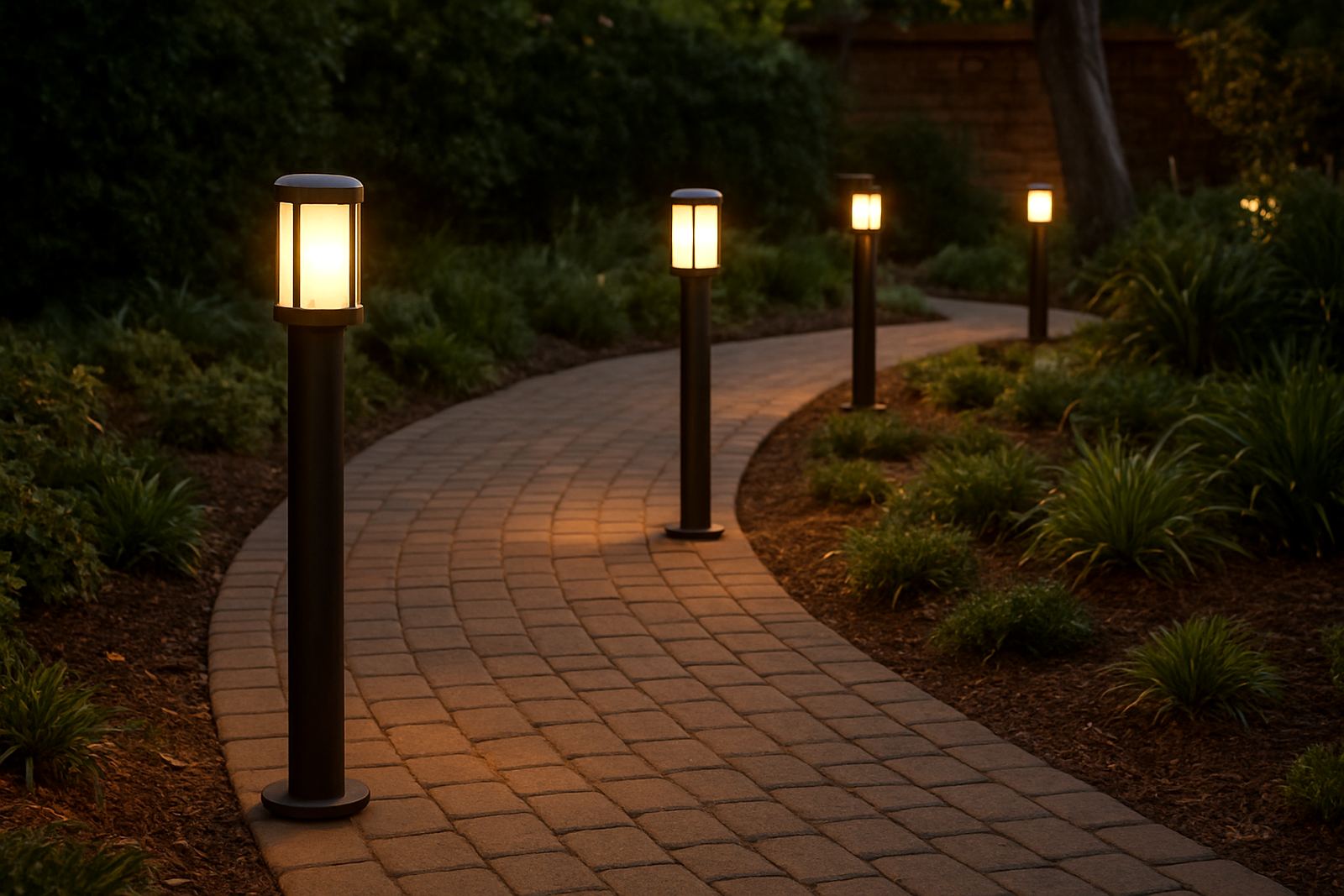
Pathway bollards are low level outdoor lights set along walkways, driveways, steps and garden edges. Their main job is to show the route clearly without throwing glare into the eyes, so people can move safely after dark and the property still looks calm and ordered.
They are useful where you want a defined line of travel, such as a front gate to entrance path, a parking area to reception door, or a garden route between braai areas and terraces. In many South African homes and guest spaces, bollards also help with load-shedding planning when paired with battery backed or low energy fittings.
For the right result, the light should be soft enough for wayfinding but strong enough to cover the path edge. Too much output makes the space feel harsh. Too little leaves dark patches and people guessing where to step.
Sizes, finishes and light output to consider
Bollards come in a range of heights and profiles, and the right choice depends on the width of the path, nearby planting, and the look of the building. For residential use, common heights are around 600 mm to 1000 mm. On larger sites or wide driveways, taller units may be used for stronger visual presence.
Body materials often include powder-coated aluminium, stainless steel or weather-treated metal, with opal or frosted diffusers to soften the beam. In coastal areas such as Umhlanga or Cape Town, corrosion resistance matters more than on inland sites, so the finish and fixing details need extra attention.
- Height: 600 mm, 800 mm, 1000 mm and custom sizes where required
- Beam: downlight, side throw or 360 degree glow depending on the route
- Colour temperature: warm white for homes and restaurants, neutral white for security-led access routes
- Ingress protection: outdoor-rated fittings with proper sealing for rain and dust
We also check the scale against the building. A slim bollard can suit a modern townhouse, while a wider profile may suit a hotel forecourt or larger commercial entrance. The unit should sit comfortably in the setting, not shout for attention.
Where pathway bollards suit best
These fittings suit places where people move on foot after dark and need a clear route. They are common on residential driveways, estate walkways, parking edges, restaurant gardens, hotel entries and office campuses. They also work well beside retaining walls, steps, boundary paths and shared access lanes.
For shopfronts and hospitality settings, bollards can guide guests from parking to door without using bright floodlights all over the site. That keeps the arrival experience tidier and often more comfortable for neighbours too. In suburbs like Rosebank, Sandton and Midrand, this matters where visual order and street-facing presentation count.
- Home driveways and pedestrian paths
- Restaurant courtyards and terrace walkways
- Hotel and guesthouse arrivals
- Apartment common areas and shared access routes
- Office parks, school grounds and small public spaces
They can be used on their own, but they are usually better when balanced with wall lights, step lights or tree lighting. That gives the site depth and stops the path from feeling isolated at night.
Installation details and power requirements
Most pathway bollards are wired to mains power and fixed into a concrete plinth or anchor base. The cable route must be planned before paving is completed, especially on new builds or where underground services are already crowded. Good installation also means allowing for drainage, stable footing and enough clearance from sprinkler lines, roots and moving vehicles.
For safe operation, the fitting should be correctly earthed and protected on the circuit. Outdoor controls may include timers, photocells or smart dimming where appropriate. On sites affected by load-shedding, low wattage LED units and backup supply planning can help keep the path usable when the grid drops out.
In some cases a bollard can be selected with solar support, but that depends on sun exposure, battery space and how much light is actually needed. Shaded courtyards and tall buildings can reduce charging significantly, so the choice needs to be practical not hopeful.
We also check the spacing before install. If the bollards are too far apart the route looks patchy. Too close together and the area feels crowded and overlit.
Care, servicing and long-term upkeep
Bollards live outdoors through heat, dust, summer rain and, in coastal areas, salt air. Regular care keeps them looking sharp and working properly. Cleaning the diffuser, checking fixings and looking for water ingress should form part of the routine, especially after heavy storms or construction nearby.
For commercial properties, servicing should include lamp and driver checks, alignment review and a test of the control system. If a fitting has been knocked by a vehicle or maintenance trolley, it should be inspected straight away rather than left til it starts leaning or leaking.
- Wipe lenses and housings with a soft cloth and mild cleaner
- Check for cracked seals, rust spots or loose bolts
- Trim back plants that block the beam
- Review output after landscaping changes or paving repairs
On high-use sites, plan a seasonal check at least twice a year. That keeps the lighting consistent and avoids small faults turning into expensive replacements.
What to check before you order pathway bollards
Before ordering, measure the route and decide what the bollards must do. Are they mainly for safety, for visual presentation, or for both? That answer affects height, wattage, spacing and finish. It also helps decide whether you need one-sided light, circular glow or more directional output.
It is also important to confirm the site conditions. Coastal humidity, exposed wind, irrigation overspray and nearby traffic all affect the spec. On a restaurant or retail site, consider whether the bollards need to match the façade style, keep the entrance photo-friendly, or avoid shining into neighbouring windows.
- Path width and total run length
- Mounting surface, paving type or base detail
- Power source and control method
- Desired colour temperature and brightness
- Exposure to weather, salt air or vehicle impact
- Any local rules, estate guidelines or municipal lighting limits
It helps to know what else is happening in the area too. If the site already has strong wall lights or security floods, the bollards may only need to guide the edge rather than do all the work. That usually gives a cleaner result and better night-time comfort.
Key facts
| Product type | Outdoor pathway bollard lighting |
|---|---|
| Typical heights | 600 mm, 800 mm, 1000 mm and custom options |
| Light source | LED, low wattage outdoor rated |
| Material options | Powder-coated aluminium, stainless steel, treated metal |
| Protection rating | Outdoor sealed construction for dust and rain |
| Use cases | Homes, shopfronts, restaurants, driveways and shared walkways |