
What shopfront sign lighting does for your frontage
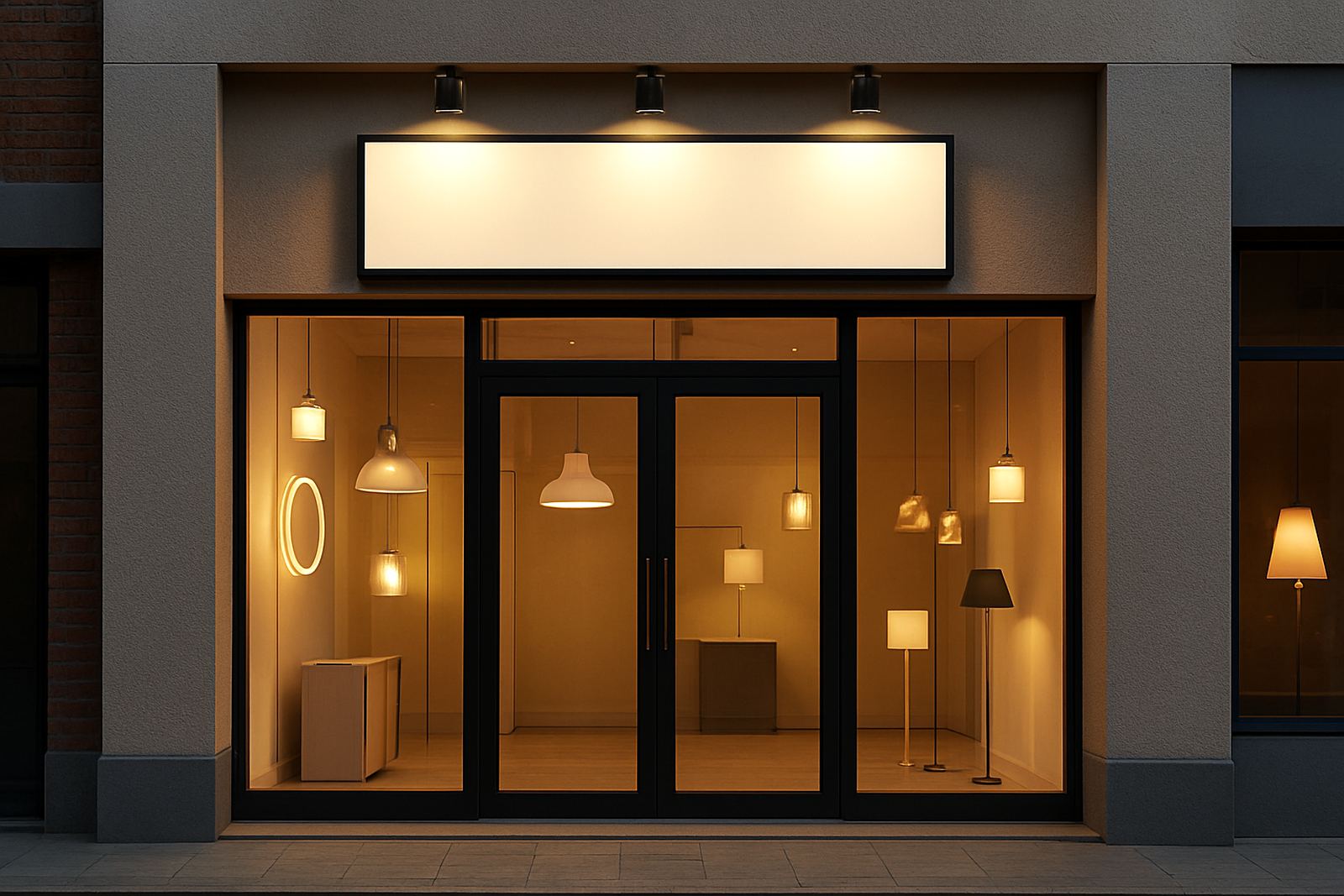
Shopfront sign lighting is the focused lighting used to make your business name, logo or fascia visible after sunset. It can be mounted above the sign, behind lettering, within a canopy, or tucked into the building line so the light reads cleanly without spilling into the street. For retail, restaurants and offices, the aim is simple: clearer visibility from a distance and a neat night-time appearance that supports the brand.
In busy areas like Sandton, Rosebank, Pretoria and Umhlanga, a well lit sign helps customers spot you in traffic and on foot. In coastal towns such as Cape Town and Durban, the fitting choice matters as much as the beam angle because salt air can shorten the life of poor quality parts. On smaller shopfronts, sign lighting also helps the facade feel active during load-shedding with the right backup supply in place.
Sign lighting options we specify for shops and restaurants
There is no single answer for every frontage. The right solution depends on the sign size, the wall finish, how far the sign sits from the road, and whether the lettering is solid, cut-out or backlit. We usually start with the viewing distance and then choose the beam spread and mounting position from there.
- Wall mounted grazing lights for textured signs and painted fascias
- Top mounted linear fittings for long rectangular shop signs
- Pin spot fittings for individual letters and logos
- Backlight and halo style options for floating lettering
- Canopy integrated lighting for sheltered entrances and restaurant fronts
- Low glare fittings for residential gates, home studios and townhouse frontage signs
Sizes are usually selected by beam coverage rather than a one size rule. Short shop names often need compact fittings with narrow beams, while longer signage may need multiple light points spaced evenly across 1.2 m, 1.8 m, 2.4 m or more. For taller buildings or deeper fascias, the mounting bracket and throw distance need careful planning so the light lands on the sign not the pavement.
Where shopfront sign lighting suits best
We design sign lighting for street facing retail units, forecourt shops, takeaways, medical suites, offices, hotels and restaurant entrances. It works well on painted masonry, aluminium cladding, timber feature walls, framed fascia boards and simple blade signs. For malls and mixed use centres, the specification often needs to follow landlord rules on glare, bracket projection and cable routing.
It also suits independent businesses that want a stronger night presence without changing the whole frontage. A neat sign light can make a modest facade look orderly and intentional. For homes, it is useful on gate signs, braai area name boards, studio entrances and driveway markers where you want visibility without harsh floodlighting.
- Shopfronts on main roads with evening foot traffic
- Restaurants that trade into the night
- Businesses in shared centres with signage rules
- Homes and private offices needing low level identification
Installation details, power supply and load-shedding planning
Most sign lighting runs on standard mains power, with the control gear sized to suit the fitting type and total load. For new work we plan the route from the distribution board to the sign point, allow for isolators where needed, and keep service access in mind so maintenance is not a struggle later. In outdoor locations, cable entry should be sealed properly and fittings should carry the correct weather rating for the exposure level.
In South Africa, load-shedding often changes how a sign is used at night. If the sign must stay visible, we can specify low wattage LED fittings, separate circuits, or tie in with backup power where the site already has battery support. That matters for trading hours in Johannesburg, Cape Town and Durban where customers still look for the entrance after dark. Installations near the coast should also use corrosion resistant fixings and fittings that can handle humid conditions. It sounds simple, but it saves a lot of call backs.
- Check the wall structure before drilling into cladding or old plaster
- Confirm available power nearby and whether a new circuit is needed
- Allow for weatherproof glands, sealant and proper earthing
- Check landlord or municipal sign rules before final mounting
What to check before ordering your sign lights
Before we specify any fixture, we need a few practical details from the site. The sign size, mounting height and viewing distance are the starting point. We also look at what the sign is made from, whether the frontage is shaded by trees or awnings, and how much ambient street light is already there. If the sign faces traffic, a slightly tighter beam can keep the lettering clear. If people view it on foot, a softer spread may work better.
It helps to know if the lighting must be visible from across the road, or just enough to identify the entrance at close range. If the sign is inside a centre or on a heritage style building, there may be restrictions on fixings, brightness or colour temperature. The finish of the wall matters too because dark surfaces absorb light and very glossy finishes can throw glare back at the viewer. A little planning here prevents over lighting or patchy coverage.
- Sign dimensions in metres or millimetres
- Mounting height from ground level
- Wall material and finish
- Power point location and access route
- Desired colour temperature, usually warm white or neutral white
- Any centre rules, municipal sign approvals or landlord conditions
Care, servicing and long term performance
Once installed, sign lighting should be checked at least twice a year. Dust, insects, coastal salt and general weather exposure can all reduce light output over time. In Johannesburg and Pretoria, dust build up is the main issue. On the coast, fittings may need more frequent cleaning and inspection because corrosion can creep into fixings and joints. If the sign sits near a road, vibration from passing traffic can also loosen hardware over time.
Routine servicing usually includes cleaning the lenses, checking fasteners, testing the circuit, and confirming that the beam still lands where it should. If a fitting starts to dim or flicker, it is better to address it early rather than wait for a full failure after trading hours. With good maintenance, a sign lighting setup can keep its crisp look for years and avoid the uneven patchy look that makes a frontage feel tired.
How Illumin8d handles shopfront sign lighting projects
At Illumin8d, we approach sign lighting as part of the full frontage, not as an afterthought. Our Rosebank team designs for sight lines, brightness control and practical servicing, whether the project is in Midrand, Sandton, Cape Town, Durban or Umhlanga. We coordinate concept design, fixture specification, layout plans, control design and installation support so the result suits the building and the business.
If the project needs mockups or samples, we can help test the look before final installation. That is useful when a client wants to compare warm white against neutral white, or check how the sign reads from the road at night. Mandla Ndlovu leads the business with our design and site team, and we keep the process straightforward from first enquiry through to post install focusing. Small detail, big difference.
Key facts
| Typical input | 230 V AC mains, with control gear matched to the fitting |
|---|---|
| Common wattage range | 5 W to 36 W per fitting depending on sign size and beam spread |
| Colour temperature | 2700 K, 3000 K, 4000 K or project specific |
| Weather rating | Usually IP65 or higher for exposed exterior use |
| Mounting heights | About 2 m to 8 m depending on fascia and viewing distance |
| Finish options | Black, white, bronze and other project matched finishes |