What bar counter lighting does at service level
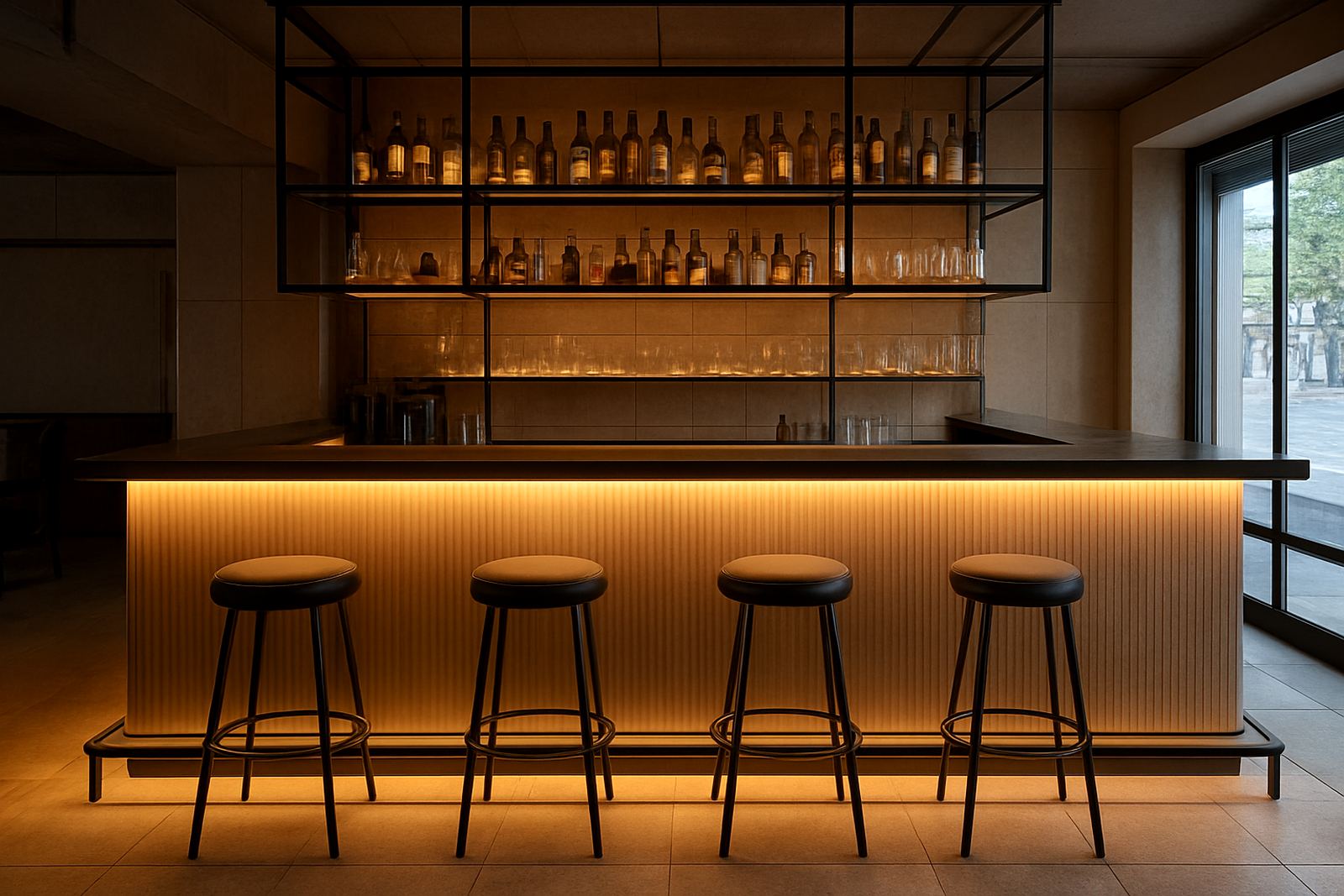
Bar counter lighting is the layer of light fitted above, under or around a counter so the serving area is easy to use and pleasant to sit at. In a restaurant, hotel bar, tasting room or home entertainment space, it helps define the counter edge, lifts the finish of timber, stone or painted panels, and makes bottles, menus and glass racks easier to read. Good counter lighting should look calm from the seating side and still give enough visibility for staff working behind the bar.
For South African sites, that often means planning for long trading hours, load-shedding backup and the warm reflected glow clients expect in evening service. In coastal areas like Durban and Umhlanga, fittings need to handle humidity and salty air. In Johannesburg and Pretoria, dust and day to night brightness changes matter more, especially where a shopfront or restaurant opens onto a busy street.
Sizes, profiles and finish options for different counters
There is no single bar counter lighting format that suits every counter. Short counters often need compact linear runs or a few downlights, while longer bars work better with continuous strips or spaced pendants. Illumin8d specifies lighting to suit the counter length, the ceiling height and the way people move through the room.
- Linear under-counter strips: typically 300 mm to 2000 mm per run, used for soft glow and edge definition.
- Above-counter pendants: usually 150 mm to 400 mm diameter shades, or slim suspended profiles for narrow bars.
- Hidden profile lighting: recessed or surface mounted channels from 10 mm to 50 mm wide, suited to clean architectural lines.
- Accent spots: adjustable heads for bottle displays, artwork and feature shelving.
Finish options can include black, white, brushed metal or colour-matched housings, depending on the counter material and the look of the room. Warm finishes pair well with timber and brass details, while darker housings disappear better against painted ceilings and shadow gaps. A careful spec helps prevent glare on polished stone or glass tops, which can otherwise make service awkward.
Where this lighting suits best in hospitality and homes
Bar counter lighting is used in many spaces, not only bars. It is a practical choice wherever the counter is a focal point and the owner wants the room to feel more intentional after dark. In restaurants, it can separate the service point from the dining area. In homes, it can turn a kitchen island or entertainment counter into a warm gathering space without overlighting the whole room.
- Restaurants with open service counters
- Wine bars, cocktail bars and tasting rooms
- Hotel lounges and guest entertainment areas
- Home bars, braai rooms and kitchen islands
- Shopfronts with serve-over or reception counters
For spaces in Cape Town and Durban, where evening foot traffic can stay high and windows remain open longer, the lighting should be planned to work in mixed indoor and outdoor conditions. In Midrand and Sandton, it often needs to sit alongside security lighting and brighter front-of-house illumination, so the counter still feels inviting without becoming too harsh.
Installation details, power needs and control options
Installation starts with the counter structure, ceiling access and power points. Most bar counter lighting uses low-voltage LED fittings with a driver hidden in a ventilated service position, usually inside joinery, above a ceiling line or in an adjacent cupboard. Where the counter includes timber cladding, stone, glass or metal trim, the fixing method must suit the surface and allow for future servicing.
Typical power requirements depend on the length and type of fitting, but a small feature bar may only need one circuit while larger hospitality counters may need separate circuits for service light, feature light and display light. Dimming is strongly recommended so the space can move from lunch service to evening trading without changing fittings. For load-shedding, many clients choose lighting to run on backup power, especially where the bar stays open during generator or inverter use.
Gas is not normally required for bar counter lighting, although some hospitality sites have nearby gas appliances in the same service zone. If that is the case, clear separation from heat sources and correct cable routing are important. Heat, moisture and vibration all affect component life, so the installation should be set out with access panels where needed, not sealed in permanently.
Lighting performance that works for service and atmosphere
The best bar counter lighting gives enough task visibility without flattening the mood. For most hospitality counters, a warm white colour temperature between 2700K and 3000K is preferred because it suits skin tones, wood finishes and evening trade. Where the counter is used for detailed prep or display, a slightly brighter neutral tone may be chosen for the working side only.
- Colour temperature: 2700K to 3000K for hospitality mood, 3500K where clearer task light is needed.
- Colour rendering: high CRI preferred so drinks, food and finishes read accurately.
- Dimming: smooth dimming from service brightness to evening ambience.
- Glare control: shielding, diffusers or hidden light sources to avoid direct glare at eye level.
- Ingress protection: higher protection ratings recommended where cleaning, condensation or splash risk is present.
A counter that is too bright can feel clinical, while one that is too dark creates service errors and slows staff down. The right balance depends on ceiling height, wall colour and how much daylight enters the room. In bright day trading, especially on north facing shopfronts, the counter lighting may need to compete with sunlight. At night, the same fitting should settle into a softer, more relaxed level.
Care, servicing and what to check before ordering
Bar counter lighting should be easy to maintain because hospitality sites rarely stop for long. Dust, fingerprints, steam and cleaning chemicals all affect the finish over time. Simple cleaning with a soft cloth and the correct non-abrasive product is usually enough for housings and diffusers. For pendant fittings, periodic alignment and tightening may be needed, especially in busy venues where vibration from doors or music can shift components a little.
Before ordering, check the counter length, ceiling height, available power point positions and whether the counter is fixed or likely to be remodelled later. It also helps to confirm what the counter surface is made of, since stone, timber and metal each need different fixing methods. If the space is in a coastal area, ask for fittings suitable for humidity and corrosion resistance. If the venue runs on backup power, note the inverter or generator capacity so the lighting load is properly matched.
- Counter length and the exact lighting zone
- Ceiling height and any bulkheads, beams or shelving above
- Power access and where drivers can be housed
- Desired colour temperature and dimming method
- Finish of the counter surface and surrounding joinery
- Location, especially coastal, dusty or high-traffic sites
Illumin8d works from Rosebank, Johannesburg and designs for projects across South Africa, including Sandton, Pretoria, Midrand, Cape Town, Durban and Umhlanga. For bar counter lighting that supports service and still feels considered after dark, the detail matters from the first drawing to post-install focusing.
Key facts
| Typical fitting length | 300 mm to 2000 mm per linear run |
|---|---|
| Colour temperature | 2700K to 3000K, with 3500K available for brighter task zones |
| Dimming | Compatible with leading edge, trailing edge or control system dimming, depending on driver |
| Material options | Aluminium profile, steel bracketry, diffused lens, decorative shade or recessed channel |
| Protection | Indoor and splash aware options available for hospitality use |
| Installation | Low-voltage LED with remote driver placement and service access |
| Lead focus | Shopfronts, restaurants and homes across South Africa |