
What wardrobe rail lighting does inside a fitted cupboard
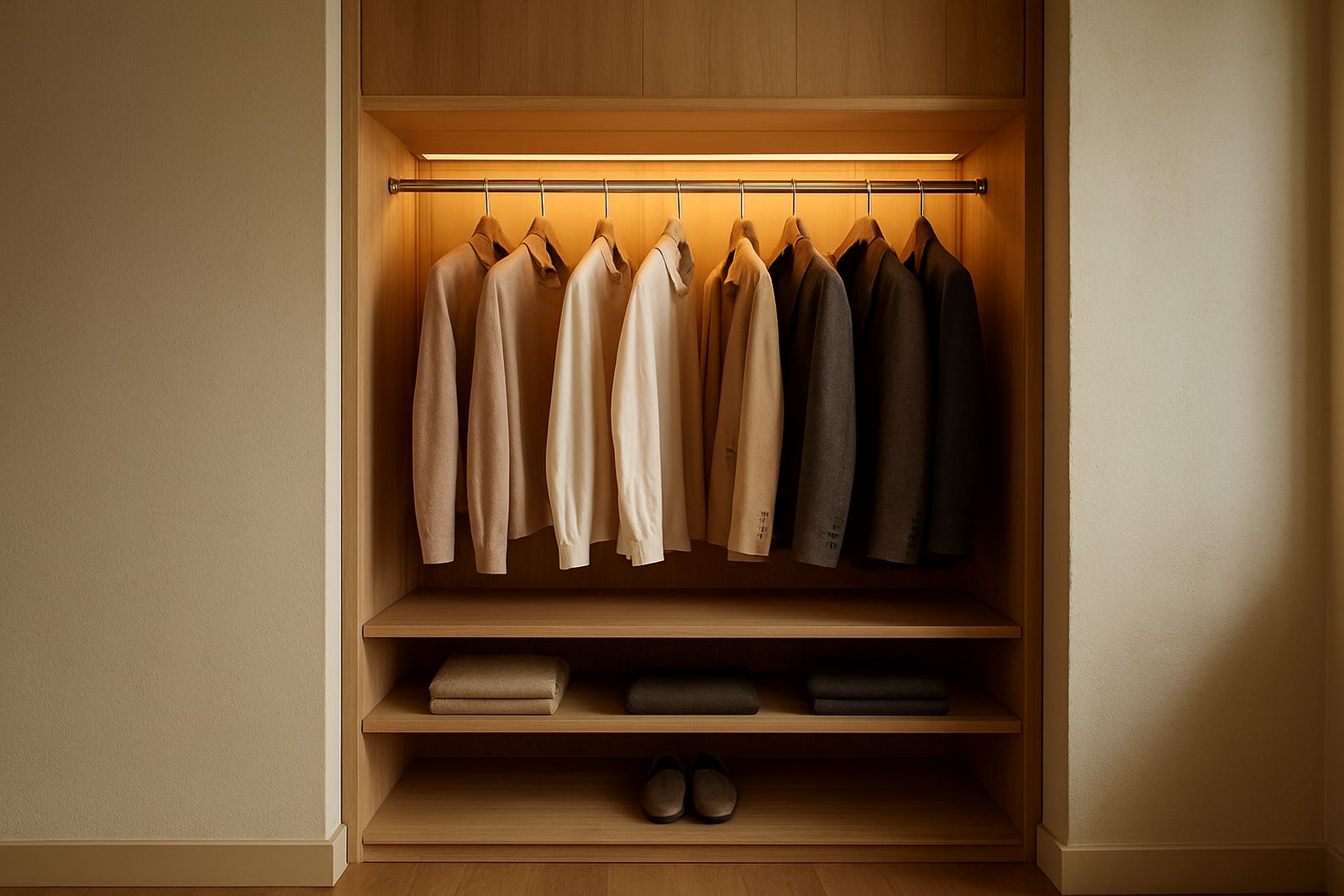
Wardrobe rail lighting is a slim light fitting mounted along, or just above, the hanging rail area so garments are lit evenly from the front. It is used to reduce shadows inside deep cupboards and to make colours, textures and labels easier to read in the early morning or at night. In practical terms, it helps you find what you need faster and it gives the cupboard a more premium fitted finish.
This type of lighting is suited to new wardrobes as well as retrofits in existing joinery. It works well where doors, shelves and hanging spaces already exist but the interior feels dark. In many homes around Johannesburg, Pretoria and Cape Town it is also used to help with load-shedding routines, so you can still see inside storage spaces when the mains power is off.
- Provides direct light onto hanging clothes and folded storage
- Reduces dark corners in deep cupboards and dressing areas
- Improves the finished look of built-in cabinetry
- Can be set up with sensors, switches or timed control
Size options and light output for different cupboard layouts
The right wardrobe rail lighting size depends on the internal width of the cupboard, the hanging depth and how the section is used. Short runs suit single hanging bays and narrow cupboard modules, while longer runs work better across full-width dressing rooms or twin hanging sections. For a neat result, the light should run close to the usable hanging area not awkwardly across a shelf edge.
Typical options include custom-cut lengths for exact cabinet widths, continuous runs for longer joinery and linkable sections where several bays need to be lit from one control point. Colour temperature is usually selected to suit the space. Warm white gives a softer home feel, while neutral white is often preferred for sharper visibility in modern fitted storage or retail back-of-house cupboards. A higher colour rendering level is useful when matching clothing colours, especially in homes where formalwear or uniforms are stored.
- Custom lengths to suit cupboard widths from compact single bays to full dressing walls
- Choice of warm white or neutral white light colour
- Low-glare diffused output for comfortable daily use
- Linkable or segmented layouts for larger wardrobes
Where wardrobe rail lighting suits best in South African spaces
This product suits bedrooms, dressing rooms, guest suites and main bedroom cupboards, especially where the interior is deep or the wardrobe doors cover most of the opening. It is also a good fit for hotel rooms, serviced apartments, furnished rentals and compact urban homes where storage needs to feel organised and easy to use. In retail or showroom settings, rail lighting helps with sample cupboards and fitted storage displays too.
In coastal areas such as Durban and Umhlanga, the fittings need to cope with humidity and salty air, so material choice matters. In inland areas like Pretoria and Midrand, the focus is often on heat, dust and reliable daily switching. For homes in Cape Town, where natural light can be strong by day but cupboards still go dark at night, a discreet rail light gives a proper balance without over-lighting the room. It is also useful in family homes where one person gets dressed while others are still asleep, since a sensor or dimmed setting can keep disturbance low.
- Main bedroom wardrobes and dressing rooms
- Guest rooms, passage cupboards and linen storage
- Hospitality rooms and serviced units
- Retail storage, fitting rooms and sample cupboards
Installation, wiring and power requirements
Wardrobe rail lighting normally runs on low-voltage LED power through a transformer or driver hidden in a nearby cabinet, ceiling void or service space. The fitting should be planned with the joiner, electrician and installer so cable routes, switch positions and sensor locations are sorted before the wardrobe is closed up. If the cupboard is already built, a retrofit can still be done, but access points may need to be created neatly.
No gas connection is needed. The main requirement is a safe power source that suits the chosen fitting and control method. Depending on the layout, the light can be linked to a door sensor, occupancy sensor, wall switch, hand sensor or a separate low-voltage control. In load-shedding conditions, it is worth confirming whether the wardrobe lighting is on the same circuit as other bedroom lights or whether it should be backed up with a battery solution. That small decision can make a big differance at night.
- Low-voltage LED operation for efficient daily use
- Requires a suitable driver or transformer matched to the total load
- Can work with door sensors, motion sensors or manual switching
- Best planned before final joinery, but retrofit options are available
Care, cleaning and servicing over time
Wardrobe rail lighting needs very little maintenance if it is installed correctly. A soft dry cloth is usually enough to remove dust from the visible profile and diffuser. In homes near the coast, wiping down lightly every so often helps prevent build-up from humidity and salt in the air. Harsh cleaners should be avoided because they can cloud the diffuser or damage finishes.
Over time, the main checks are whether the light still switches on cleanly, whether the sensor responds properly and whether the fitting remains secure inside the wardrobe frame. If a driver or connection fails, it should be tested by a qualified installer rather than opened casually. For built-in cupboards, it is also worth keeping a note of the fitting length and control type, so future replacement is straightforward. A tidy service record saves time later and avoids unnecessary guesswork.
What to check before ordering wardrobe rail lighting
Before ordering, measure the usable internal width of each wardrobe bay and note where the hanging rail sits in relation to shelves, drawers and side panels. The lighting should fit the real usable area, not just the overall carcass size. It also helps to know whether you want one light per bay, one continuous run, or a linked system across several sections.
Also check the finish of the wardrobe interior, the preferred light colour and whether you want the light to come on automatically. If the space is used by children, guests or elderly family members, simple operation can matter more than anything else. For projects in South Africa, it is wise to confirm power access, cable routes and any building or sectional title rules if the wardrobe forms part of a larger renovation. A clear brief upfront usually avoids a lot of rework later.
- Internal width, hanging depth and shelf positions
- Light colour preference and brightness level
- Control method: sensor, switch or timed operation
- Power access and driver location
- Whether the installation is new or a retrofit
Key facts
| Product type | Low-voltage LED wardrobe rail lighting |
|---|---|
| Typical lengths | Custom made to suit cupboard widths from compact bays to long dressing runs |
| Light colour options | Warm white or neutral white |
| Control options | Door sensor, motion sensor, wall switch or low-voltage control |
| Power need | Mains supply to a compatible driver or transformer, then low-voltage output to the fitting |
| Best suited to | Bedrooms, dressing rooms, fitted cupboards, hospitality rooms and retail storage |