
What LED track lights are and why they work so well
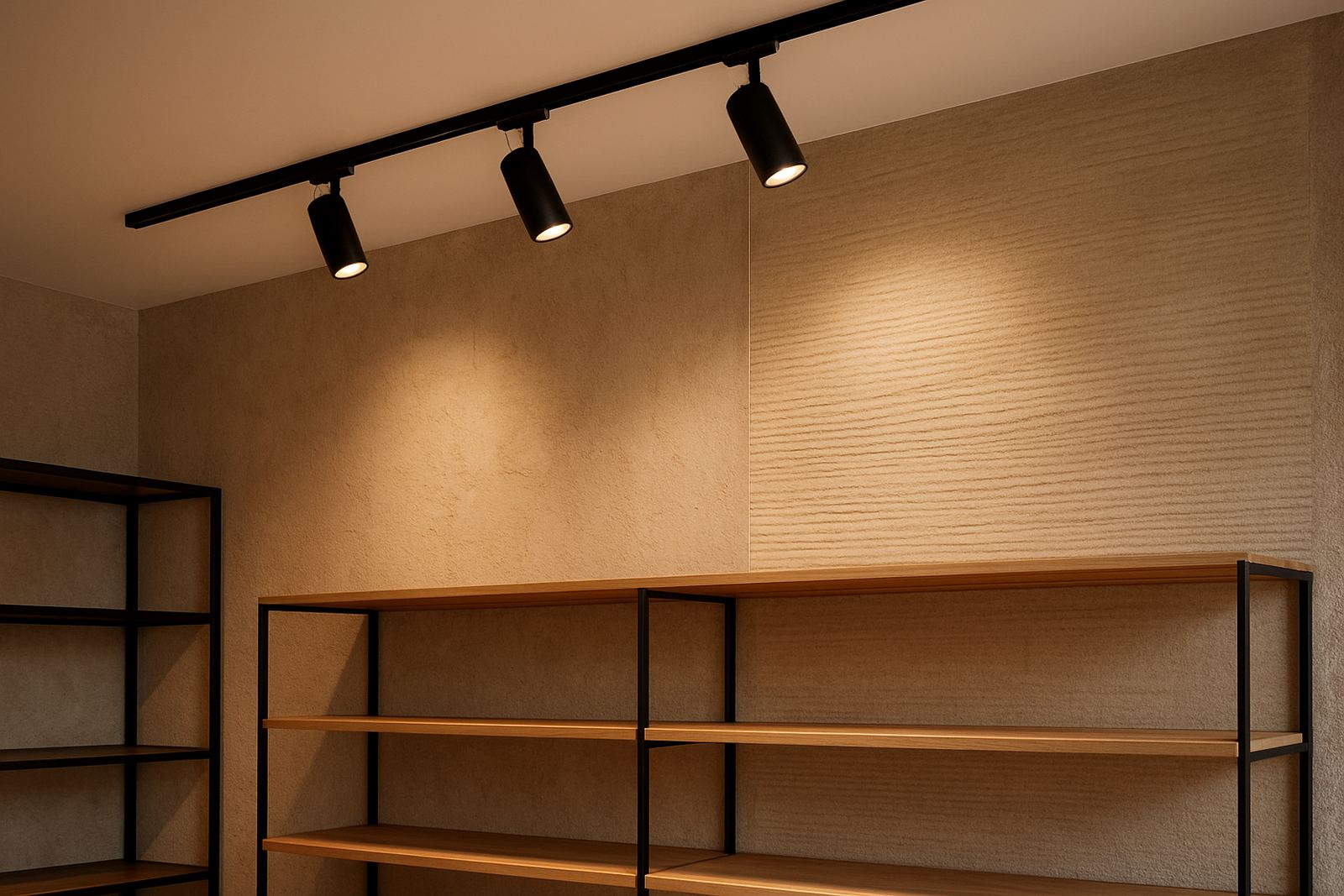
LED track lights are small directional fittings that clip onto a mounted track, letting you aim light exactly where it is needed. That makes them ideal when displays move, tables change position, or a home needs focused light for art, shelving or a passage wall. The track carries power along its length so one supply point can support several heads, which keeps ceiling work neat and practical.
For retail, the main benefit is control. You can light a new clothing rail one month and a window display the next without rewiring the whole ceiling. In homes, the same system works well over gallery walls, kitchen counters and double-volume spaces. In restaurants, track lights help you highlight artwork, bar areas and feature finishes without washing the whole room in flat light.
In South African spaces, track lighting also helps with load-shedding planning. LED fittings use far less power than older lamp types, so they are easier to run on inverter backed circuits or generator supply where needed. The fittings stay cooler too, which matters in compact shops and warm kitchens.
- Directional light for walls, merchandise and feature details
- Easy to reposition heads without changing the full installation
- Lower power draw than older halogen track fittings
- Suitable for retail, hospitality and residential interiors
Track lengths, head styles and finish options
LED track lights are usually supplied as single or multiple heads on a straight track, but there are also corner pieces and joiners for longer runs. Common track lengths are 1 metre and 2 metres, with custom runs built from linked sections where a space needs more coverage. Head sizes vary by beam angle and output, from compact spot heads for tight accent work to larger heads for broader wash light.
For specification, we look at how wide the beam should be, how far the fittings sit from the wall and whether the track is ceiling mounted or suspended. Black and white finishes are the most common because they disappear into the ceiling, while dark bronze or silver can suit certain interiors. In a shopfront, a dark finish often looks cleaner against a plain ceiling. In a home with light ceilings, white usually blends in better.
There is no need for gas or special fuel supply with LED track lights, only a proper electrical feed. What matters is the circuit planning, the dimming method and the load on the lighting line. If the ceiling is concrete, brick or plasterboard, the fixing method must suit the substrate so the track stays straight and secure.
- Standard lengths: 1 metre and 2 metre sections
- Heads can be fixed spot, swivel or narrow beam types
- Common finishes include black, white and silver tones
- Track can be surface mounted or suspended where ceiling height allows
Best places to use them in retail, hospitality and homes
LED track lights suit spaces that change often or need focused visual interest. In retail, they work on clothing stores, showrooms, galleries, pharmacies and window displays. In restaurants, they are useful over tabletops, bar counters, open shelves and feature walls. At home, they suit living rooms, studies, kitchens, passageways and rooms with artwork or built-in shelving.
The key is to match the light to the task. A shopfront may need a tighter beam for mannequins, while a restaurant may need a softer beam with better colour rendering for food and finishes. In a home, the same fitting can be used to light a painting, a coffee station or a hallway wall. For coastal homes in Durban or Umhlanga, we also pay attention to corrosion resistant hardware and finishes where humidity is a factor.
In offices or mixed-use spaces, track lights can be used to mark reception zones or display shelves. Because the heads move, the layout can adapt when furniture shifts. That is useful in spaces where tenants change or where a business updates its branding every few years.
- Shopfronts and changing retail displays
- Restaurants, bars and hospitality interiors
- Homes with artwork, shelving or feature walls
- Mixed-use spaces that need flexible accent lighting
Installation needs and electrical planning
Track lighting is straightforward to install, but it still needs proper planning. The electrician must confirm the circuit size, switching arrangement and whether the track will be controlled on its own or with other lights. If dimming is required, the dimmer must be compatible with the LED driver type. A poor match can cause flicker, limited dimming range or humming sounds.
For shopfronts and restaurants, we often recommend zoning the lighting so the front of house, display wall and back areas can be controlled separately. That gives staff better control during trading hours and helps reduce wasted power after closing. Where ceilings are high, the track position and beam spread must be checked carefully so the light lands where it should, and not too high above the product or seating.
On site, the installer should verify ceiling type, cable route and access to the power point before fixing anything. In older buildings around Johannesburg or Pretoria, the ceiling void can be tight, so a clean route for wiring matters. If you are fitting tracks in a renovation, check whether the existing circuit can carry the new load without overloading the board.
- Confirm supply point, circuit size and switching plan first
- Use dimmers only where the LED driver is compatible
- Allow for zoning in retail and hospitality spaces
- Check ceiling type and cable access before installation starts
Maintenance, cleaning and long term care
LED track lights need very little maintenance, but they do perform better when kept clean and correctly focused. Dust on the lens or reflector reduces output and can change the beam shape, especially in restaurants or busy retail areas. A light wipe with a dry microfibre cloth is usually enough for the head and track body. Avoid harsh cleaners that may mark the finish or cloud the lens.
If the heads are moved often, check that the locking mechanism still grips properly. Loose heads can drift over time and point away from the intended target. For commercial sites, it helps to include lighting in regular maintenance checks, especially after ceiling work, shop fitting changes or cleaning around the ceiling line. In coastal areas, also inspect fixings for any sign of corrosion, not all fittings are the same in salty air.
Most LED track systems last well when the driver and wiring are installed correctly, but any flicker, overheating or uneven dimming should be checked early. A small issue can become a bigger fault if it is left too long.
- Dust lenses and heads regularly for better light output
- Check locking joints if heads are moved often
- Inspect coastal installations for corrosion or marking
- Fix flicker or heat issues early
What to check before you order track lights
Before ordering, start with the space and the purpose of the light. Decide whether you need tight accent beams, wider coverage or a mix of both. Measure the ceiling area, note the ceiling height and decide how long each track run should be. If the room has beams, bulkheads or angled ceilings, those details affect the layout and the final light spread.
You should also confirm the finish, dimming requirement and whether the light source needs to show product colour accurately. For retail clothing and food display, colour quality matters a lot. In a home, the question is often whether the light should blend quietly into the ceiling or stand out as a feature. If the project is in a humid or coastal area, ask about suitable materials and finishes before you place the order.
At Illumin8d, we help clients match track lights to the overall lighting plan so the result feels deliberate, not pieced together. That includes checking beam angles, spacing and the number of heads per run. A well planned track line can do more than one job, but it should still suit the room shape and the actual use of the space.
- Measure track lengths and ceiling height accurately
- Choose the right beam angle for the task
- Confirm dimming, finish and colour quality needs
- Check whether the site needs coastal-friendly materials
Key facts
| Product type | LED track lighting for accent and directional illumination |
|---|---|
| Typical track lengths | 1 metre and 2 metre sections, with linked runs available |
| Beam options | Narrow, medium and wider accent beams |
| Mounting | Surface mounted or suspended, depending on ceiling and layout |
| Power requirements | Standard electrical supply, with compatible LED driver and dimmer where specified |
| Best use areas | Shopfronts, restaurants, homes, galleries and display spaces |