
What canopy entrance lights do at a front door
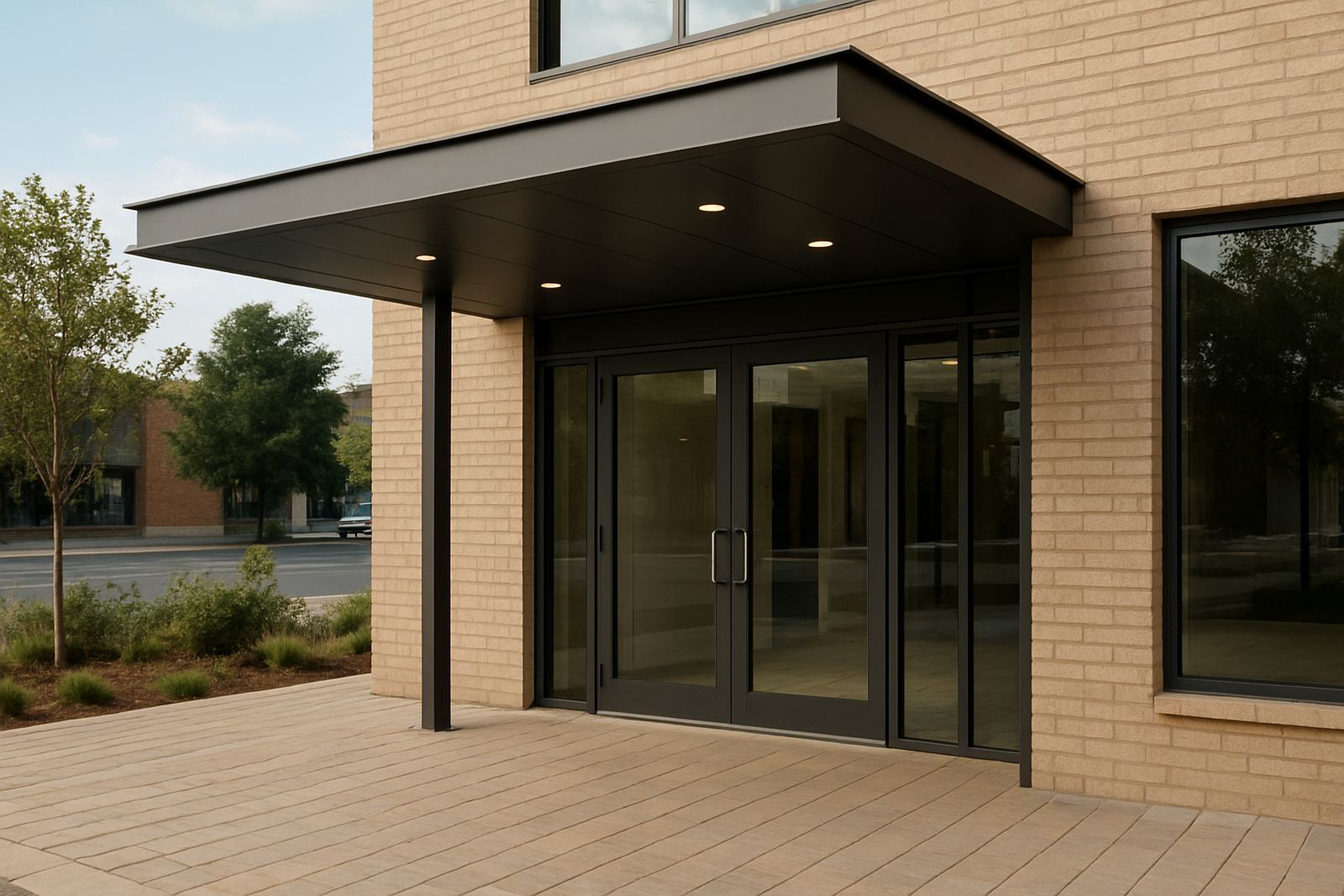
Canopy entrance lights sit under or beside an overhang, portico or covered entry so the doorway reads clearly from the street. They are usually chosen to make the entrance visible, reduce dark patches around steps, and give visitors a proper sense of where to go after dark.
In Johannesburg, Pretoria, Cape Town, Durban and Umhlanga, entrances face different conditions. Inland sites deal with dust and dustier air during dry months, while coastal sites often need fittings that handle humidity and salt exposure better. A good canopy fitting should throw light onto faces and the threshold without blasting light into passing traffic or neighbouring windows.
- Useful for apartment entrances, retail shopfronts, restaurant foyers and house front doors
- Improves visibility at steps, keypads, intercoms and door handles
- Can be matched to modern, classic or understated architectural lines
Common sizes, finishes and beam options
Canopy entrance lights are supplied in a range of compact sizes so they do not overpower the façade. Small units are often used for narrow doors and townhouse entries, while longer linear fittings suit double doors, deeper canopies and wider commercial fronts. A typical installation ranges from about 200 mm to 1200 mm in length, with custom lengths possible for larger entrances.
Most projects use wall-mounted, recessed or surface-mounted fittings. Shade depth and lens style affect the light spread, so it helps to match the beam to the width of the opening and the height of the canopy. Warm white is often preferred for homes and dining areas, while a neutral white is commonly used for retail and security focused entries.
- Lengths: 200 mm, 300 mm, 600 mm, 900 mm and 1200 mm
- Power: low-watt LED units from about 6 W to 24 W
- Colour temperature: 2700K, 3000K, 4000K or as specified
- Beam styles: narrow, medium or wide spread depending on canopy depth
Where canopy lights work best in South African settings
These fittings suit places where the entrance is partly sheltered but still needs strong, controlled light. Shopfronts use them to help customers find the main door. Restaurants use them to create a clear arrival point from the pavement or parking area. At home, they are handy for front porches, covered stoops and entrance alcoves.
On commercial sites, canopy lighting often works alongside signage, bollard lights and security lighting. On homes, it can be paired with wall lights or path lighting so there is no harsh contrast between the gate and the front door. In busy streets or mixed-use centres, the right fitting helps reduce glare and keeps the façade looking tidy at night.
- Shopfronts with deep awnings or steel canopies
- Restaurants with covered verandas or entrance recesses
- Homes with porches, stoops and gated driveways
- Body corporate entrances where neat appearance and safe access both matter
Installation notes and power requirements
Canopy entrance lights are normally connected to mains power by a qualified installer and should be planned before ceiling finishes are closed up. Most fittings run on standard 230 V supply, with LED drivers or control gear concealed in the canopy or nearby service space. No gas supply is required. If the site uses timers, photocells or smart controls, the wiring should be set up so the lights come on when needed and stay consistent during load-shedding and power restoration.
For exterior use, the fitting and connections should be selected for the weather exposure at that point. In coastal areas such as Durban and Umhlanga, corrosion resistance matters. In open street-front situations, the installer should check fixings, waterproofing, and access for future servicing. If the canopy is shallow, the fitting height and beam angle need to be checked carefully so the lamp does not shine straight into people’s eyes.
- Standard supply: 230 V mains
- No gas connection needed
- Optional control: timer, photocell, manual switch or building management tie-in
- Recommended for installation by a licensed electrical contractor
Care, cleaning and servicing between seasons
These lights do not need much daily attention, but they should be checked a few times a year. Dust, insect build-up and coastal grime can reduce output and make the entrance look dull. A gentle wipe with a soft cloth and mild cleaner usually keeps lenses clear. Avoid abrasive pads because they scratch the diffuser and affect light spread.
If the entrance is in a busy retail centre, or a restaurant with constant foot traffic, it helps to include the fitting in the normal maintenance schedule. Loose screws, water marks, flickering and faded seals should be picked up early. That is especially important before the rainy season in Gauteng and after strong coastal winds. A small fault left too long can lead to a bigger repair later on.
- Clean lenses and trims with non-abrasive products
- Check seals after heavy rain or wind
- Look for flicker, dimming or uneven light spread
- Replace failed drivers or LED modules promptly
What to check before you order
Before ordering canopy entrance lights, measure the canopy depth, mounting height and the width of the door opening. Also check whether the entrance needs accent light only or enough light for safe after-hours access. If the property has branding on the façade, the fitting should not wash out the signage or throw unwanted shadows on the lettering.
It also helps to confirm the finish and colour temperature before supply. A warm tone often suits homes and hospitality spaces, while a cooler tone can suit commercial entries that need a sharper, cleaner look. If the site has existing wiring, check whether the circuit can handle the load and whether there is space for drivers or control gear. A proper site check up front saves time later on.
- Canopy depth and mounting height
- Door width and any side panels or glazing
- Preferred colour temperature and brightness level
- Whether the entrance needs dimming or fixed output
- Exposure to rain, dust, salt air or vandal risk
Design support for entrances that must work after dark
Entrance lighting should do more than shine a light over the door. It should guide people in, support the building style and hold up in everyday use. For new builds and upgrades, canopy lights are often chosen as part of a wider lighting plan that includes shopfronts, dining areas, garden paths or home forecourts.
Illumin8d works on architectural and decorative lighting for shops, restaurants and homes across South Africa, with projects in Rosebank, Sandton, Pretoria, Midrand, Cape Town, Durban and Umhlanga. We look at the entry in context, then specify fittings that suit the space, the structure and the way people actually move through it. That usually means a cleaner entrance, better evening visibility and fewer surprises once the sun goes down.
Key facts
| Product type | Canopy-mounted entrance lighting |
|---|---|
| Typical lengths | 200 mm to 1200 mm, with custom options available |
| Input voltage | 230 V AC mains |
| Power range | About 6 W to 24 W LED, depending on size and output |
| IP rating | Selected to suit sheltered exterior use, higher for exposed sites |
| Common applications | Shopfronts, restaurants, homes, foyers and covered entries |