
Why a dining chandelier changes the room
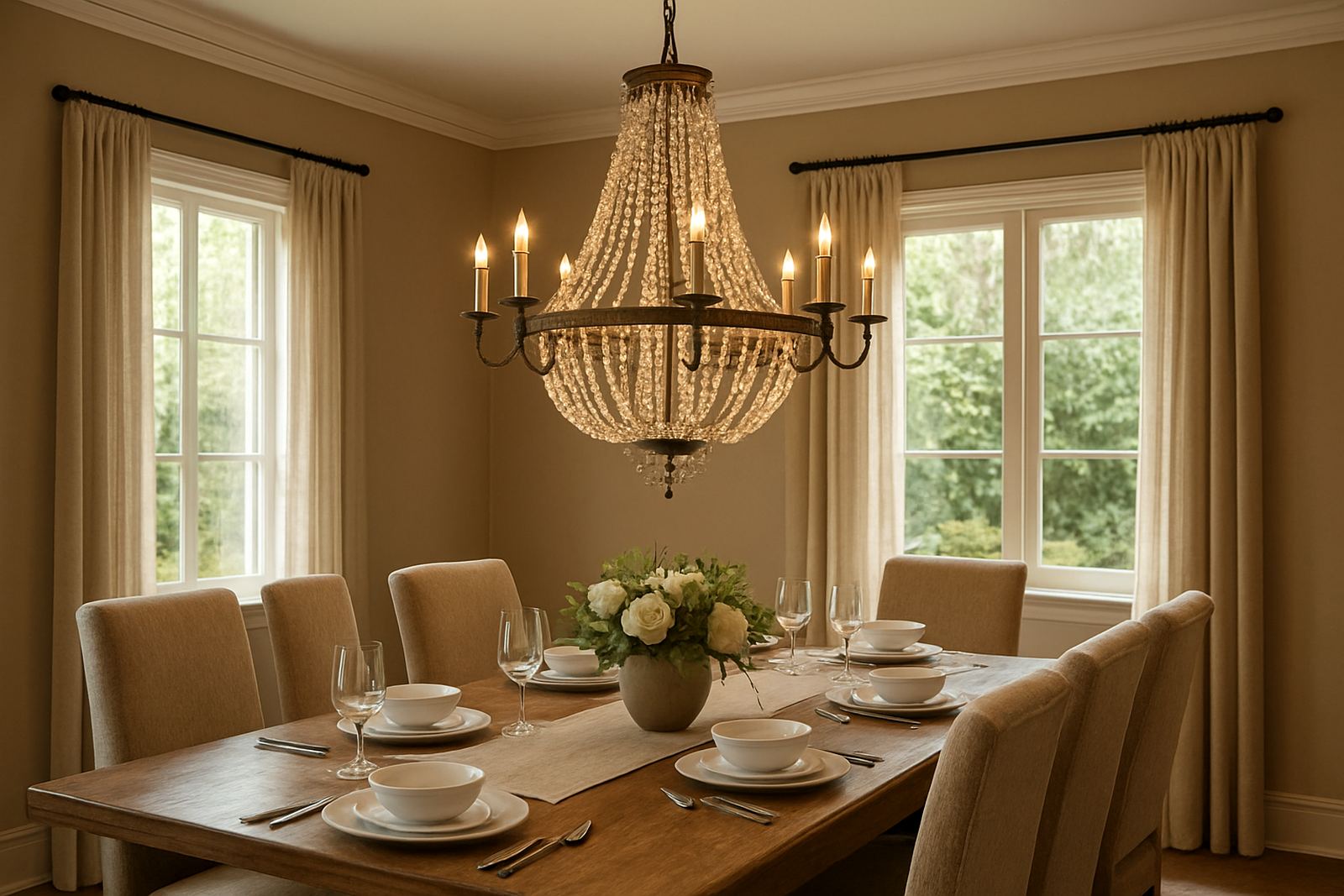
A dining chandelier does more than fill the centre of a room. It sets the mood over the table, helps separate the dining zone from the rest of the space and gives the room a strong point of focus. In homes it can make an open-plan area feel more intentional, while in restaurants it helps create a clear guest experience from the first step inside.
For a dining room in Johannesburg, a larger statement fitting can suit a double-volume space with high ceilings. In coastal homes in Durban or Umhlanga, we often allow for air movement and corrosion resistant finishes because humidity can affect exposed metal over time. The right chandelier should look balanced from every angle, not just when viewed from the front.
We design these fittings for practical use too. The light level must support eating, reading menus and moving safely around the table, especially during load-shedding when dimmable LED fittings and battery-backed circuits can make a real difference. A good dining chandelier should feel special, but it still has to work hard every evening.
Sizing and style options for different ceilings
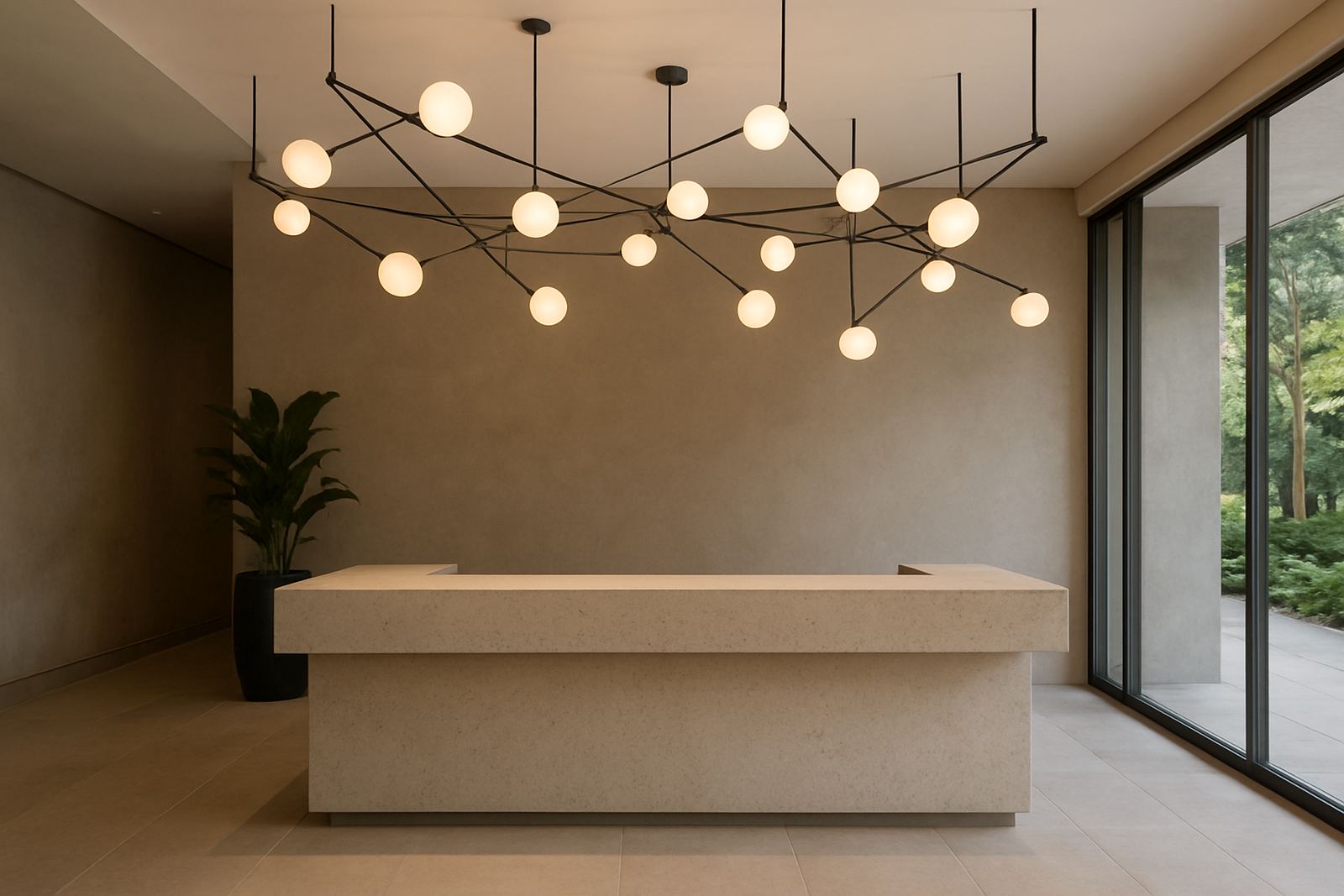
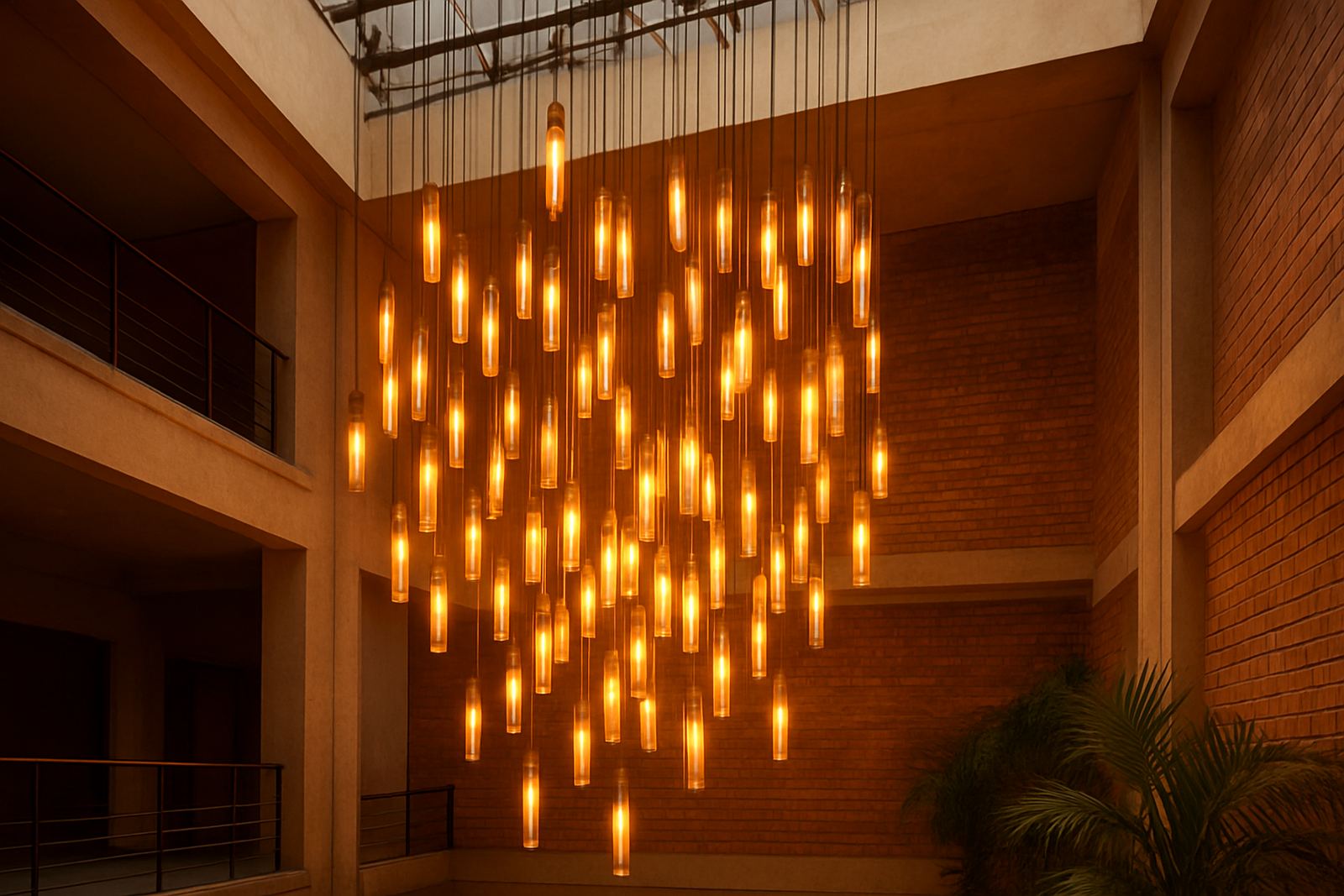
Dining chandeliers come in many forms, from compact single-drop pieces to wide multi-arm fittings and linear cluster designs. The right size depends on table length, ceiling height and the overall scale of the room. A round table usually suits a central circular form, while a long rectangular table often looks better under a linear or elongated chandelier.
As a practical guide, the fitting should usually sit about 75 cm to 90 cm above the tabletop, depending on the scale of the piece and the line of sight across the room. In homes with standard 2.4 metre ceilings, a lower-profile design is often safer and more comfortable. In restaurants with 3 metre plus ceilings, there is more scope for height and drama, but the pendant still needs to stay within the clear movement zone.
We can work with a range of finishes and forms, including hand-finished metal frames, glass elements, fabric shades, crystal-style detail and mixed-material designs. The aim is not just decoration, it is proportion. A fitting that is too small disappears, and one that is too large can overpower the table and cause glare.
Where dining feature chandeliers suit best
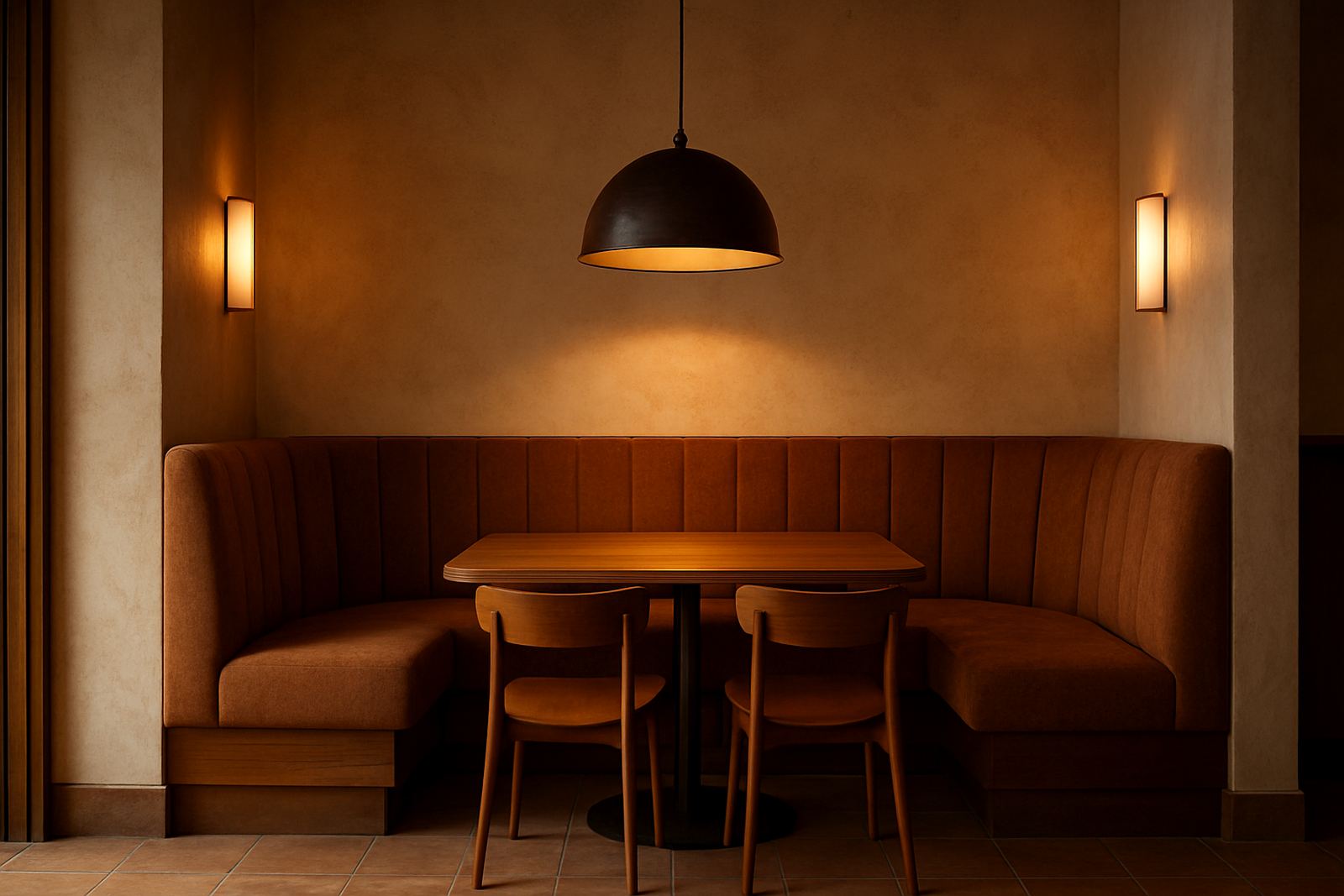
These fittings work in many settings, but they need to be matched to the space honestly. In a home, a chandelier over the dining table can anchor the room and create a more considered feel, especially where the dining area opens into the kitchen or lounge. In a restaurant, the same kind of fitting can help define VIP tables, private rooms or a central feature area.
For shopfront hospitality spaces, such as wine bars, delis or display-led venues, the chandelier can carry the brand mood from the street to the seating area. In Pretoria and Sandton, we often use more refined forms for executive homes and formal dining rooms. In Cape Town, lighter coastal finishes and clean silhouettes are often preferred. In Durban and Umhlanga, humidity resistant materials and careful maintenance access matter more than people first expect.
Depending on the room, we can also coordinate the chandelier with wall lights, downlights and cove lighting so the table is highlighted without leaving the rest of the room too dark. That balance matters because a feature fitting should create atmosphere, not leave sharp shadows over faces or plates.
Power, dimming and installation planning
Before ordering, it is important to confirm what the ceiling can support and where the power point sits. Some chandeliers are light enough for a standard ceiling box, while others need proper structural fixing into a joist, slab or support frame. If the fitting is large or heavy, installation planning must happen early so the electrician and installer are working from the same layout.
Most dining chandeliers are supplied for LED lamps or integrated LED modules. We often recommend dimming so the light can shift from bright for cleaning or family meals to softer for evening use. If the home or restaurant has backup power, we can specify low-wattage fittings that draw less load, which helps during power interruptions and keeps the system more manageable.
For restaurant projects, access for future maintenance is a real issue. A chandelier that is beautiful but difficult to clean or service becomes a problem fast. We therefore plan for safe lowering points, accessible drivers where needed, and installation coordination that allows the fitting to be aligned correctly over the exact centre of the table. Even a small offset is noticeable.
Care, cleaning and long-term servicing
Dining chandeliers need regular care to keep them looking good and performing properly. Dust, cooking vapour and fine particles from open windows can settle on the frame and diffuser surfaces, especially in kitchens that open directly into the dining area. In coastal towns, salt in the air can also dull certain finishes if they are not wiped down from time to time.
For most fittings, a soft dry cloth is enough for routine care. Glass parts can be cleaned with a suitable non-abrasive cleaner, but the power should be isolated first and the fitting allowed to cool. We do not recommend harsh chemicals on plated or painted surfaces because they can stain or lift the finish. If the chandelier includes crystals, shades or small decorative elements, each part may need a gentler clean by hand.
Servicing should include checking the suspension points, wiring condition, lamp condition and dimming function. If the fitting flickers, sits out of level or has changed colour temperature over time, it is worth inspecting early rather than waiting for failure. A well maintained chandelier should last for years, but only if it is treated as a working electrical fitting and not just a decorative piece.
What to confirm before you place an order
Ordering the right chandelier starts with a few basic checks. First, confirm the table size and the room size. Next, measure the ceiling height, note any bulkheads, beams or air-conditioning vents, and decide whether the fitting should hang directly over the centre or slightly off-centre for room planning reasons. If the ceiling is sloped or unusually high, the suspension method may need to change.
You should also confirm the preferred finish, brightness level and lamp type. Some clients want a soft decorative glow, while others need enough light for full dining use. If the project is a restaurant, it is also important to know the cleaning routine, opening hours and whether the fitting must survive more frequent handling or repositioning. For homes, the main question is often how formal the room should feel at night versus during the day.
At Illumin8d, we help clients in Rosebank, Sandton, Midrand, Pretoria, Cape Town, Durban and Umhlanga choose a chandelier that suits the room properly. Our team can assist with concept design, fixture specification, layout plans, site lighting audits and post install focusing where needed. If you are unsure about scale, send the room measurements and table size through the enquiry form and we can advise on the next step.
Key facts
| Mounting | Ceiling suspended, centre hung or offset where the room requires it |
|---|---|
| Typical drop | 750 mm to 1800 mm from ceiling, depending on ceiling height and table size |
| Recommended clearance | 75 cm to 90 cm above tabletop |
| Light source | LED lamps or integrated LED modules |
| Control options | On-off, dimming, scene control and timed switching |
| Common finishes | Black, brass tone, bronze, matt white, glass and mixed metal |