

Home / Lighting / Restaurant Booth Lighting

Lighting

Restaurant Booth Lighting

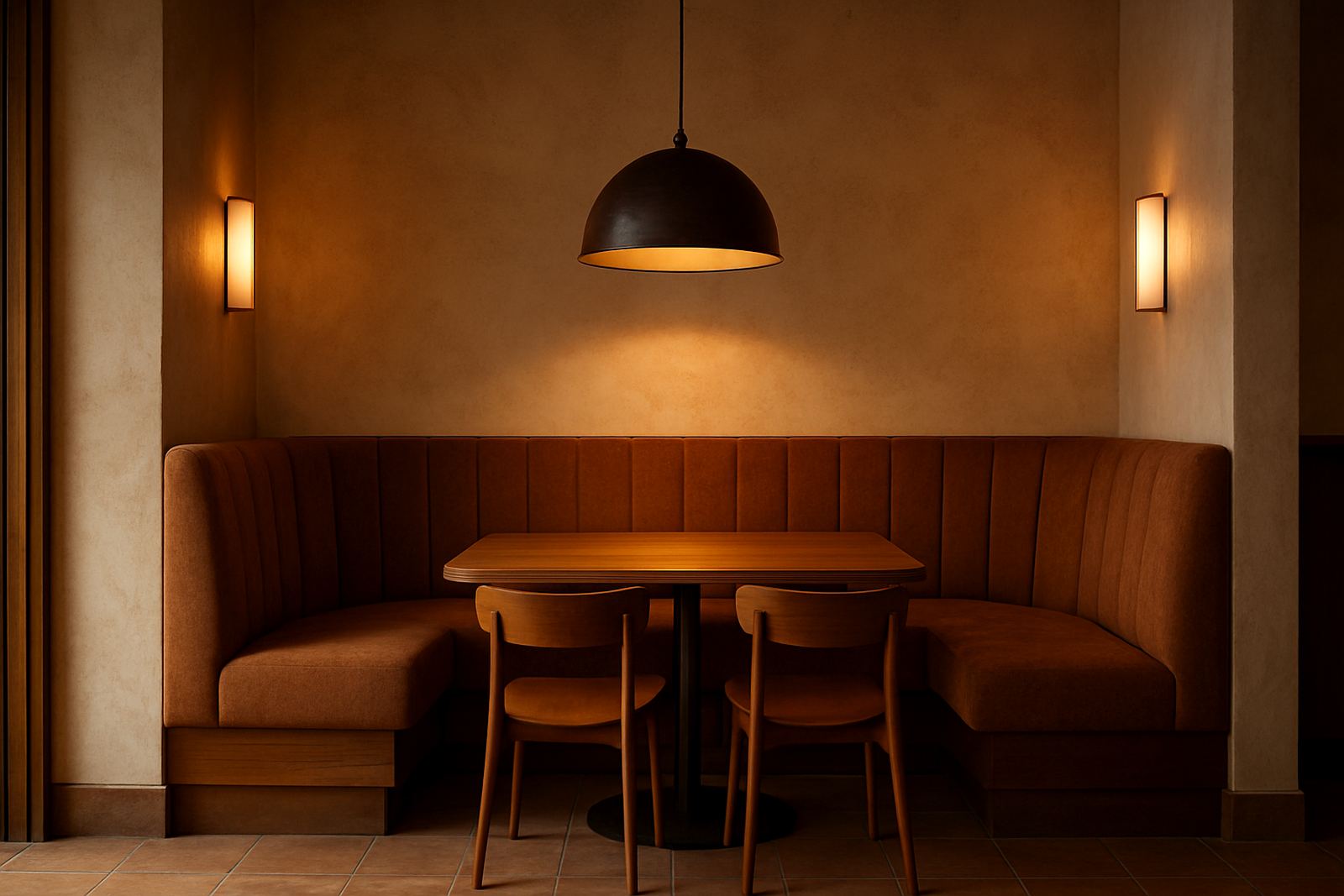
Restaurant booth lighting helps guests feel comfortable while keeping tables bright enough for menus, notes and easy conversation. Illumin8d designs booth lighting for restaurants in Rosebank, Johannesburg and across South Africa, with options suited to new fit-outs and upgrades alike.

Restaurant Booth Lighting

What restaurant booth lighting does in a dining room

Booth lighting is the layer of light that sits above or around a booth to make the seating area feel private, warm and usable. In a restaurant, that usually means softer ambient light with a more focused beam at table level so guests can read menus without glare on glassware or polished tabletops. The aim is simple: people should feel relaxed, and staff should still be able to see what they are serving.

Good booth lighting also helps zone the room. It can break up a long dining area, bring structure to banquette seating, and support the restaurant’s style whether the space is casual, fine dining or family focused. In South African restaurants, we often factor in bright daylight at lunch, darker winter evenings, and load-shedding back-up plans so the room still works when power is limited.

  • Soft enough for comfort, bright enough for menus
  • Works with wood, fabric, leather and exposed brick finishes
  • Helps define each booth without making the room feel closed in

Popular booth lighting sizes and mounting options

Booth lighting is normally designed around the size of the booth, the ceiling height and how the seating is built. A small two-seater booth may need a single centred pendant or a narrow track head, while a larger four to six seater booth may need two fittings spaced across the table line. For very high ceilings, we often use suspended pieces with adjustable drop lengths so the light lands where it should.

Typical drop lengths range from 450 mm to 1200 mm, though deeper booths or feature ceilings may call for more. Shade diameters commonly sit between 180 mm and 450 mm, and linear fixtures are often specified from 600 mm to 1200 mm long. If the restaurant has low ceilings, compact surface fittings or wall-mounted options can keep head clearance comfortable. In Cape Town and Durban, we also think about corrosion resistance near coastal humidity, because fittings that look fine on day one can stain or tarnish quickly if the material choice is wrong.

  • Suspended pendant lights for feature booths
  • Linear lights for long banquettes and bar-side booths
  • Wall lights for narrow aisles or lower ceilings
  • Surface mounted options where ceiling voids are limited

Where booth lighting works best in South African restaurants

Booth lighting suits restaurants that need a clear customer focus point and a consistent dining experience. It works well in pizza bars, steakhouses, cafés, hotel dining rooms, wine bars, high-volume family restaurants and premium tasting spaces. It is especially useful where table turnover matters, because properly lit booths feel inviting and practical at the same time.

In Johannesburg and Pretoria, booth lighting often has to balance strong sunlight by day with a welcoming evening feel. In Cape Town, the challenge is sometimes glare from windows or reflective finishes. In Durban and Umhlanga, we pay close attention to moisture, salt in the air and the way fabric seats and timber finishes age over time. The right booth light does not shout, it supports the room and keeps the dining area looking organised, even on a busy Friday night.

  • Restaurant booths and banquette seating
  • Private dining corners and semi-private alcoves
  • Front-of-house areas that need a stronger design feature
  • Renovations where existing light levels are uneven

Installation, wiring and power planning

Booth lighting should be planned with the electrical layout, ceiling structure and service access in mind. Most fittings use standard mains power, but the details matter: dimming compatibility, transformer space, switching zones and safe cable routes all need to be checked before installation. In a fit-out, we coordinate the light positions with joinery, ceiling finishes and seating layout so the final result lines up properly, not just roughly close.

For restaurants, we also look at maintenance access. If a fitting needs lamp changes, cleaning or adjustment, the design should allow that without disturbing guests or removing the whole booth area. Where load-shedding backup power is in place, the lighting load should be kept sensible, especially in larger dining rooms where too many fittings can drain battery systems quickly. A well planned booth light often uses dimmable LEDs in the 6W to 15W range per fitting, depending on size and output required.

  • Confirm ceiling height, ceiling type and fixing points
  • Check dimming control and switch zoning before ordering
  • Plan for cleaning and future lamp replacement
  • Allow for backup power if the restaurant runs on inverter or generator support

Finish choices that suit dining room use

Restaurant booth lighting should look good at close range and still hold up under regular cleaning. Matte black, brushed metal, powder-coated finishes and warm neutral shades are common choices because they sit comfortably in most interiors. Clear glass, opal glass and fabric shades each create a different effect, with opal generally giving softer light and clearer glass adding a more decorative touch. For coastal areas, we usually lean toward finishes that handle humidity better and dont corrode quickly.

The finish should also match the rest of the room. If the booths have leather seating and dark timber, a lighter shade or warmer tone can stop the space from feeling heavy. If the dining room already has a lot of pattern or colour, simpler booth fittings help calm the room down. We also consider the ceiling colour, because black fittings against a dark ceiling disappear nicely while pale ceilings can make a fixture stand out more than intended.

  • Matte and low-gloss finishes reduce visual clutter
  • Opal or frosted shades soften brightness at eye level
  • Metal fittings suit busy service areas and frequent cleaning

Care, servicing and what to check before you order

Booth lighting is easy to live with when it is chosen correctly, but it still needs sensible care. Dust and grease build up over time, especially in restaurants close to open kitchens or high-traffic entrances. A soft dry cloth usually works for everyday cleaning, while shade material and lamp type should guide deeper servicing. If the fitting is high, make sure there is a safe way to reach it without disturbing the booth or damaging upholstery.

Before ordering, check the table size, ceiling height, desired light colour temperature and whether the booth needs a single feature light or a layered arrangement. Warm white in the 2700K to 3000K range is usually preferred for dining areas, but some restaurants use slightly cooler light where the menu or branding calls for a sharper look. Ask whether the fitting is dimmable, whether spare parts are available and whether the finish will suit your cleaning routine. The wrong fitting can look fine on a sample sheet, then show fingerprints and dust very quickly in real service.

  • Measure booth width, table depth and ceiling height
  • Confirm warm white or neutral white output before purchase
  • Ask about dimming, spare parts and access for servicing
  • Check that the fitting suits the restaurant’s cleaning schedule and humidity level

Key facts

Light outputTypically 400 to 1200 lumens per fitting, depending on size and shade type
Colour temperature2700K to 3000K for warm dining areas, or 3500K where a cleaner white is needed
PowerUsually 6W to 15W LED per fitting for booth use
Drop lengthCommonly 450 mm to 1200 mm from ceiling to fitting base
Recommended spacingAbout 600 mm to 1200 mm between fittings on long booths, subject to table size
Finish optionsMatte black, brushed metal, powder-coated colours, opal glass and clear glass

What our Lighting Design customers say

Verified Google reviews

Questions we get asked

Is booth lighting better than general ceiling lighting for restaurants?

Booth lighting gives more control over the table area, so guests get a warmer and more private feel while menus stay readable. It usually works best alongside general ambient lighting, not instead of it.

Can booth lighting work in a restaurant with low ceilings?

Yes. Low ceilings often suit compact surface fittings, wall lights or short-drop pendants. The key is keeping enough head clearance and avoiding glare at eye level.

What should I check before fitting booth lights in a coastal restaurant?

Check the material finish, corrosion resistance and ease of cleaning. In humid coastal areas, the wrong finish can age quickly, so it is worth choosing fittings that can handle moisture and regular wiping.

Planning something? Send the team a message.

Contact form