
What recessed downlights are and how they work
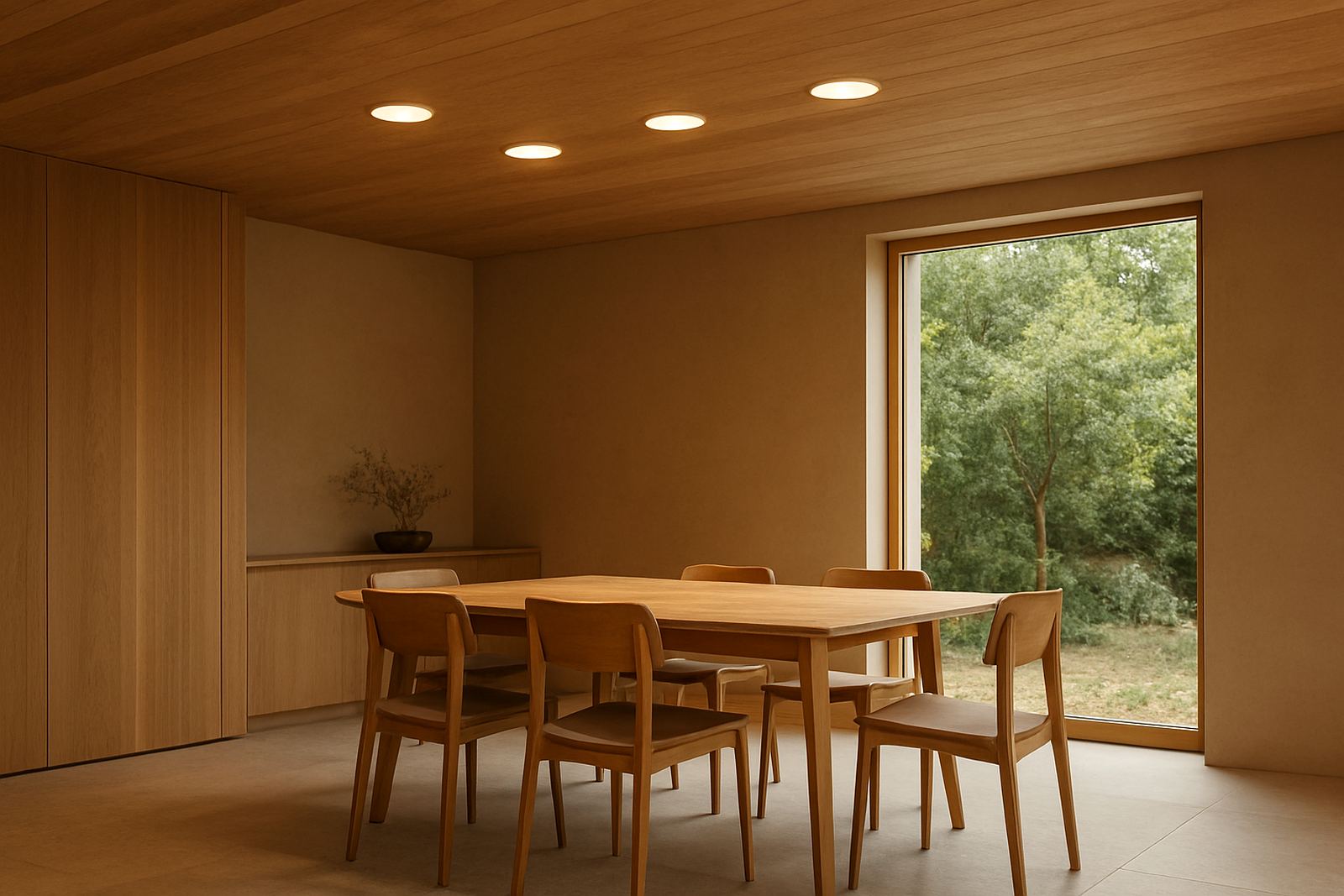
Recessed downlights sit inside the ceiling so only the trim and light source are visible from below. That makes them ideal for spaces where a tidy ceiling line matters, especially in modern homes, eating areas and retail interiors where signage, finishes and shelving already carry a lot of visual weight. The fitting itself is installed into a cut-out in plasterboard, bulkheads or suitable suspended ceilings, then connected to the lighting circuit above the ceiling.
Most recessed downlights use LED modules now, which means lower power use, less heat at ceiling level and better control of light output. They are available in fixed and adjustable versions, with trim sizes that can be matched to the room and ceiling detail. In practice, the right choice depends on ceiling height, the type of ceiling material, the mood you want, and whether you need the light to wash a wall, light a passage, or sit neatly over a table or counter.
- Fixed or adjustable beam direction
- Round or square trim profiles
- Warm white, neutral white or cool white output
- Dimmer compatible options for flexible use
Sizes, trims and output options to consider
Recessed downlights are usually chosen by cut-out size, trim size and light output rather than only by the name of the fitting. Common ceiling cut-outs range from about 75 mm to 180 mm, although larger custom options can be used for feature ceilings or higher light levels. Smaller fittings suit corridors, bathrooms and compact rooms, while wider trims can help cover older ceiling cut-outs or give a stronger architectural look.
Colour temperature matters too. A warm white range around 2700K to 3000K works well in homes, restaurants and hospitality spaces where a softer feel is wanted. Neutral white around 4000K suits product areas, kitchens and some shopfronts. For task-heavy spaces, output is often measured in lumens and the beam angle needs just as much attention. Narrower beams can highlight an object or point, while wider beams spread light across the room more evenly.
- Cut-out sizes: typically 75 mm, 90 mm, 100 mm, 120 mm, 150 mm and 180 mm
- Beam angles: commonly 24°, 38°, 60° and wider spread options
- Output: from about 500 lumens to 1500+ lumens per fitting
- Finish options: white, black, brushed metal and trimless styles where suitable
Where recessed downlights suit best
These fittings work well anywhere you want a quiet ceiling line and dependable ambient light. In a home, they are often used in living rooms, kitchens, passages, bathrooms and covered patios, especially where the ceiling must stay visually simple. In restaurants, they help create a calm base layer of light before decorative pendants, wall lights or table lighting are added. In shopfronts, they are useful for general illumination, window zones and circulation areas where the ceiling should not compete with the display.
They also suit offices, reception areas and private consulting rooms, though the spacing and output should be planned carefully so you do not end up with dark patches or harsh pools of light. In coastal areas like Umhlanga and Durban, fittings with suitable corrosion resistance are worth checking if the site has salty air or open edges near the coast. In Johannesburg and Pretoria, where many clients deal with load-shedding, it is also worth considering how recessed lighting will behave with backup supply or inverter circuits.
- Homes: lounges, kitchens, passages, bathrooms and patios
- Restaurants: dining rooms, bars, service zones and entrance areas
- Shopfronts: display zones, counters and circulation paths
- Commercial interiors: reception, meeting rooms and waiting areas
Installation, power and ceiling planning
Proper installation starts with the ceiling construction and the electrical layout. The electrician needs to confirm the cut-out size, driver location, ceiling void depth and whether there is enough space above the ceiling for heat dissipation. Some fittings use remote drivers and some have integrated drivers, so access matters. If the ceiling is shallow, the specification needs to be checked early to avoid clashes with beams, insulation or ducting.
Recessed downlights run on normal mains power, but the circuit should be planned for the overall load and dimming method. On sites with backup power, lower-wattage LED downlights are usually the better choice because they place less strain on inverter systems and batteries. For new builds and upgrades in apartments or mixed-use spaces, it is also sensible to check local municipal requirements, fire safety details and any ceiling access rules before cutting. A neat fit is important, but so is making sure the units can be serviced later without damaging the ceiling.
- Check ceiling depth before final ordering
- Confirm dimmer compatibility if control is required
- Plan driver access for future servicing
- Allow for insulation clearances and fire safety needs where applicable
Care, servicing and long-term performance
LED recessed downlights need relatively little care, but they still benefit from regular checks. Dust on the trim or lens can reduce the perceived brightness, especially in kitchens, restaurants and coastal homes where airborne particles build up faster. A soft dry cloth is usually enough for cleaning the visible parts. Avoid harsh cleaners on painted trims and take care around textured ceilings so you do not mark the finish.
It is also worth having the fittings checked if you notice flickering, colour shift or one side of the room looking uneven. That can point to a driver issue, poor dimmer pairing or a problem in the circuit. In busy hospitality spaces, post-install focusing and periodic review help keep the light aimed correctly after furniture moves or décor changes. For properties in humid or coastal areas, corrosion at the trim or spring clips should be checked as part of normal maintenance.
- Wipe trims and lenses with a dry microfibre cloth
- Check for flicker after load-shedding or power interruptions
- Review beam direction after layout changes
- Replace failed drivers or lamps promptly to keep levels even
What to check before you order
Before ordering recessed downlights, measure the ceiling area and confirm the exact cut-out size, because a small mismatch can delay installation. You should also decide whether you want fixed or adjustable heads, how warm or cool the light should feel, and whether the fitting needs to work with a dimmer. For shopfronts and restaurants, the beam angle matters a great deal because it affects both atmosphere and visibility on displays, menus and tables.
It helps to know the ceiling type, the available void depth, whether the fitting must sit flush or trimmed, and whether the project needs a fire-rated solution. If the site has backup power, ask for the wattage per fitting so the electrician can plan the circuit properly. When in doubt, provide room sizes, ceiling height, photos of the space and the intended use of each zone. That gives the design and specification team enough information to avoid guesswork and keep the installation straightforward.
- Cut-out size and ceiling depth
- Beam angle and light output
- Colour temperature and dimming needs
- Fire rating, finish and corrosion resistance if required
Key facts
| Product type | Recessed LED downlight |
|---|---|
| Common cut-out sizes | 75 mm to 180 mm |
| Typical output | 500 to 1500+ lumens |
| Colour temperature options | 2700K, 3000K, 4000K |
| Beam angle options | 24°, 38°, 60° and wider |
| Installation | Ceiling recess with mains power and optional dimming |