
What atrium feature lights do in a tall space
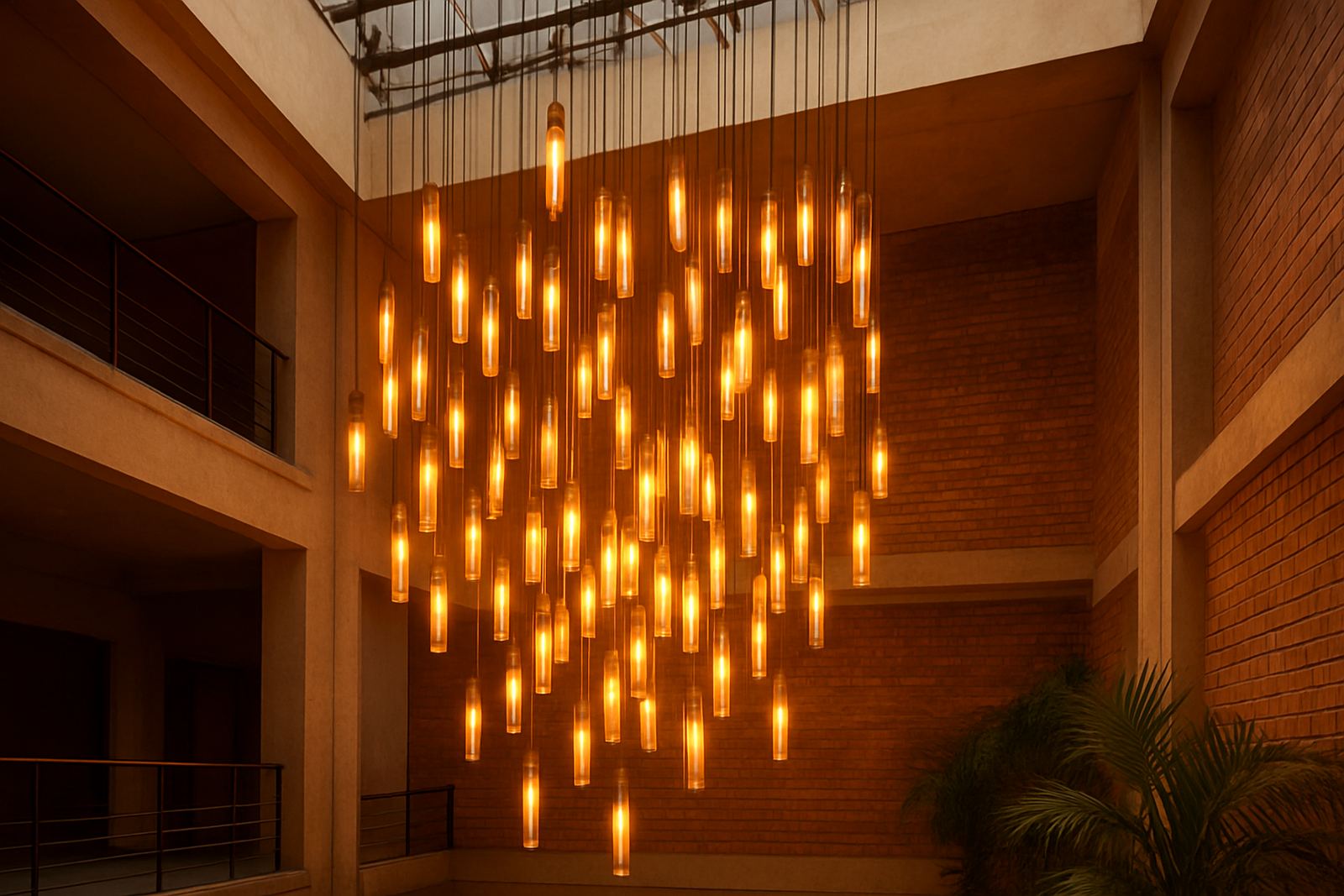
Large atrium fittings are used where ceilings run high and a standard pendant would get lost. They help define a void, anchor a staircase or bring character to a reception, dining area or entrance hall. The aim is not only to light the space but to give it a strong visual centre that can be seen from different levels.
In Rosebank, Sandton and other busy urban sites, these fittings often need to work in daylight as well as at night. A good atrium light should have enough presence to hold its own in a glazed lobby or open plan room, while still giving usable light below. For many projects, that means choosing a form that is bold but not bulky, with carefully placed sources so the fitting looks refined from ground level and upper floors.
- Best for double volume foyers, stairwells and atrium voids
- Can be used as a single statement fitting or grouped in a cluster
- Suitable for homes, restaurants, hotels, offices and shopfront entrances
Sizes, scale and finishing options
Atrium feature lights are usually specified to suit the height of the void rather than one fixed size. Common overall diameters range from about 450 mm for compact spaces to 1200 mm plus for larger entrances and hospitality venues. Hanging drops can start at 1500 mm and extend well beyond 4000 mm, depending on ceiling height, sightlines and access for maintenance.
Frames and bodies are commonly finished in powder coated metal, brushed metallic tones or mixed materials, with opal, clear, fluted or textured diffusers. In coastal areas like Umhlanga and Durban, finishes should resist humidity and salt air. In Johannesburg and Pretoria, dust build-up and air-conditioning movement are usually the bigger issues, so cleanable surfaces and protected drivers matter too.
- Typical fitting widths: 450 mm to 1200 mm plus
- Typical drop lengths: 1500 mm to 4000 mm plus
- Common options: single tier, multi tier, ring, linear, sculptural branch or custom cluster
- Finish choices: matt black, white, bronze, champagne, brushed metal and custom colours
Where they suit best in South African projects
These fittings work well in places where the first impression matters. A restaurant entrance in Cape Town, a double volume home in Pretoria East, a showroom in Midrand or a retail atrium in Johannesburg can all benefit from a feature light that gives the space identity. In hospitality, the fitting often helps guide the eye from the door to the reception counter or host point.
They are also useful where the architecture needs softening. A high ceiling can feel cold or unfinished, but a carefully placed feature light adds warmth and rhythm. In homes, the fitting may sit above a stair landing or central void. In shopfronts, it can be used to draw attention from the street through the glazing, especially at dusk when the interior must do a lot of the visual work.
- Ideal for entrance halls, double volume lounges and stair voids
- Works in restaurants, retail atriums, homes and small hospitality spaces
- Useful where the ceiling height needs a stronger focal point
Installation, power and control needs
Because these fittings are large and often suspended at height, installation needs to be planned early. Structural fixing points must be confirmed before final manufacture or ordering, and access for lifting equipment should be checked on site. In some buildings a scissor lift or scaffold tower is needed, particularly where the atrium opening is tight or the fitting is to be assembled in sections.
Power requirements depend on the lamping and control method, but most feature lights are hardwired to a dedicated circuit with an appropriate driver or control gear concealed above the ceiling or in an accessible service zone. If dimming is required, it should be specified up front so the correct control system can be matched. In load shedding prone areas, clients sometimes pair feature lighting with backup power for selected circuits, but the fitting itself still needs proper protection and load planning.
- Confirm ceiling structure, mounting points and safe access before ordering
- Allow for concealed driver space and future maintenance access
- Specify dimming, switching and backup power needs early
- Check whether the fitting will be supplied in one piece or sectional form for site assembly
Care, cleaning and routine servicing
Atrium fittings collect dust, insects and sometimes cooking residue if they are near a restaurant open plan kitchen. Regular care keeps the finish looking good and helps maintain output. For most projects, a light clean every few weeks and a full service check once or twice a year is enough, depending on height and environment. Coastal sites may need more frequent attention because salt air can mark finishes faster.
Servicing should include checking suspension points, driver condition, lamp life, and any dimming faults. If the fitting includes decorative glass or acrylic parts, these should be removed carefully and refitted in the correct order. It is also worth checking for vibration from air movement or doors slamming near the void, as this can loosen fixings over time.
- Use a soft cloth and a dry or slightly damp clean only, unless the finish requires otherwise
- Switch off power before any cleaning or maintenance
- Inspect fixings, cables and control gear during routine servicing
What to check before you order
Before confirming an atrium feature light, measure the void accurately and note the hanging height from finished floor level. You should also confirm the ceiling build-up, the position of beams or service trays, and any sightlines from upper floors. A fitting that looks perfect on paper can sit too low or block a view if those details are missed.
It helps to prepare a simple list of project details so the right size and output can be matched to the space. This makes the specification process faster and reduces changes on site, which saves time and cost. If the fitting is being used in a restaurant or shopfront, check municipal or building rules for emergency lighting, access and fire egress so the feature piece does not interfere with compliance.
- Void height and floor to ceiling dimensions
- Mounting point position and structural support details
- Preferred finish, colour temperature and dimming method
- Access route for installation and future servicing
- Whether the fitting must be suitable for a humid or coastal environment
Key facts
| Product type | Large scale suspended feature light for atrium and double volume spaces |
|---|---|
| Typical size range | 450 mm to 1200 mm plus diameter, with custom drops from 1500 mm upward |
| Mounting | Suspended from structural fixing points with concealed support hardware |
| Lighting | Integrated LED or lamp based options with dimming where specified |
| Suitable locations | Homes, restaurants, shopfronts, reception areas and void spaces |
| Finish options | Powder coated, brushed metal, mixed material and custom colour finishes |