What poolside lighting is and why it matters
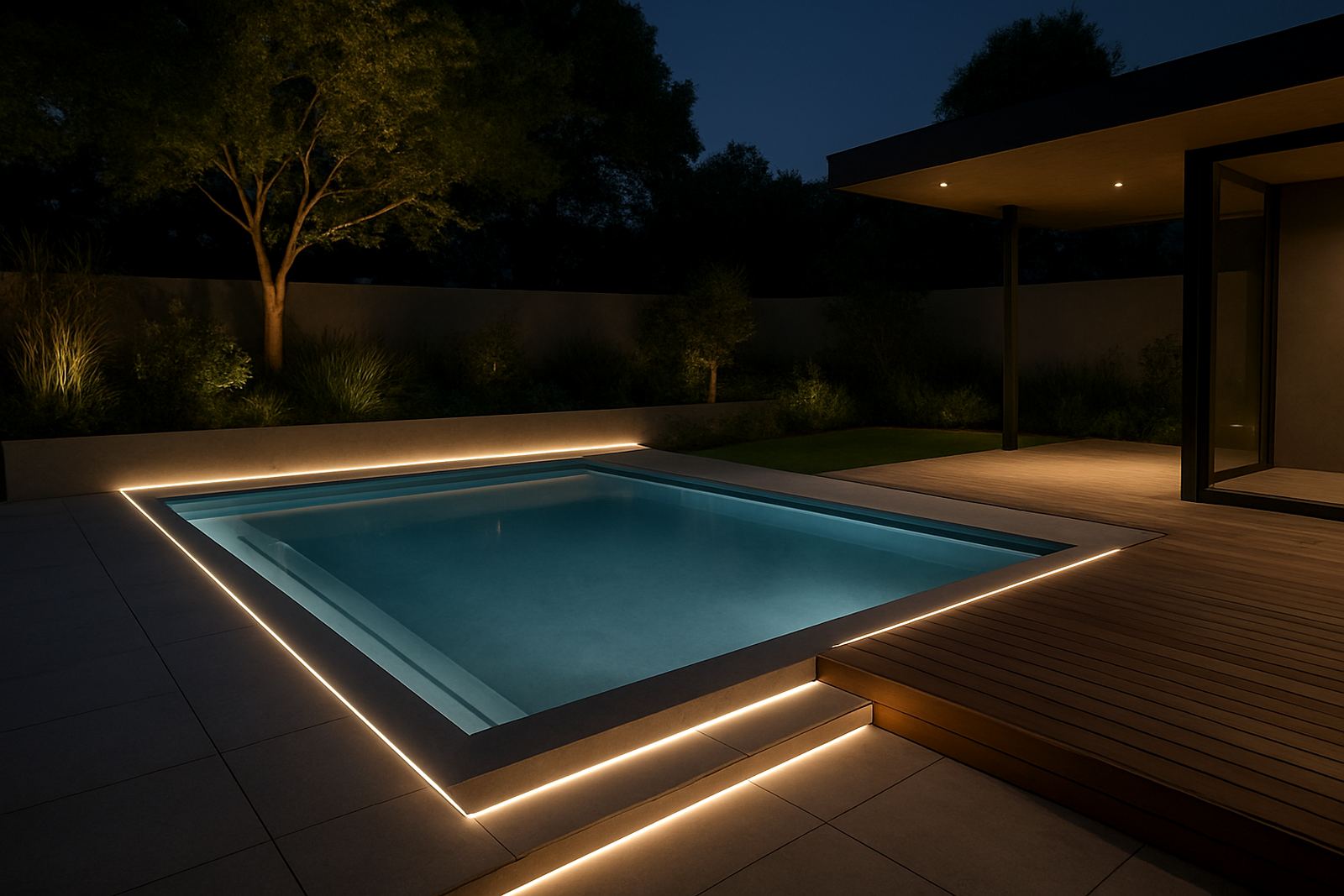
Poolside lighting is the group of fittings used around a pool area to improve visibility, reduce dark spots and add atmosphere after sunset. It can include low level path lights, wall lights, step lights, bollards, recessed deck lights and underwater fittings where the pool itself needs accent lighting. The right arrangement makes the area easier to use during load-shedding too, when outdoor spaces often become the main gathering point.
On a practical level, poolside lighting should help people see the pool edge, coping, stairs, change rooms and wet paving without glare. A well planned layout also supports security around side passages and access gates. In places like coastal Durban or Umhlanga, fittings need to handle humidity and salt air. In Johannesburg and Pretoria, the focus is often on dust, heat and reliable control gear. For restaurant courtyards and small hospitality venues, good pool lighting can keep the area usable longer without overpowering the setting.
Common fittings and size options for poolsides
Poolside lighting comes in many sizes, and the best option depends on how the space is used. Small recessed fixtures are often used along steps and decking, while larger wall mounted or bollard style fittings suit pathways and perimeter areas. Underwater lights are usually selected for the pool shell itself, while low glare units outside the water help define the setting. We also specify adjustable fittings where the beam needs to be aimed carefully away from seating areas or bedroom windows.
Typical choices include 12V low voltage fittings for close to water applications, 230V fittings where the location and protection rating allow it, and LED sources for lower running costs. A compact fitting can be as small as 30 mm to 60 mm face diameter, while larger path lights may stand 400 mm to 900 mm high. Recessed deck lights are often 40 mm to 80 mm in diameter, depending on the output required.
- Recessed step lights for stairs, decks and boundary walls
- Low bollards for walkways, entertainment areas and side passages
- Wall lights for pool rooms, braai areas and boundary faces
- Underwater lights for colour accents or general pool glow
- Linear lights for coping edges, benches and feature niches
Where poolside lighting works best
Poolside lighting suits private homes, guest houses, restaurants, clubs and residential complexes where outdoor areas are used into the evening. In homes, it can frame the pool, guide people from the braai area to the house and make it easier to move around safely with children or visitors. In restaurants and hospitality spaces, the same fittings can help define dining zones and make the pool feel intentional rather than overlit. The goal is not to flood the whole area with light, but to place it where it is needed most.
For South African homes, we often see poolside lighting paired with garden paths, courtyard walls and patio pergolas. In coastal areas, fitting selection is especially important because stainless steel grades, seals and fixings must cope with moisture. In inland suburbs, the layout often needs to work with municipal boundary walls, swimming pool enclosures and neighbour-facing light spill. If a property has a backup inverter or generator, the lighting circuit should be checked against the available load so it doesnt trip when other appliances start up.
- Private homes with entertaining areas and children’s pools
- Restaurants with outdoor seating and evening service
- Guest houses, boutique stays and small courtyards
- Complexes with shared pool decks and pathways
- Renovations where dark edges need better visibility
Installation, power supply and control options
Poolside lighting should be installed with careful attention to protection ratings, cable routing and maintenance access. In many cases, low voltage 12V systems are preferred near water because they reduce risk and are easier to integrate with transformers and control gear. Some fittings can run on 230V, but that depends on the location, the product rating and the electrician’s assessment. All wiring near pools must comply with local electrical rules and should be installed by a qualified contractor familiar with wet-area requirements.
Controls can be simple or fairly detailed. A basic setup may use one switch or timer, while a larger project can include dusk sensors, dimming and zone control for the pool, deck and garden separately. For homes with load-shedding, we often look at how many circuits can be supported on backup power. If the pool area is used for evening entertaining, it may be worth keeping one low draw circuit available on battery backup. We also check whether any lights will be visible from neighbouring properties, since light spill can become a complaint in tightly built suburbs.
- Confirm the supply voltage before ordering or installing
- Allow for transformers or drivers where required
- Plan access to junction boxes for future servicing
- Keep cable routes away from wet zones and digging points
- Match control gear to timers, dimmers or backup power plans
Caring for fittings near water and coastal air
Poolside lighting needs regular care because it works in a tough environment. Splashing water, pool chemicals, dust and outdoor weather can all shorten the life of fittings if they are not cleaned and checked. A soft cloth and mild detergent are usually enough for the lens and housing. Avoid harsh solvents, as they can cloud plastics or damage seals. Around coastal areas like Durban and Umhlanga, salt build up should be rinsed off from time to time, especially on exposed metal parts.
Servicing usually involves checking lens clarity, gasket condition, cable entry points and how firmly each fitting sits in place. If underwater units are installed, they may need periodic inspection for condensation or corrosion. Lamps and drivers should be replaced before failure where possible, because a dark pool edge is a safety issue. In restaurants and homes that use the space heavily on weekends, a twice yearly service is a good starting point. In wetter regions or where the pool gets regular chemical treatment, more frequent checks may be needed.
What to check before you place an order
Before ordering poolside lighting, it helps to measure the area and work out exactly what each fitting must do. A good brief should cover where the pool starts and ends, where people walk, where the steps are, and whether the lights are for safety, mood or both. If the project is a new build or renovation, we also need to know what power is available, where the driver or transformer can be housed, and whether there are any waterproofing details that affect cut-outs. Small mistakes at this stage can lead to extra works later.
It also helps to think about finish, beam spread and maintenance. A narrow beam can highlight a feature but leave the surrounding paving dark. A wider beam gives softer coverage but may create glare if fitted too high. Ask for the exact dimensions, mounting depth and ingress protection rating, plus whether the fitting is suitable for coastal exposure. If the pool area is part of a hospitality site, check operating hours and cleaning access so the lights can be serviced without disrupting guests. A proper order should leave no guesswork.
- Measure the pool, deck and walking routes accurately
- Confirm whether the lights are for safety, ambience or both
- Check the available supply voltage and backup power capacity
- Ask for mounting depth, cut-out size and IP rating
- Note if the site is coastal, shaded, windy or chemically exposed
Key facts
| Typical supply | 12V low voltage or 230V, depending on fitting and location |
|---|---|
| Common materials | Powder coated aluminium, stainless steel, brass, glass and UV stable lenses |
| Protection rating | Usually IP65 to IP68 for outdoor and submerged applications |
| Beam angles | About 15°, 30°, 45° and wider options for general coverage |
| Mounting sizes | Recessed fittings from 40 mm, path fittings from 400 mm to 900 mm high |
| Control options | On off switch, timer, dusk sensor, dimming and zone control |