
What a mirror backlight does in daily use
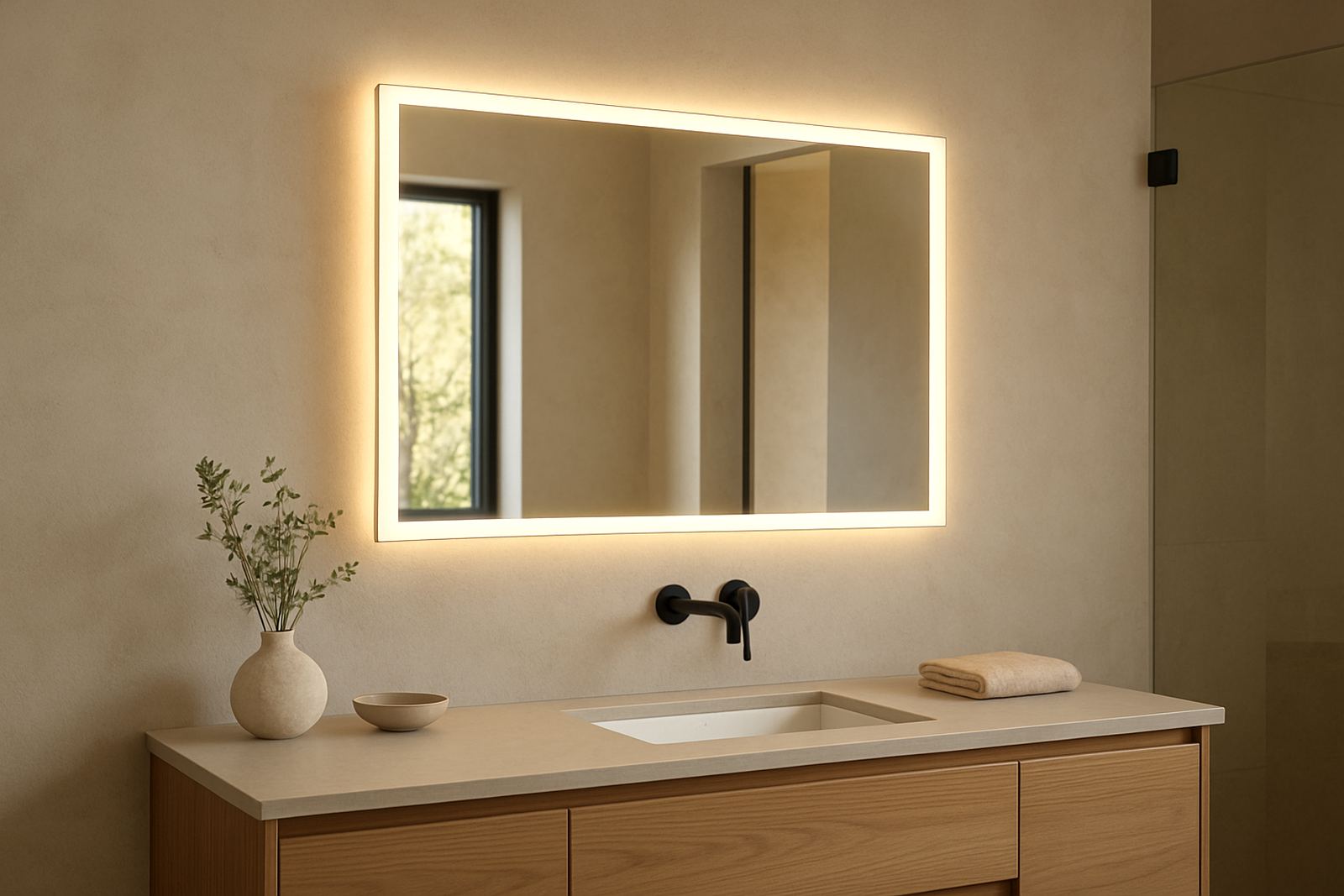
A mirror backlight is a lighting feature fitted behind or around a mirror so the surface appears to float while a soft halo of light washes the wall. It is popular where you want clear task light without harsh glare, especially at vanities, in guest bathrooms, makeup areas and dressing rooms. The result is practical as well as polished, with better facial lighting than a single ceiling fitting or an exposed wall light.
For homes in Johannesburg, Cape Town, Durban and Umhlanga, mirror backlights also help when natural light is limited or inconsistent through the day. In restaurants, salons and boutique retail settings, they give a more composed first impression and help staff or guests see themselves properly. If you need a mirror light that works during load-shedding too, the fitting can be planned with the correct transformer, backup supply or low-voltage arrangement from the start.
Sizes, shapes and finish options to consider
Mirror backlights are made to suit the mirror, not the other way around. They can be specified for round, oval, square or rectangular mirrors, with edge-lit or backlit configurations depending on the look and the wall depth available. Common sizes range from compact 500 mm vanity mirrors to large feature mirrors above 1200 mm wide, with custom dimensions available for full-length or irregular shapes.
Options usually include colour temperature selection, dimming, frosted diffusion and concealed mounting hardware. For bathrooms near the coast, especially in Durban and Umhlanga, the housing and fixings should be selected for humid conditions so the finish lasts. If the mirror sits in a tiled wall or a joinery frame, allowance must be made for cable entry, service access and the actual wall build-up. That detail matters more than people think, and it avoids a lot of comfot later.
- Round, oval, square and rectangular mirror formats
- Custom sizing for feature walls and vanity units
- Warm white, neutral white or cooler task lighting
- Dimmable and non-dimmable options
- Humidity-aware specifications for bathrooms and coastal locations
Where mirror backlights work best
Mirror backlights suit spaces where people need both function and finish. In homes, they are well suited to family bathrooms, guest WCs, dressing tables and main bedroom vanity corners. In restaurants and guest houses, they work well in powder rooms and grooming areas where the fitting should look neat, calm and easy to maintain. In salons, they provide usable light for close work without making the room feel clinical.
They also work well where wall space is limited. Because the light is integrated behind the mirror, there is less visual clutter and fewer fittings to clean around. For shopfront-related interiors, especially fitting rooms or consultation areas, the mirror backlight gives a professional result without needing large amounts of ceiling lighting. It is a good choice when the brief calls for detail, but not fuss.
- Bathrooms and guest WCs
- Bedroom dressing areas
- Salons and grooming spaces
- Hospitality powder rooms
- Retail fitting rooms and consultation areas
Installation, wiring and power planning
Installation needs to be planned with the mirror, the wall surface and the electrical supply in mind. Most mirror backlights are fixed to a prepared wall with concealed cabling and a proper mounting system that can carry the mirror safely. If the mirror is very large or heavy, or if the wall is tiled, the fixing points must be checked before the mirror is fabricated. A neat installation is not only about looks, it also prevents future movement and wiring strain.
Power needs vary by size and light source. Small vanity mirrors may use a low-wattage LED driver, while larger feature pieces can need a dedicated transformer or grouped supply. As with any bathroom lighting, the fitting must be positioned according to the room conditions and any applicable electrical rules. In properties affected by load-shedding, it can also help to coordinate the mirror backlight with a backup inverter circuit or a separate lighting circuit so the bathroom still functions when the mains go off.
- Concealed wiring and accessible driver placement
- Check wall strength before ordering large formats
- Plan for tiled walls, waterproofing and cut-outs
- Allow for dimmer compatibility where needed
- Consider backup power for essential bathroom lighting
Choosing the right light output for flattering results
The best mirror backlight is the one that gives enough clarity without turning the face flat or overexposed. For most bathroom and vanity applications, a warm to neutral white output is preferred, depending on the room finish and how the mirror is used. Warm white tends to suit softer interiors and hospitality spaces, while neutral white is often better for detailed grooming and makeup work. Very cool white is usually avoided unless there is a specific functional reason for it.
Brightness should be matched to the mirror size and the ambient lighting in the room. If the room already has strong downlights, the mirror may only need a softer glow. If the mirror is the main source of task light, then output needs to be more carefully specified. Dimming is often worthwhile, because the same mirror might be used early in the morning and later in the evening when a gentler level is more comfortable. This is the sort of detail that makes a room feel well thought through rather than overlit.
Care, servicing and what to check before you order
Mirror backlights are straightforward to maintain if they are specified properly. Clean the mirror with a non-abrasive glass cleaner and a soft cloth, and avoid soaking the edges where the lighting components sit. If the mirror is in a steamy bathroom, good ventilation helps preserve the finish and reduces condensation on the back surface. Coastal homes and hospitality sites should also check for corrosion-resistant fixings and moisture-safe drivers where required.
Before ordering, confirm the exact mirror size, desired light colour, mounting method and the location of the cable entry. It is also wise to check whether the wall has power at the right point, whether the mirror must be removable for service access, and whether the client wants dimming or fixed output. For project work, it helps to have the site measurements, wall type, finish schedule and any photos of the intended position. A short site lighting audit can save time if the room is unusual or the wall is not perfectly square.
- Final mirror size and shape
- Preferred colour temperature and brightness
- Wall type, tile layout and mounting points
- Driver or transformer access for servicing
- Humidity, coastal exposure and cleaning method
Key facts
| Product type | Custom architectural mirror backlight system |
|---|---|
| Typical use | Bathrooms, dressing areas, powder rooms and hospitality interiors |
| Size range | From about 500 mm to 1800 mm plus custom formats |
| Light output | LED with warm white, neutral white or cool white options |
| Control options | Switching, dimming and backup power coordination |
| Mounting | Concealed fixings with planned cable entry and service access |