
What Menu Board Lighting Does At Counter Level
Menu board lighting is focused illumination fitted to or above a menu display so the text, product images and pricing can be read quickly from the queue. In busy stores and food service areas, this matters more than people think. A board that looks bright enough in daylight can still fall flat at night, especially in malls, near windows, or under mixed ceiling lighting.
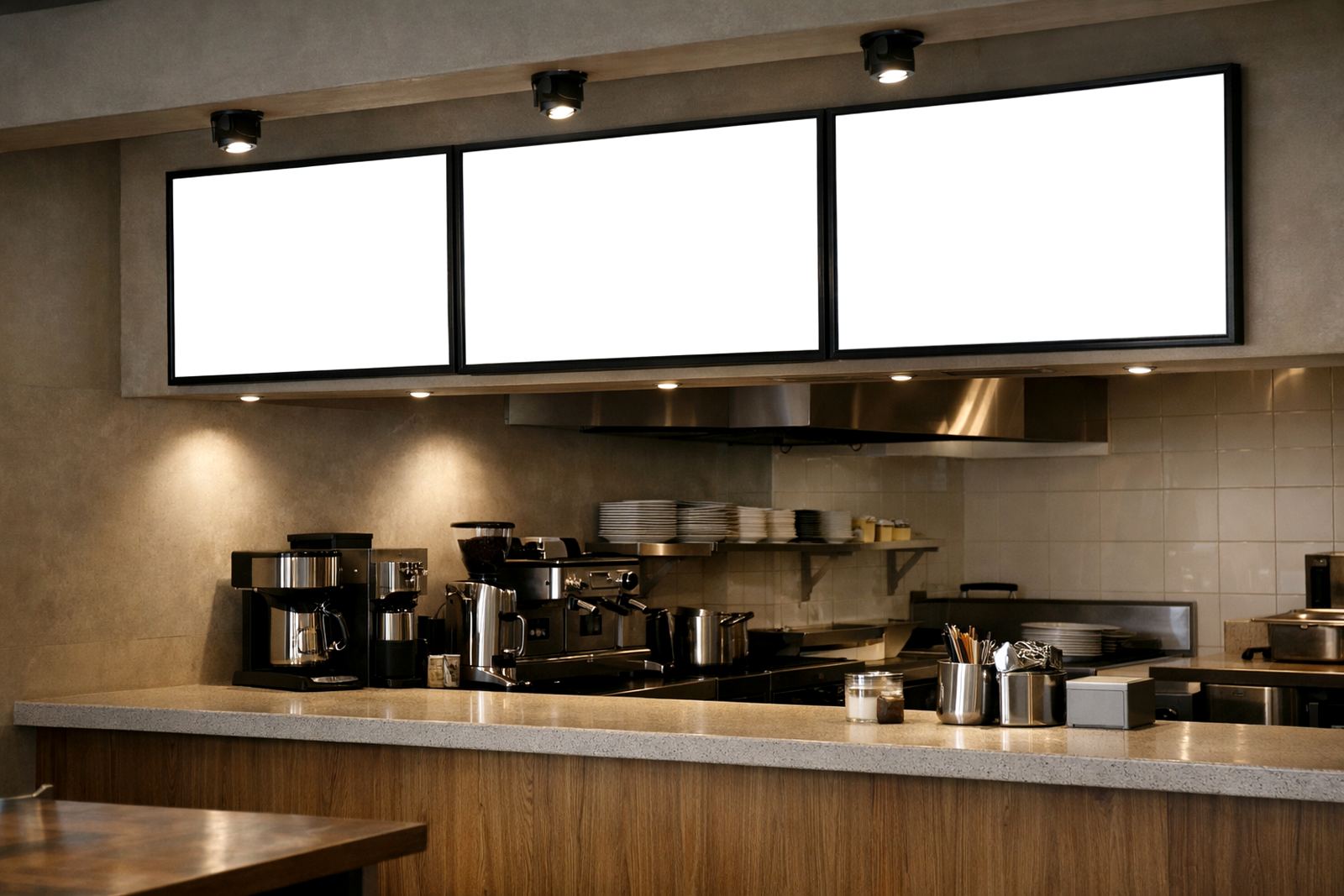
We design menu board lighting to suit the board size, viewing distance and the finish of the board itself. Matte printed boards need less control of glare than gloss panels, while backlit menus call for different output again. The aim is even light with no hot spots, dark corners or reflection that makes the menu hard to read. In a takeaway store or coffee counter, that can change service speed and reduce order mistakes.
Typical applications include single line boards, multi panel menu walls, illuminated price lists, bakery counters and promotional boards. We also factor in local conditions such as power interruptions, high traffic handling and coastal humidity where fittings may need better corrosion resistance.
Sizes, Formats And Light Output Options
Menu board lighting is specified to suit the actual board, not a one size setup. We work with compact 600 mm wide boards through to long runs over 3 metres, and with heights from 300 mm up to full wall menu arrays. The fitting choice depends on how the board is mounted, how far customers stand back, and whether the board is fixed to a wall, suspended or built into a service counter.
- Single board lighting for small kiosks, grab and go counters and compact coffee stations.
- Linear lighting for long menu strips or multiple panels placed side by side.
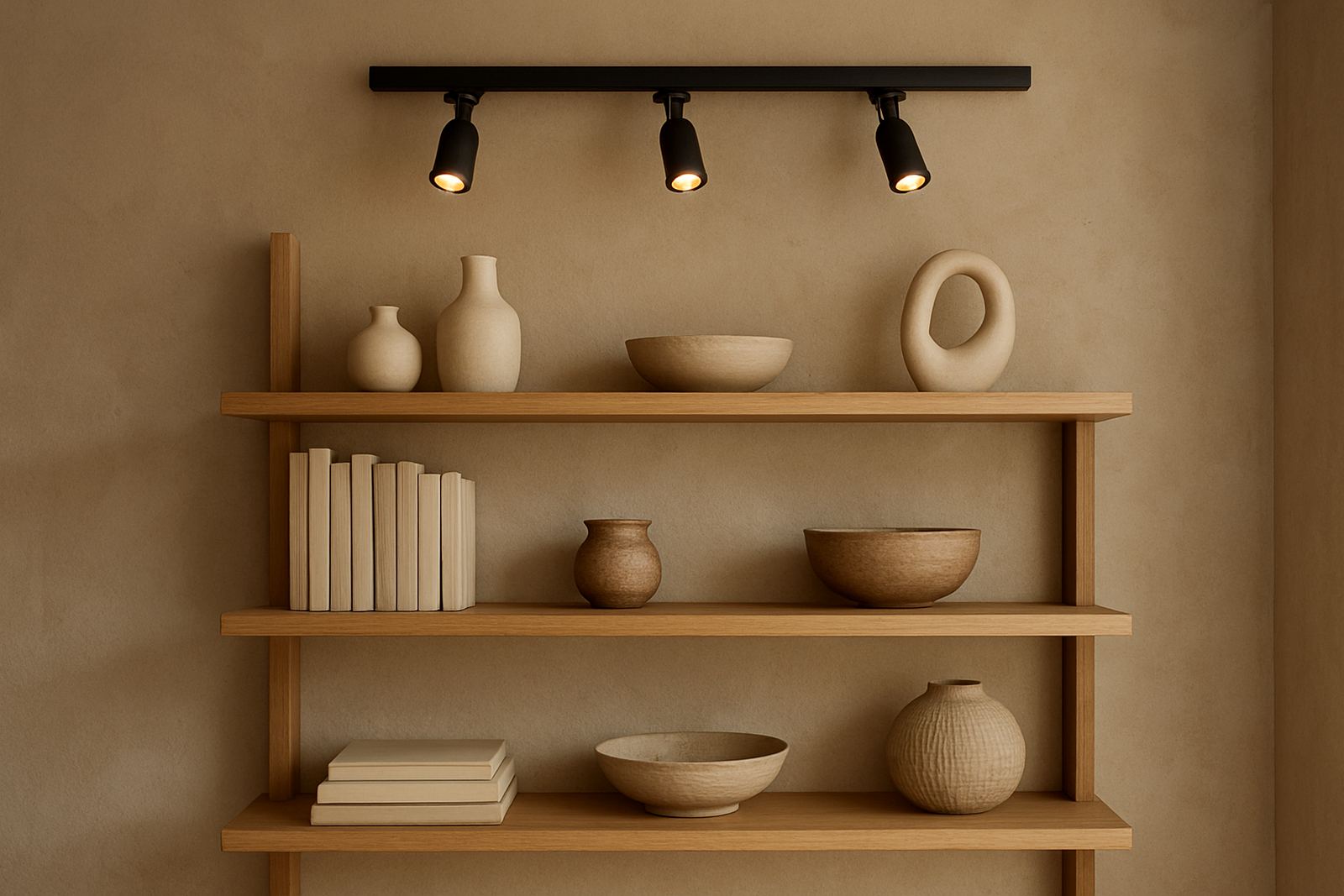
- Track mounted spots for featured items, daily specials or menu zones that need more emphasis.
- Integrated backlighting for translucent panels and illuminated menu boxes.
LED output is usually selected in the 3000K to 4000K range depending on the atmosphere of the venue. Warm white suits restaurants and casual food spaces, while a cleaner neutral white often works better for delis, pharmacies and retail food counters. Dimming can be added where the menu needs to work from breakfast through dinner, or where a softer evening setting is preferred.
Where It Suits Best In South African Spaces
Menu board lighting suits any place where customers need to read quickly and make a decision at the counter. We fit these systems in fast food stores, cafés, bakeries, bars, casual dining restaurants, forecourt shops, canteens and reception snack points. It also works well in branded retail environments where the menu board carries daily specials, combo offers or service information.
In Johannesburg and Pretoria, the main concern is often glare from shopfront glass and strong daytime brightness. In Cape Town, Durban and Umhlanga, humidity and salt air can influence the fitting selection near exposed entrances or semi open food areas. In malls and transport hubs, the board often needs to stay readable under a mix of daylight, ceiling spots and signage lighting.
For restaurants, menu lighting can be tied into the broader interior scheme so it does not look bolted on. For shops, the finish can be simpler and more direct, with clean beam control and practical fixing details. Either way, the lighting must support the ordering process and not compete with the food visuals.
Installation, Wiring And Load-Shedding Considerations
Installation depends on the board location, the structure behind it and the available power point position. Some menu boards can be wired neatly from above through a ceiling void. Others need surface conduit or hidden cabling behind bulkheads. Where the board is close to a food prep zone, we keep fittings serviceable and positioned so that cleaning staff can reach them without disturbing the display.
Power requirements are usually low because LED fittings draw modest wattage, but the circuit must still be planned properly. We check transformer placement, switching, dimmer compatibility and whether the board should be on a dedicated lighting circuit. In areas affected by load-shedding, we can also set up the menu board lighting so it works with backup supply, which is useful for trading continuity during evening service.
- Confirm ceiling height, wall build-up and fixing points before ordering.
- Check whether the board is printed, backlit or front lit, as the wiring method changes.
- Allow for access panels if the fitting needs future maintenance.
- Make sure the lighting does not interfere with signage, fans or heating equipment nearby.
Where gas cooking equipment sits close by, we keep the lighting away from heat plumes and greasy vapour paths. That helps with lifespan and keeps the board cleaner for longer.
Care, Cleaning And Ongoing Servicing
Menu board lighting should be easy to maintain because these areas see regular fingerprints, steam and airborne grease. The fittings need simple cleaning with a dry or lightly damp cloth, and the board face should be wiped as part of the normal opening and closing routine. Avoid harsh chemicals on acrylic diffusers or printed covers, as they can cloud the surface over time.
Servicing usually involves checking loose fixings, testing dimmers, inspecting cable terminations and replacing failed LED modules if a fitting is not sealed as a single unit. In busy food outlets, we recommend a routine check every 6 to 12 months. For coastal sites, more frequent inspection can help pick up early signs of corrosion or moisture intrusion.
If the board is used for promotions and pricing changes, the lighting should remain flexible enough to handle new artwork without leaving shadows or colour shifts. Good service access also means less disruption during trading hours, which matters in restaurants and shops that cannot close for long.
What To Check Before You Place An Order
Before ordering menu board lighting, it helps to confirm the exact board dimensions, the surface finish and the reading distance. A board that looks fine on a drawing may need a different beam spread once it is installed on site. The more detail we get at the start, the cleaner the result.
- Board width, height and mounting height from finished floor level.
- Whether the menu is printed, backlit or changeable.
- The colour temperature you want for the venue and brand tone.
- Power points, switch location and whether dimming is needed.
- Any nearby heat, steam or moisture from cooking and cleaning.
- Whether the site needs a backup lighting plan during outages.
We also check if the board will be seen from the front only, or from an angle in a queue line. Side viewing can affect glare and the way light spreads across the text. For multi branch groups across South Africa, consistency matters too, so we can keep the look repeated from one store to the next without making every site identical.
Why A Properly Lit Menu Helps Sales
A well lit menu does not just look tidier. It makes the ordering process quicker, reduces hesitation and helps customers find the item they want without asking staff to repeat information. That saves time at the counter and gives the venue a more organised feel.
When the lighting is planned properly, prices are easier to read, specials stand out and the whole service point feels more deliberate. In a busy shopfront or restaurant, that clarity can make a real difference during peak periods. The result is practical, not flashy, and that is exactly what menu board lighting should be.
Key facts
| Lighting type | LED front lit, backlit or accent assisted |
|---|---|
| Colour temperature | 3000K, 3500K or 4000K |
| Typical board sizes | 600 mm to 3000 mm+ wide |
| Input supply | 220V to 240V AC |
| Control options | On/off switch, dimming, timed control |
| Typical applications | Shopfronts, cafés, restaurants, bakeries, kiosks |