
What garden uplights do after sunset
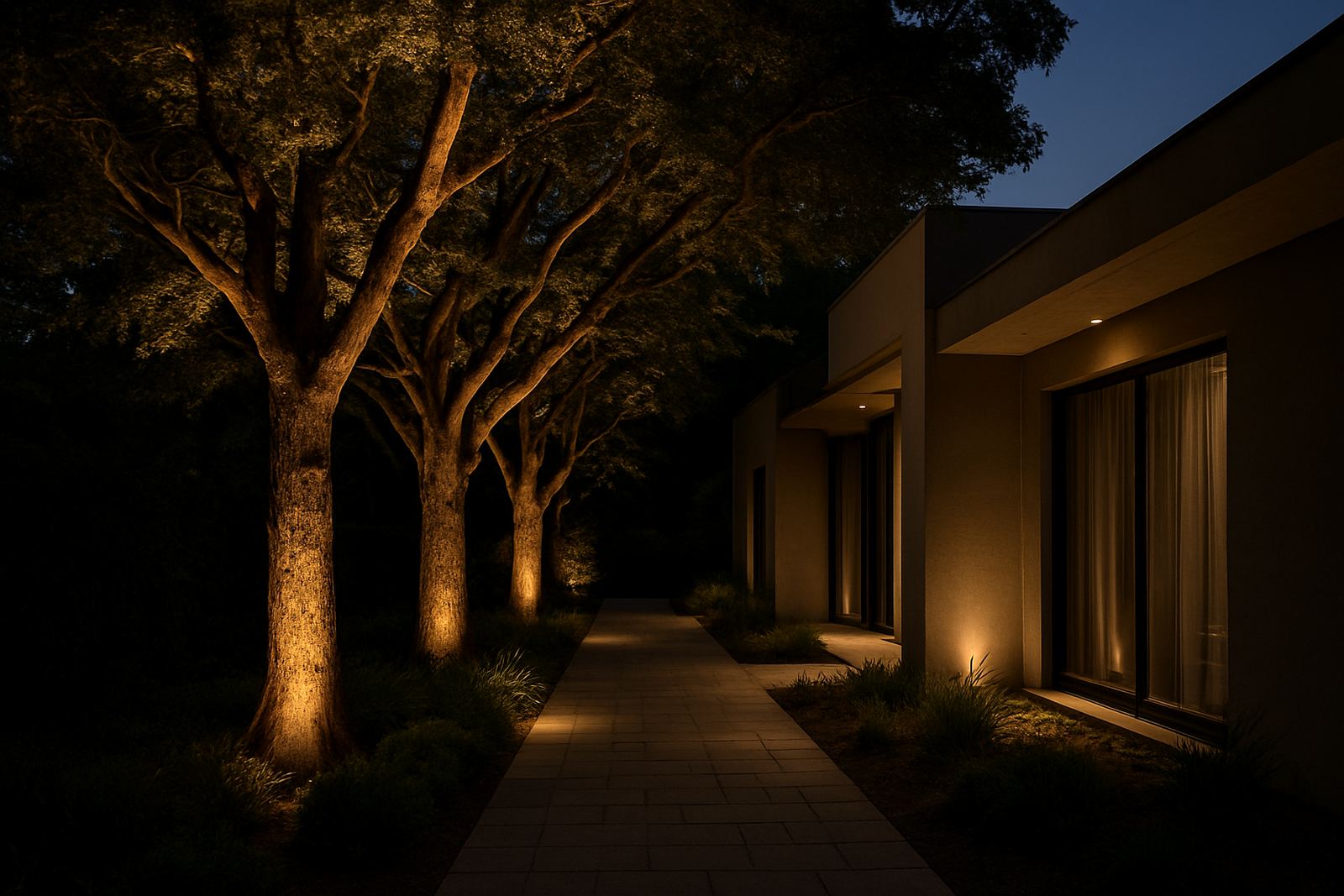
Garden uplights are fixed at ground level or just below it and aimed upward to light trunks, foliage, stonework and boundary features. The result is clear shape and depth at night, with enough visibility for paths and outdoor living areas without turning the garden into a floodlit yard. For many homes and hospitality spaces, that softer control matters just as much as the decorative effect.
They work well where you want to draw the eye to one feature at a time. A pair can frame a mature tree, while a row of smaller fittings can lift a hedge, pergola or textured wall. On a restaurant terrace, the right uplights help define the edge of the space and create atmosphere for evening service, without glare in diners eyes. In winter, when daylight fades early in Johannesburg, good uplighting keeps the garden looking finished and usable.
We usually plan uplighting as part of the whole exterior lighting layout, not as a single item. That means checking sight lines, beam spread, nearby windows, and where a guest or family member will stand or sit. The aim is to light the feature properly and keep the source itself discreet.
Sizes, beam angles and finish options
Garden uplights come in several sizes, depending on the height of the feature and the level of output needed. Small fittings are suitable for low shrubs, planter boxes and narrow architectural details. Medium uplights are often used for feature trees, columns and boundary walls. Larger units are chosen for taller trunks, palm clusters or wider brick and stone surfaces. If the beam is too narrow the effect can look harsh; too wide and the light can spill into places it is not wanted.
Typical specification points include the housing size, beam angle, colour temperature and ingress protection rating. For South African conditions we usually look for fittings with good weather resistance and a finish that can handle sun, dust and coastal moisture. In coastal areas like Durban and Umhlanga, corrosion resistance matters quite a bit. In dry inland suburbs, dust build-up and heat are the main concerns.
- Beam angles commonly range from narrow accent beams to wider wash options, depending on the feature.
- Colour temperatures are usually selected to suit the setting, often warm white for homes and hospitality spaces.
- Housing sizes vary from compact low-profile units to larger, heavier fittings for deeper light throw.
- Shrouds, glare guards and adjustable heads can help control light spill and improve comfort.
We also consider the surface where the light will sit. On paving, pavers or soil, the mount must stay stable and level. In some gardens, recessed or semi-recessed uplights are preferred because they sit lower and feel less obtrusive.
Where uplights suit best in gardens and external spaces
Uplights suit a wide range of outdoor settings, from small townhouse gardens to larger estates and commercial courtyards. They are especially useful where there is one strong feature that deserves attention after dark. That might be a shade tree, sculpted planting, a retaining wall, a textured façade or an entrance approach.
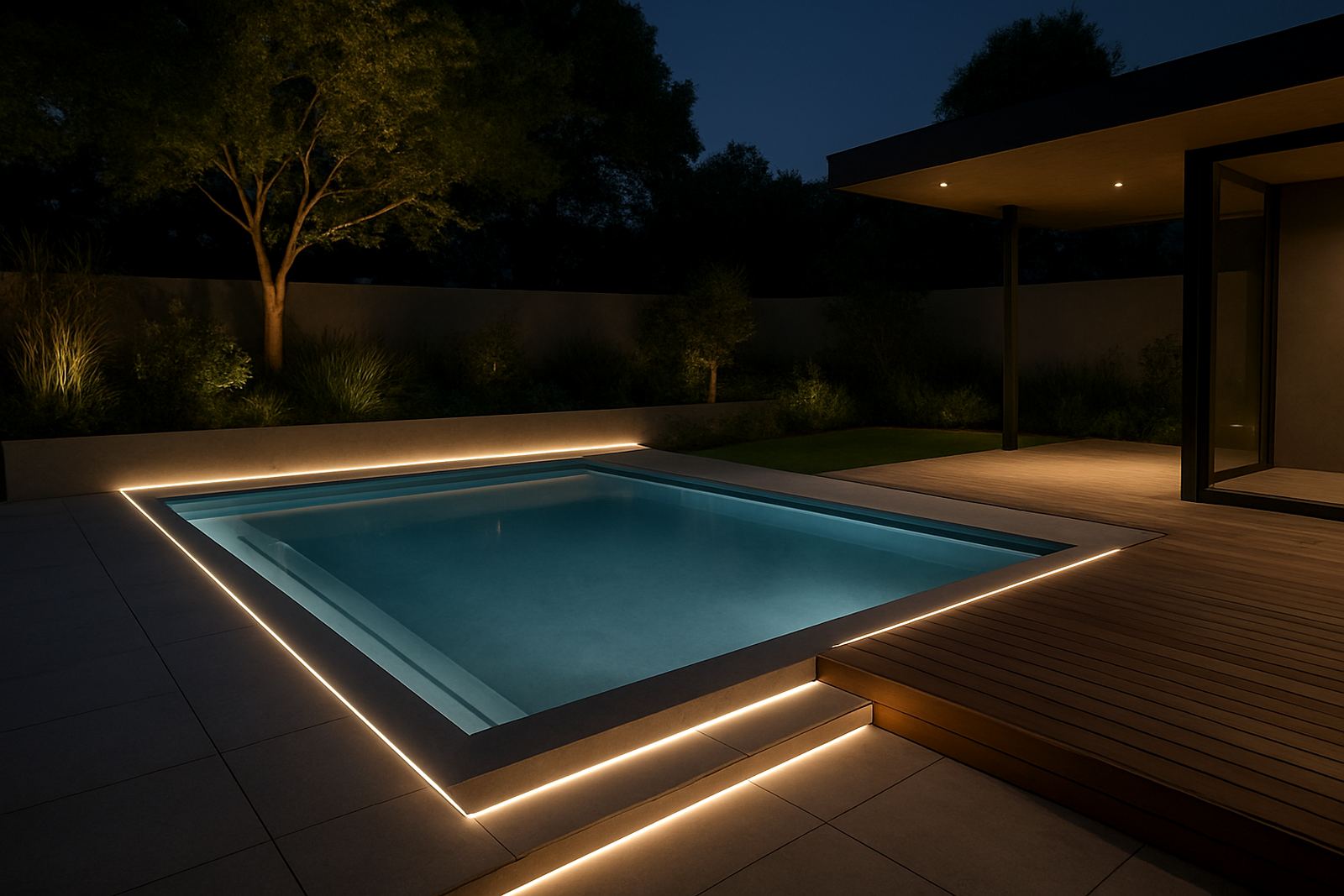
For homes, garden uplights are often used along driveways, around pool edges, near braai areas and at front entrances. They can help with wayfinding while also adding depth to the garden. In restaurant settings, uplighting can make planting look fuller and more considered, even when the space is modest in size. For shopfronts and office courtyards, the fittings can highlight signage, columns or landscape beds without competing with the building lighting.
- Residential gardens with trees, feature walls or layered planting.
- Restaurant terraces, courtyards and outdoor dining areas.
- Shopfront forecourts and entry gardens where first impressions matter.
- Driveways, gate features and boundary planting that need night visibility.
In areas with load-shedding, a low-voltage outdoor scheme is often easier to manage because it can be tied into backup power more practically. The lighting can still be planned to give useful visibility during outages, if the supply and controls are set up correctly.
Installation, cabling and power requirements
Most garden uplights are installed on a low-voltage system, which is safer for outdoor use and easier to maintain around lawns, planting and water features. The transformer or power supply is usually placed in a dry, accessible position, then cabling is run to each fitting through protected routes. Cable size, run length and total wattage must all be checked properly or the fittings can end up underpowered.
Good installation starts with the layout. We look at fixture spacing, beam direction and the position of trees or walls at night, not just during the day. This avoids awkward shadows and too much overlap. Where the ground is uneven or irrigation is already in place, the installation plan needs care so the lights do not sit too low, or get hit by garden equipment. In sandy soils or near coastal properties, fixing methods and seals need extra attention, simple as that.
For homes with solar, inverter or generator support, the lighting load should be matched to what the backup system can actually carry. Garden uplights are not usually gas-powered. They are electric fittings, so the practical questions are supply capacity, cabling route, control gear and maintenance access. If the property has municipal restrictions or timed lighting rules for certain shared developments, the controls should reflect that too.
Care, cleaning and long-term servicing
Outdoor fittings work best when they are checked regularly. Dust, leaf litter, insect build-up and irrigation spray can all affect the light output over time. In coastal areas, salt exposure can dull finishes faster, so cleaning routines matter. A quick wipe and lens check every few months usually keeps performance steady.
Servicing should include checking seals, fittings, cable joints and any corrosion at connection points. If a beam has shifted, it may need re-aiming after planting has matured or after garden maintenance has moved the head. LEDs generally last well, but drivers and control gear can still need replacement over time. It is worth keeping a small record of the fitting type, wattage and location so maintenance is straightforward later.
We also recommend checking for overgrown plants. A beam that worked beautifully in summer can get blocked by new growth by winter and then the whole effect changes. That is not a fault in the light, it is just part of garden life.
What to check before you place an order
Before ordering garden uplights, it helps to know exactly what the fittings must do. Are they for a single tree, a full façade, or a mix of planting and paving? Do you want a warm decorative feel or stronger functional light for movement and security? The answers will guide the beam angle, output and mounting method.
- Measure the height and width of the feature to be lit.
- Confirm whether the fitting will sit in soil, paving, gravel or a planter.
- Check the available power supply and whether backup power is required.
- Choose a finish and weather rating suited to inland or coastal conditions.
- Decide if the beam should be fixed, adjustable or fitted with glare control.
- Ask for the maintenance access point, especially where cables are buried.
If you are planning a new build, renovation or garden refresh, it is best to coordinate uplights with the rest of the exterior lighting from the start. That way the fittings can sit cleanly in the landscape and the cabling can be hidden properly instead of being patched in later.
Key facts
| Product type | Outdoor uplight for gardens, planting and exterior features |
|---|---|
| Typical power | Low-voltage LED, commonly 3W to 20W per fitting depending on effect |
| Beam options | Narrow accent to wider wash beam, selected to suit tree size and wall texture |
| Material options | Weather-resistant metal or durable outdoor composite housings |
| Protection rating | Outdoor-rated with sealed lens and cable entry, specified to site conditions |
| Best use | Trees, shrubs, feature walls, boundary planting, entrances and courtyards |