
What courtyard string lights do in real outdoor spaces
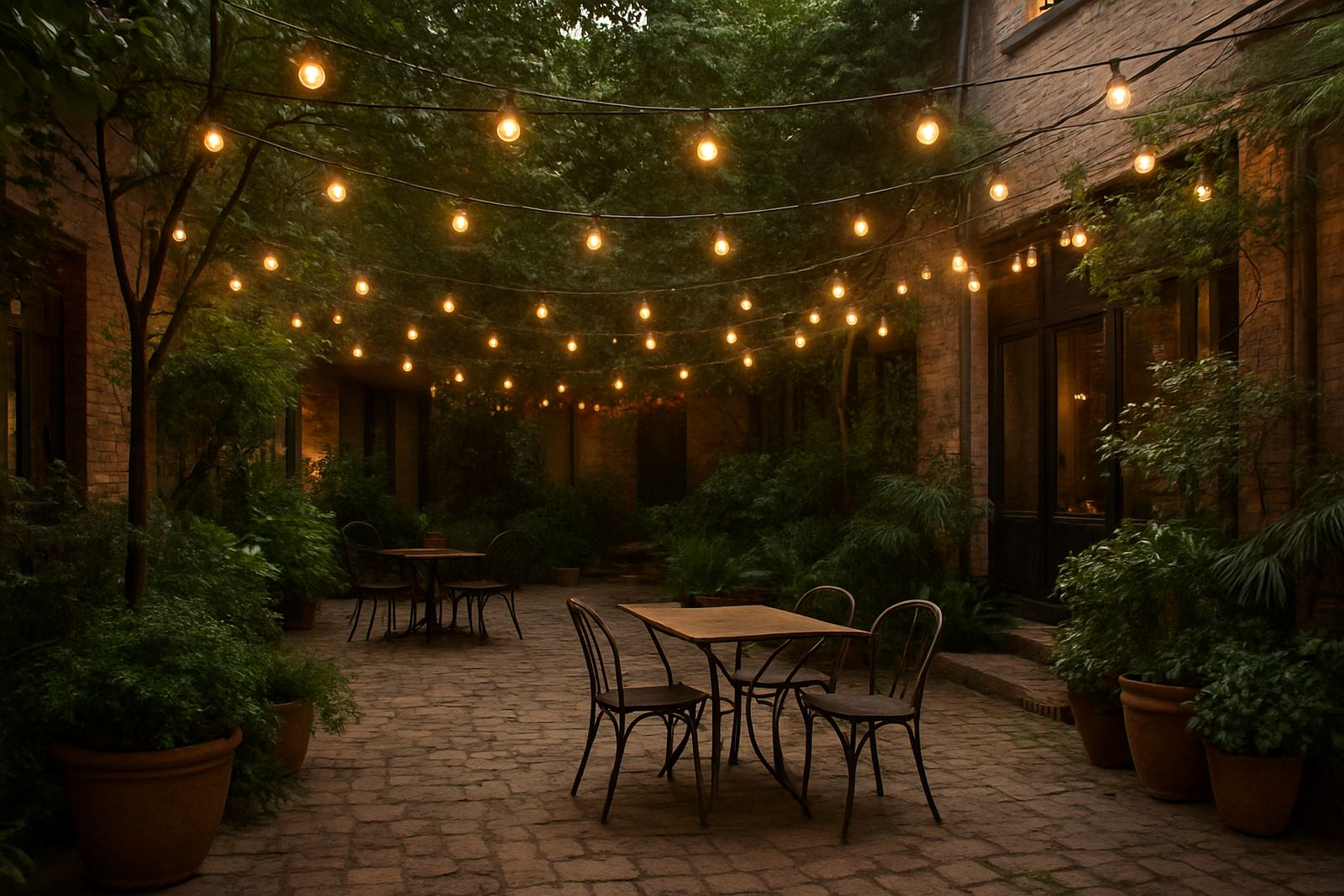
Courtyard string lights are decorative hanging lights used to bring a warmer, more relaxed feel to outdoor areas. They work well over seating zones, between walls or posts, along pergolas and across smaller restaurant courtyards where you want people to settle in after dark. The aim is not harsh brightness. It is comfortable, usable light that makes the space feel inviting without flattening the atmosphere.
In South African homes and hospitality spaces, these lights often do two jobs at once. They help with visibility for movement and dining, and they also soften the look of paving, stone, timber and planting. In a Rosebank courtyard they can make a compact space feel more intimate. In Cape Town or Umhlanga, they can add warmth to exposed outdoor areas that need a bit more visual comfort on windy or cooler evenings.
- Used for ambience, not primary security lighting
- Suitable for private courtyards, patios, restaurant decks and small event areas
- Can be specified for warm white or dimmable output
- Often paired with wall lights, uplights or feature pendants for layered lighting
Sizes, spacing and the look you can choose
There is no single size that suits every courtyard. The right layout depends on span, ceiling or pole height, and whether the lights need to read as a gentle background effect or a more visible feature. We usually specify string sets with evenly spaced lamps, but the spacing can be adjusted for a tighter or looser visual rhythm.
Common options include shorter runs for townhouse courtyards and longer spans for restaurants, hotel terraces and larger home entertaining areas. Some projects use a single straight run, while others use crossed lines or a perimeter pattern. If the courtyard has irregular edges, the layout can be planned around anchor points so the finished look feels balanced rather than forced.
- Short runs for small courtyards and compact patios
- Medium runs for family dining areas and restaurant seating zones
- Longer spans for larger outdoor entertainment areas
- Choice of lamp spacing to suit the size of the area and the visual density required
For most projects, a warm white appearance is the safest choice because it flatters skin tones, food and outdoor finishes. Where a stronger feature look is wanted, the spacing can be tighter and the fittings more prominent, though the light level still needs to remain comfortable for sitting under for long periods.
Where courtyard string lights suit best
These lights are especially useful where a space needs to feel more finished after sunset. They suit courtyards attached to restaurants, coffee shops, guest houses, residential complexes and private homes. In hospitality settings, they can guide the eye across the room and help define where people should sit, wait or move. In homes, they can turn an unused paved corner into a proper evening entertaining area.
They are a practical choice for areas that open onto kitchens, braai spaces or indoor-outdoor dining rooms. In Gauteng, they are often used in protected courtyards where walls reduce wind. In coastal areas like Durban and Umhlanga, the specification needs to account for humidity and salt in the air. That means better-rated components, neat terminations and fittings that can stand up to more demanding conditions.
- Private courtyards and garden rooms
- Restaurant and bar seating areas
- Small wedding and event spaces
- Shopfront courtyards and entrance terraces
- Guest houses, boutique stays and shared outdoor common areas
Installation, power and control options
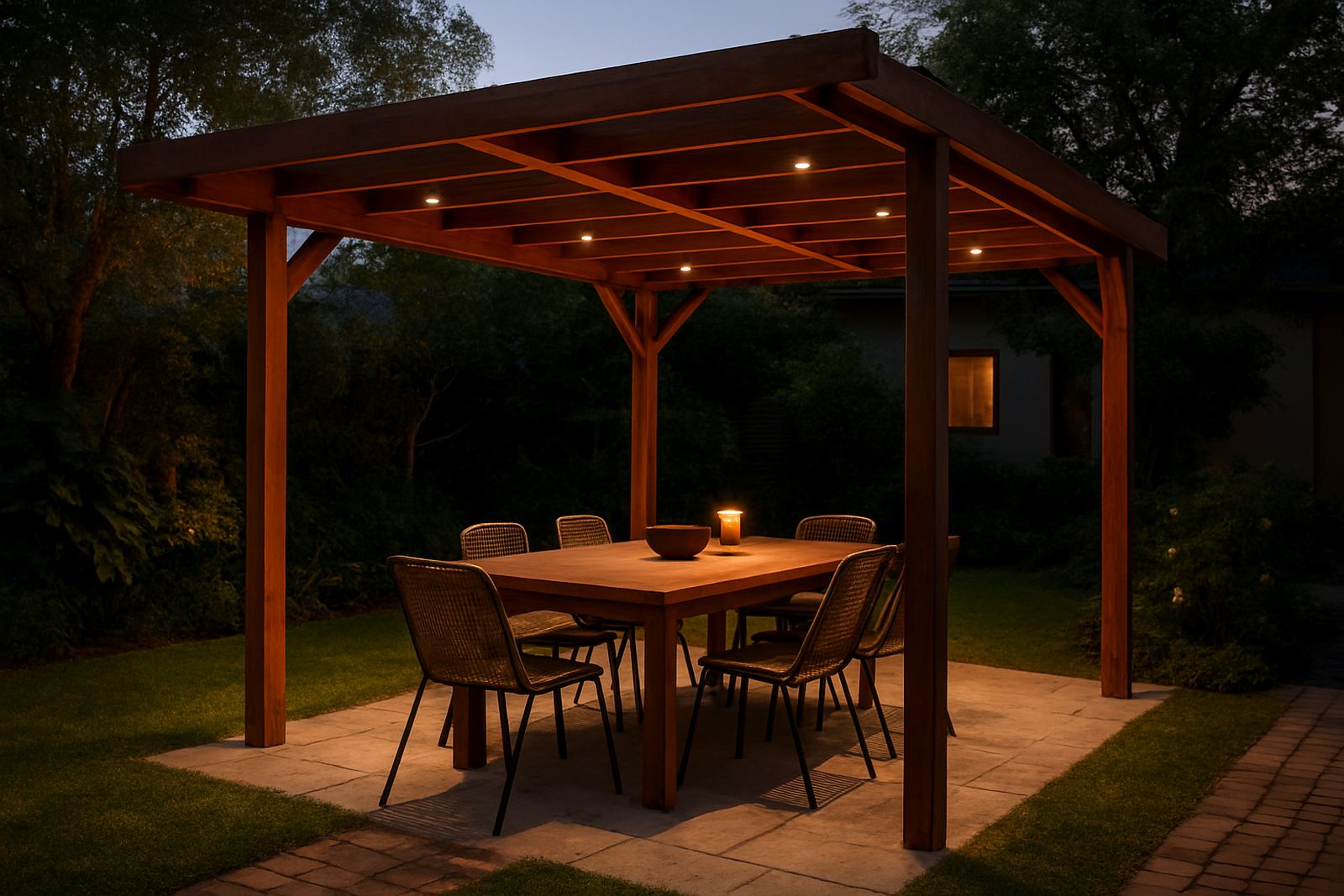
String lights can be installed from walls, poles, pergolas, steel frames or other suitable support points, depending on the site. Good fixing is important because outdoor lighting must cope with wind movement and regular use. The route should be planned so cables do not hang where people can grab them or where delivery trolleys, umbrellas or furniture will catch them.
Most courtyard string light systems need a safe power point nearby and a tidy way to manage switching or dimming. Where the site already has outdoor wiring, we check capacity and cable routes before specifying the final layout. If the area is exposed to load-shedding, it is worth planning how the lights will behave when power returns, especially if the courtyard forms part of a dining service area.
- Requires suitable outdoor-rated power supply and safe cable routing
- Can be connected to standard switching, timers or dimmers where appropriate
- May be integrated with broader lighting controls for hospitality sites
- For longer runs, voltage drop and circuit loading must be checked before ordering
There is no gas requirement for this product. The main considerations are electrical supply, support points, weather protection and the position of the switch or control gear. On mixed-use sites, it also helps to plan the lighting with other services such as fans, heaters and awnings so the ceiling or beam space does not become crowded.
What to check before you order
Before we specify courtyard string lights, we check the size of the area, the height and position of fixing points, and the type of use the space gets after dark. A family courtyard needs a different approach from a busy restaurant terrace. We also ask whether the lights need to support dining, circulation or only ambience, because that changes the output and the spacing.
It helps to have clear answers to a few practical points before ordering. The more accurate the measurements, the cleaner the result and the fewer surprises on site. A rough sketch with lengths and fixing positions is often enough to start.
- Exact span lengths between fixing points
- Height above finished floor level
- Indoor or outdoor exposure, including rain and coastal air
- Preferred light colour, usually warm white
- Whether dimming or timed switching is required
- Nearby power source and access for installation
If the courtyard has trees, beams or pergola slats, tell us. These details affect both the layout and the final effect. In some cases, a small adjustment in fixing height or spacing makes the whole installation feel more balanced and prevents glare at eye level.
Care, servicing and long-term use
Outdoor string lights need basic care to stay looking good. Dust, pollen, bird droppings and coastal moisture can all build up over time. A gentle clean with a soft cloth and a suitable non-abrasive cleaner is usually enough for the fittings, while the cable and fixing points should be checked for movement or wear. Avoid over-tightening ties or brackets, because that can damage the cable over time.
For hospitality sites and busy homes, regular inspection is worth the effort. Lamps may need replacing from time to time, and dimming performance should be checked if the installation is used often. If the courtyard is exposed to weather, look out for water ingress at joints, loosened anchors or signs of corrosion on metal parts. Catching small issues early keeps the installation safer and cheaper to maintain.
We also recommend checking the layout after any change to furniture, shade structures or planting. A courtyard changes over time, and string lights should still fit the way the space is used. A branch that grows into the line or a new awning placed too close to the run can affect both safety and appearance.
Key facts
| Product type | Decorative outdoor string lighting for courtyards and social spaces |
|---|---|
| Typical use | Homes, restaurants, patios, shopfront courtyards and hospitality terraces |
| Light colour | Warm white, with dimmable options where suitable |
| Mounting | Wall, pole, pergola or frame fixing depending on site conditions |
| Power | Outdoor-rated electrical supply, with switching or control options |
| Weather suitability | Specified for outdoor use, with stronger attention needed for coastal humidity and exposed sites |