
Why the window matters more after dark
In Johannesburg, Pretoria, Cape Town, Durban and Umhlanga, the best retail windows work hardest when the street is busy and the sun is low. A good display can still help in daylight, but after 5pm the lighting becomes the difference between a flat front and a shop that feels worth entering. The point is not to flood the glass. It is to create depth, contrast and a clear focus that helps people understand what you sell in a glance.
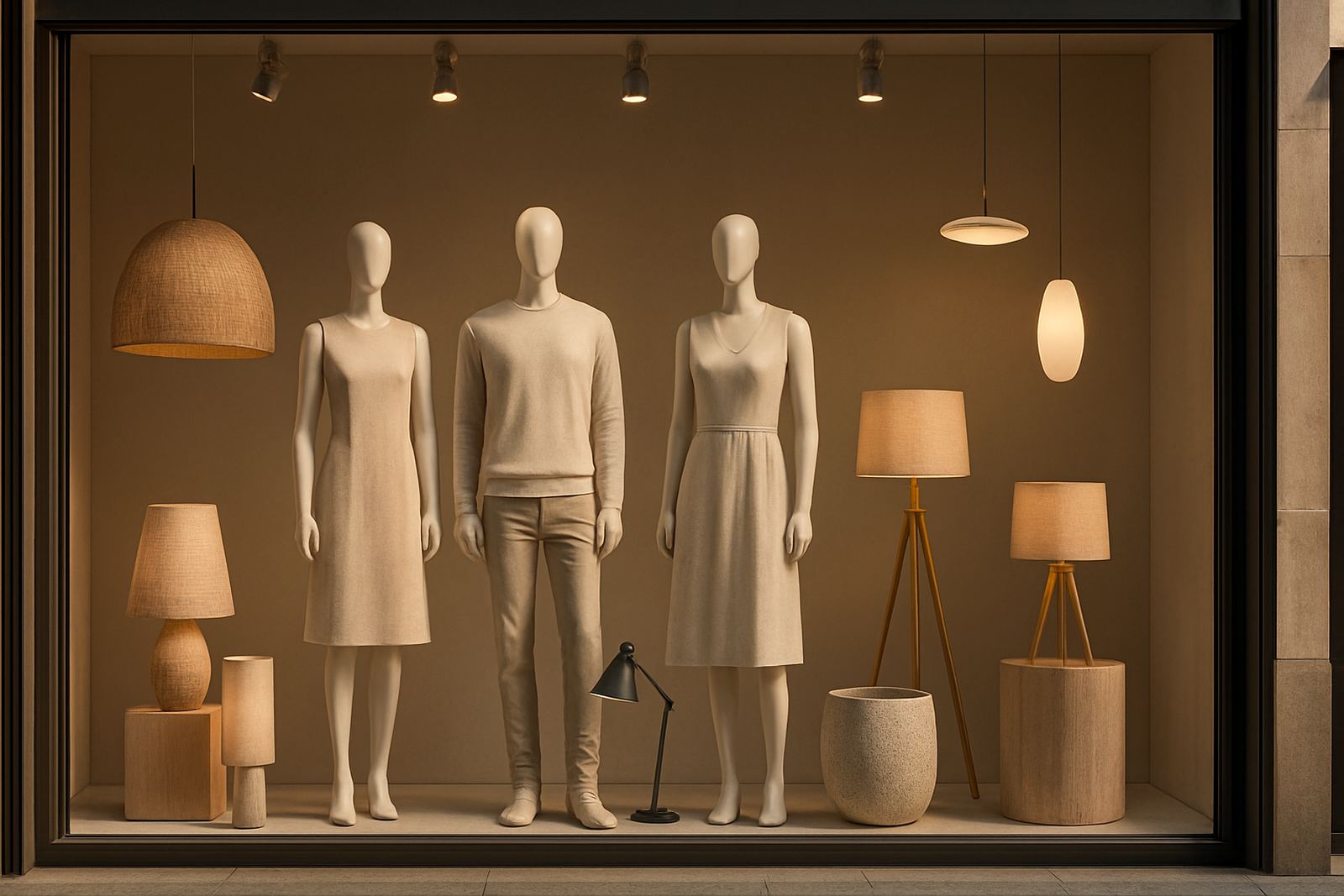
Many shopfronts lose impact because every surface is lit the same way. The result is a bright box, not a display. A stronger approach is to light the hero item first, then support it with softer background light. That gives the display shape and stops reflections from turning the glass into a mirror. In malls and streetfronts alike, this matters for fashion, jewellery, gifts, specialty food and even service businesses that need a polished first impression.
Start with a clear viewing angle and a single message
Before choosing fittings, stand across the street, then move closer to the doorway and look at the window from each point. The display should still make sense when seen from a distance, at an angle and from shoulder height. If the lighting is too decorative, the message gets lost. If it is too plain, the display feels cold and unfinished.
A practical display usually has one main story. That may be a seasonal range, a featured menu item, a limited product line or a strong brand colour. Keep the story tight. Too many props, mixed tones and scattered highlights confuse the eye. The best window displays are easy to read, even when traffic is moving and people are only glancing for two or three seconds.
- Use one focal point, not four or five competing ones.
- Keep the highest brightness on the most important item.
- Leave negative space so the display can breathe.
- Repeat a shape or colour to create rhythm.
Choose light that flatters product, colour and texture
Lighting must show the product as it really is. If a shirt looks yellow under the glass but white inside the shop, customers feel misled before they even walk in. That is why colour quality matters. Warm light suits timber, leather, food and many hospitality displays. Neutral light is often better for fashion, interiors and mixed product ranges. Very cool light can make a display feel hard or clinical, so it should be used with care.
Texture also matters. A matte ceramic, polished shoe, chrome fitting or woven basket all react differently to light. Directional light can make a product feel more tactile, while a soft fill keeps shadows under control. In a coastal area like Umhlanga or Durban, salt air and humidity can affect fittings faster than inland, so the choice of materials and mounting detail should match the location. If fixtures are hard to access for cleaning or replacement, the display will age badly, quite quickly.
- Match the colour temperature to the product and the brand mood.
- Use narrow beams for hero items and wider beams for background layers.
- Avoid glare on glass, chrome and polished packaging.
- Check that the display still looks good when seen from outside at night and in daylight.
Layer the window instead of over-lighting it
Good display lighting usually works in layers. The first layer is general visibility, enough to show the shopfront and keep the window from disappearing into darkness. The second layer is accent lighting for the main products. The third layer may be a low level glow behind the display or near the floor to add depth. When those layers are balanced, the window feels considered rather than busy.
For many South African shops, load-shedding changes the brief. A display that relies on too many fittings may look impressive only when the power stays on. It is smarter to plan around available circuits, emergency backup and the most important trading hours. In a restaurant window, for example, a small number of well placed fittings can make the menu or seating area feel inviting without pushing electricity use too high. In a retail shopfront, a focused window can do more than a fully lit interior that washes everything out.
Practical setup tips for malls and streetfronts
Every site has its own problems. A mall window may fight reflections from bright common areas, while a streetfront in Rosebank or Sandton may need stronger visibility because passing traffic moves fast. In Pretoria, glare from afternoon sun can make daytime viewing difficult. In Cape Town, strong daylight and changing weather can alter how the display reads through the glass. The answer is not the same for each location. It starts with site testing, then adjusting beam angles, mounting positions and dimming levels.
At Illumin8d, we often approach a window display as part of the shopfront as a whole. That means looking at fascia lighting, interior sightlines, window height and the position of the first product table or feature plinth. If the light hits the glass at the wrong angle, the window reflects the street instead of the merchandise. If the fittings are placed too high, the lower half of the display fades. Small changes can make the difference between a window that feels flat and one that draws people in.
- Test the display from the pavement, car park and doorway.
- Dim the background and push the accent light where it matters.
- Keep wiring, transformers and drivers easy to reach for maintenance.
- Plan for cleaning, because dust and coastal moisture reduce output over time.
A Rosebank example: turning a quiet frontage into a reason to stop
In Rosebank, a retailer with a narrow frontage had a strong product range but very little after-hours presence. The window was bright in places and dull in others, and the glass reflected the street more than the merchandise. The fix was not more fittings, it was better control. The main display items were given focused light from above and slightly to the side, while the background was softened so the eye had a clear path. A subtle floor glow helped define the depth of the window, and the light levels were adjusted for evening trading.
The effect was immediate. The frontage looked tidier from across the road, the colour of the products read more honestly, and the entrance felt more welcoming. That is the real value of window display strategy. It does not shout. It gives people a clear reason to slow down, look again and step inside. For shops, restaurants and homes with street-facing spaces, the right approach is practical, measured and local to the site, not copied from somewhere else.
What to review before you sign off a display
Before a window goes live, check it in the same conditions your customers will see it. That means night-time, early morning and peak trading time. A display that looks perfect under work lights can still fail once cars pass, neon signs flicker nearby or the sun moves across the glass. Review the balance, the shadows and the reflection on the final day, not only on paper or in a showroom.
If the display changes seasonally, plan for easy resets. Fixtures should be easy to move, and the control settings should make it simple to adjust brightness without a full rewire. A good window strategy saves time later, keeps the shop looking current and gives staff a clear method to follow. That practical approach is what keeps a frontage working week after week, especially in busy areas where the competition for attention is constant.