
Why the first 10 metres matter after sunset
In busy parts of Johannesburg, Sandton or Rosebank, a shopfront has only a few seconds to work once the sun goes down. People driving past are scanning for signage, window displays, entrances and parking access. If the front of the building falls into shadow, the business can disappear into the street even when the trading floor is open and busy.
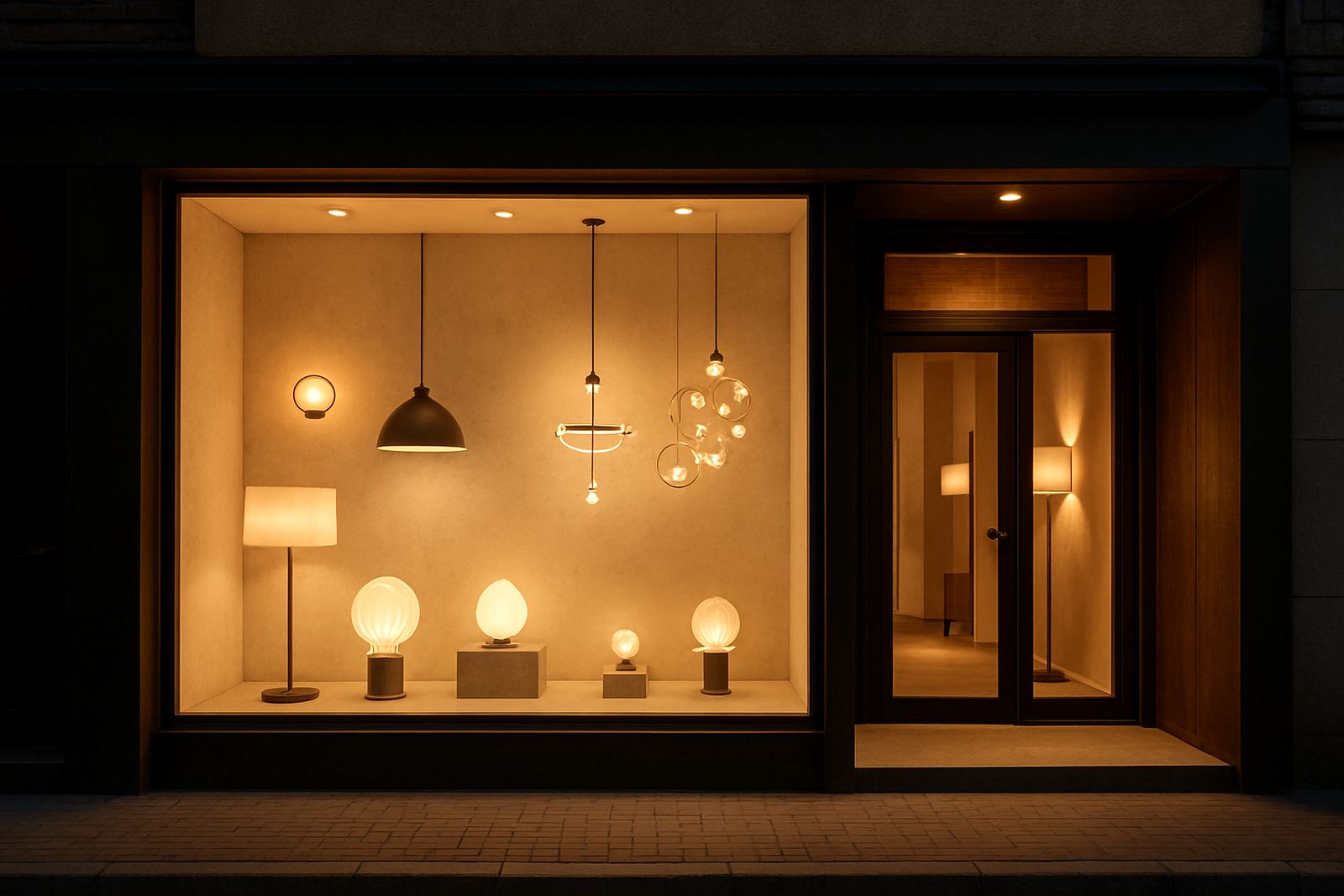
Night-time storefront lighting is not only about brightness. It is about making the frontage readable from the road, showing where the entrance sits, and giving the building a clear identity. In areas with mixed use buildings and competing signs, the right light can lift a shopfront above the noise without making it look harsh or overdone.
For many sites, the goal is simple: help the customer recognise the business from the kerb and feel comfortable enough to stop. That means balancing light levels, glare control, colour temperature and the way the fittings sit on the façade.
Start with the façade, not the fittings
Good shopfront lighting begins with the building itself. A glass front needs different treatment from a painted brick façade or a textured concrete wall. A narrow entrance under an overhang needs different handling from a corner site with full exposure to the street. Before choosing fittings, check how the frontage performs at night and where the dark patches fall.
A lighting audit helps identify practical issues such as blocked sightlines, reflections in glazing, and shadows created by signs, awnings or planting. In coastal areas like Umhlanga and Durban, fittings also need to cope with humidity and salt air. Inland sites may have more dust and dust build-up on lenses, which affects output over time.
- Measure the frontage and note the viewing distance from the road.
- Check whether the entrance, signage and display window are lit evenly.
- Look for glare on glass, metal trims and polished floors.
- Confirm where maintenance access will happen after installation.
Use layers of light for clarity and atmosphere
Single-source lighting often leaves a shopfront looking flat. Layering is more effective because different parts of the front do different jobs. One layer can wash the façade, another can frame the doorway, and a third can highlight signage or a display feature. The result is easier to read and usually more comfortable for the eye.
For restaurants, the aim may be warmer and more inviting, with softer light at the frontage and tighter control near seating areas. For retail, the front may need stronger visibility around the entrance and window display. Homes that use decorative frontage lighting still need the same discipline, especially where the house faces a street or shared complex road.
- Facade wash lighting for overall visibility.
- Accent lighting for signs, plants or architectural details.
- Entrance lighting for safety and wayfinding.
- Display lighting to draw attention to products after dark.
When these layers are planned together, the frontage feels intentional rather than patched together.
Controls, timers and load shedding planning
In South Africa, lighting has to cope with load-shedding, voltage swings and the reality of after-hours trading. A frontage that looks good at 6 pm may not perform well at 9 pm if the controls are too basic. Time schedules, dimming options and grouped switching can make a big difference to running costs and day-to-day use.
Many clients want lighting that can adjust for trading hours, weekends and seasonal changes. In winter, the sun drops earlier, so the shopfront may need to come on sooner. In summer, the same settings may waste energy. That is why control design matters just as much as fixture choice.
Practical control planning should cover:
- Automatic on and off times that suit trading hours.
- Separate control for signage, façade and window lighting.
- Backup planning for power interruptions.
- Simple access for staff who need to adjust settings.
When the controls are clear, the frontage stays consistent and staff do not have to fight with complicated settings every evening.
A Rosebank example with a real street presence
Consider a restaurant frontage in Rosebank with a deep set entrance, glass windows and a slim sign band. By day the place is easy to spot, but after dark the road-facing side can lose definition. The entrance looks flat, the menu window is hard to read, and the sign competes with nearby traffic lights and vehicle headlights.
A practical lighting approach would start with a site audit to check viewing angles from both directions of travel. Then the design can add a soft façade wash, focused lighting at the entrance, and controlled illumination for the sign band. If the site has a canopy, the underside can be lit carefully so the doorway feels open without spilling light into the street.
This kind of work is common across Johannesburg, Pretoria, Cape Town, Durban and Umhlanga, because each location brings its own conditions. Busy urban streets need clarity. Coastal towns need materials and fittings that handle moisture. Retail strips need enough visibility to compete with neighbouring businesses, but not so much light that it feels harsh or wasteful.
Installation details that protect the result
Even a strong lighting concept can be undone by poor installation. Cables need to be routed neatly, aiming needs to be precise, and fittings should be positioned so they can be cleaned and maintained. If the frontage uses feature signs or textured finishes, final focusing after installation matters because small angle changes can alter the whole appearance.
At this stage, coordination between the designer, the site team and the client is critical. Measurements must match the real building, not just the drawing. If the site has municipal restrictions, neighbouring properties or landlord rules, those need to be considered before anything is fixed to the façade.
After install, a short period of adjustments is usually worth it. It allows the light to be tuned once the sun has set and the shopfront can be seen in real conditions. That is often when hidden issues show up, such as a darker corner, a sign that needs more separation, or a bright spot that creates glare on glass.
What good after-dark lighting should achieve
A well-lit shopfront should do three things at once. It should help people find the business. It should make the frontage feel safe and welcoming. And it should support the brand without overpowering the building. When those three aims are in balance, the lighting works quietly every night and keeps paying back.
For businesses that trade late, or want stronger visibility from the street, the frontage is not a side issue. It is part of the sales environment. The right lighting can extend visibility into the evening, support foot traffic, and give the property a cleaner, more confident presence on the street. That is why the best solutions are planned carefully, measured properly and installed with attention to detail.
Illumin8d works on architectural and decorative lighting projects for shopfronts, restaurants and homes across South Africa, with concept design, fixture specification, layout plans, control design and installation coordination handled to suit the site. Clients can send an enquiry through the contact page to start the process.
When to refresh a shopfront lighting plan
If a frontage has changed its signage, changed tenants, added a canopy or started trading later into the evening, the lighting plan should be reviewed. Many sites also need an update after renovations, because new finishes can reflect light differently and old fittings may no longer suit the space.
Signs that a refresh is due include uneven brightness, visible hotspots, poor visibility from the street and higher running costs than expected. A proper review can often improve the look of the frontage without a complete rebuild.
- The entrance is visible by day but fades at night.
- Customers struggle to find the doorway after dark.
- The signage is lit unevenly or appears washed out.
- The fittings are hard to service or have become unreliable.
A small design change can make a big difference when the sun goes down.