
Why table light changes the whole meal
Restaurant lighting is not only about making a room look attractive. The light at table level affects how food appears, how long guests stay, and how easy it is for staff to work without disturbing the table. If the light is too bright, diners can feel exposed. If it is too dim, menu reading becomes awkward and plates lose colour and detail.
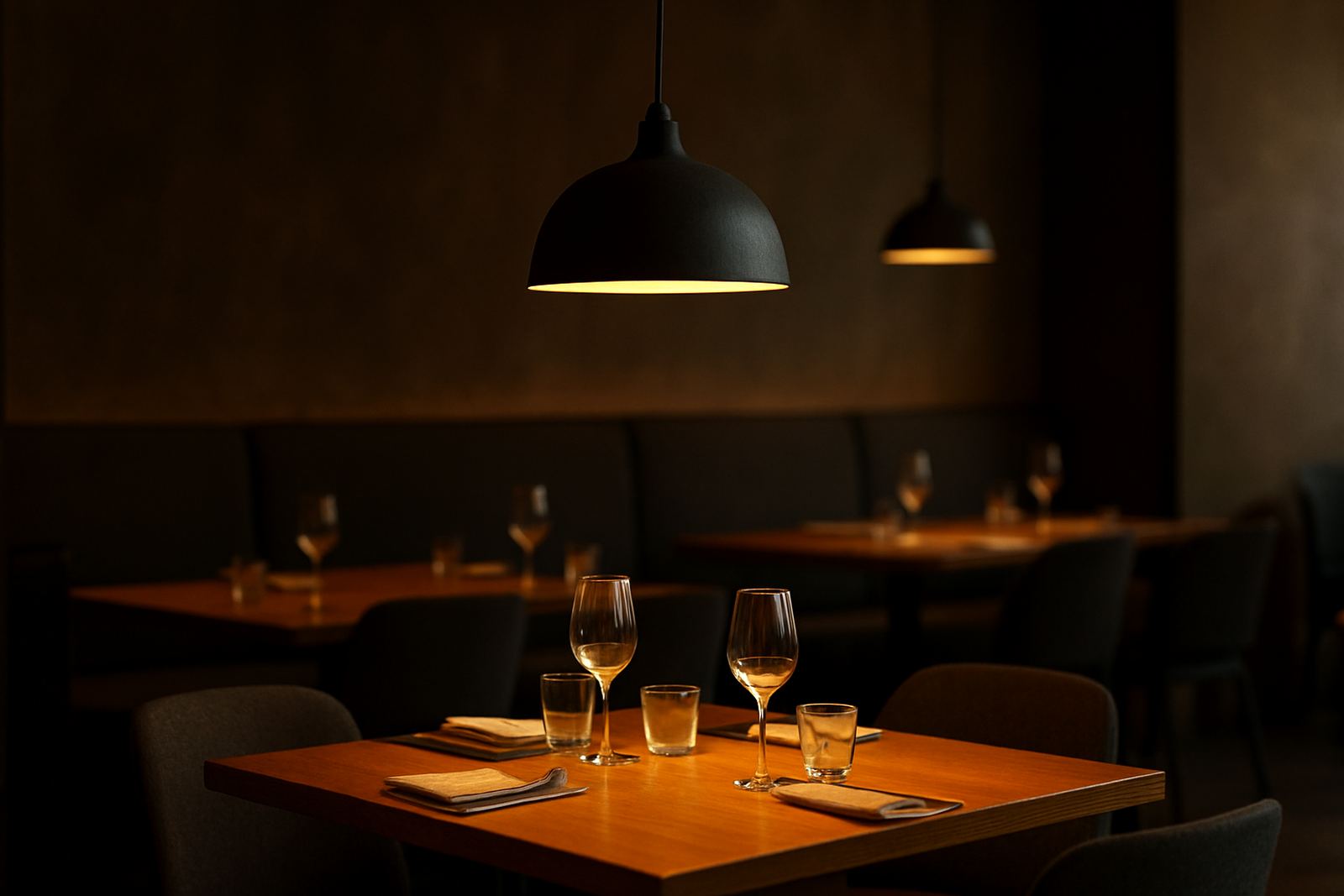
We often look at table lighting in layers. General ambient light gives the room its base level, while focused light over the table does the practical work. In a good dining room the table should feel brighter than the walls, but not harsh. That balance is what makes a steak look rich, a salad look fresh, and wine service feel calm rather than rushed.
Getting the right level over each table
There is no single number that suits every restaurant, because the right level depends on ceiling height, finishes, table size and the type of service. Still, a useful starting point is a low to moderate level at the table surface, with enough contrast to create intimacy without forcing guests to strain their eyes. In many venues that means careful positioning rather than simply adding more fittings.
For a restaurant with 2.7 metre ceilings, a pendant hung too low can block sight lines and create glare. In a room with dark walls and timber finishes, light may need to be slightly stronger to stop the space from feeling heavy. In a brighter brasserie with light plaster and glass, less output can do the job. The trick is to test the table first, not the room from the doorway.
- Use focused light where guests sit, not wide spill across the floor
- Keep the brightest point off the plate edge to avoid glare on cutlery
- Allow dimming for lunch, dinner and private functions
- Check the table from a seated height, not standing up
Colour temperature and how food actually looks
Warm light is usually kinder to dining spaces, but too much warmth can make certain dishes look dull. Cooler light can sharpen detail, yet if it is overdone the room can feel clinical. For most restaurants, a warm white range works well because it suits skin tones, wood, linen and food presentation. The exact choice should match the menu and the interior finishes.
A seafood restaurant in Umhlanga may want the freshness of shellfish and greens to read clearly, while a steakhouse in Sandton may prefer a slightly richer tone that flatters red meat and dark timber. In both cases the aim is the same: make the plate look honest and appetising, not washed out or orange. A small adjustment in colour temperature can change the whole feel of the room.
Table level lighting also affects photography. Guests will often take pictures of special meals and private events, so the light should support a clean image without creating hot spots. That matters more now because people share their dining experience in real time. It is a small detail, but it says a lot about the venue.
Fixtures that work well at table height
The fixture choice should suit the ceiling, the table shape and the staff workflow. Some venues need pendants over each table, others do better with small directional fittings, wall-mounted light or a combination of both. In narrow rooms, a line of compact fittings can be more practical than large decorative pieces. In larger dining rooms, grouped pendants can define areas and bring scale to the space.
When we specify fittings, we look at the beam spread, shielding and mounting height. A well controlled beam gives the table its focus without lighting the whole restaurant like a showroom. Materials also matter in coastal areas such as Durban and Umhlanga, where humidity can affect finishes over time. It is worth selecting fittings that handle cleaning, heat and frequent use properly.
- Pendants for feature tables and private dining areas
- Directional spots for flexible table layouts and banquettes
- Wall or shelf lighting to support softer ambient levels
- Dimmable drivers and controls for day and evening service
Controls for lunch, dinner and load-shedding
Restaurants in South Africa need lighting that can adapt quickly. A lunch service with natural daylight requires a different setting from a winter dinner in Pretoria, and both are different again from a private function in Cape Town. Dimming lets the restaurant respond without changing fittings or rearranging the room. It also helps with energy use, which matters when running costs keep climbing.
Table lighting should also be considered alongside backup power. During load-shedding, a restaurant may be running on partial supply, inverter power or generator backup. If the lighting design has been planned properly, the table levels can stay consistent enough for service to continue comfortably. That means fewer complaints, safer movement through the room and less stress for the team. It is one of those jobs where planning pays off immediately.
Control design should be simple enough for staff to use without guesswork. A manager should be able to move from lunch brightness to dinner mood in a few steps, not by trying to remember a complicated sequence. Good control systems save time and keep the service standard steady from one shift to the next.
A practical example from Rosebank to Umhlanga
One common brief is a restaurant that wants atmosphere, but also needs customers to read menus easily and see plated dishes properly. In a Rosebank dining room, for example, a combination of softly dimmed ambient light and focused table light can help the room feel intimate without making it dark. If the venue has a mix of two-seaters, booths and a long communal table, each zone may need a slightly different level.
For a Durban site, humidity, salt air and maintenance access would be part of the conversation from the start. In Pretoria, strong daylight through the front windows may mean the entrance tables need a different setting from the back of house dining area. The local context matters. A design that works in a compact city restaurant might not suit a beachfront venue or a family dining room in Midrand.
That is where careful design makes a visible difference. We look at the room as a working space as much as a visual one, then set the table levels so staff can serve smoothly and guests can relax. It sounds simple but it takes proper planning to get right.
What to check before final sign-off
Before a restaurant opens, table lighting should be checked at service height, during day and night conditions. Test it with real tableware, linen and menu boards if possible. Look for shadows on faces, glare on glassware and dark patches between tables. If the tables are moved for functions, check the lighting again in the new layout.
At Illumin8d, we approach restaurant lighting as a practical design job, not just a decorative one. The goal is to make the meal look good, support the service team and create a setting guests want to return to. When the table level is right, the room feels calmer, the food is better presented and the whole experience works better.