Why restaurant lighting changes the whole dining mood
Good food can be let down by harsh light, while modest food can feel considered and special when the lighting is right. In a dining room, guests read brightness, colour tone and shadow long before they think about the menu. A table lit too strongly can feel exposed. A room lit too weakly can feel tired or even a bit cheap.
For South African venues, the pressure is practical as well as aesthetic. Load-shedding, mixed daylight, reflective finishes and different service periods all affect how a restaurant performs after dark. A lunch service in Cape Town with strong coastal glare needs a different approach to an intimate supper in Rosebank or a busy family restaurant in Umhlanga.
The aim is not simply to make a room brighter. It is to guide the eye, soften faces, support staff movement and create a setting that matches the restaurant’s price point and personality. When the lighting plan is done properly, guests usually notice the feeling first and the fittings second.
Brightness levels that feel intimate without going gloomy
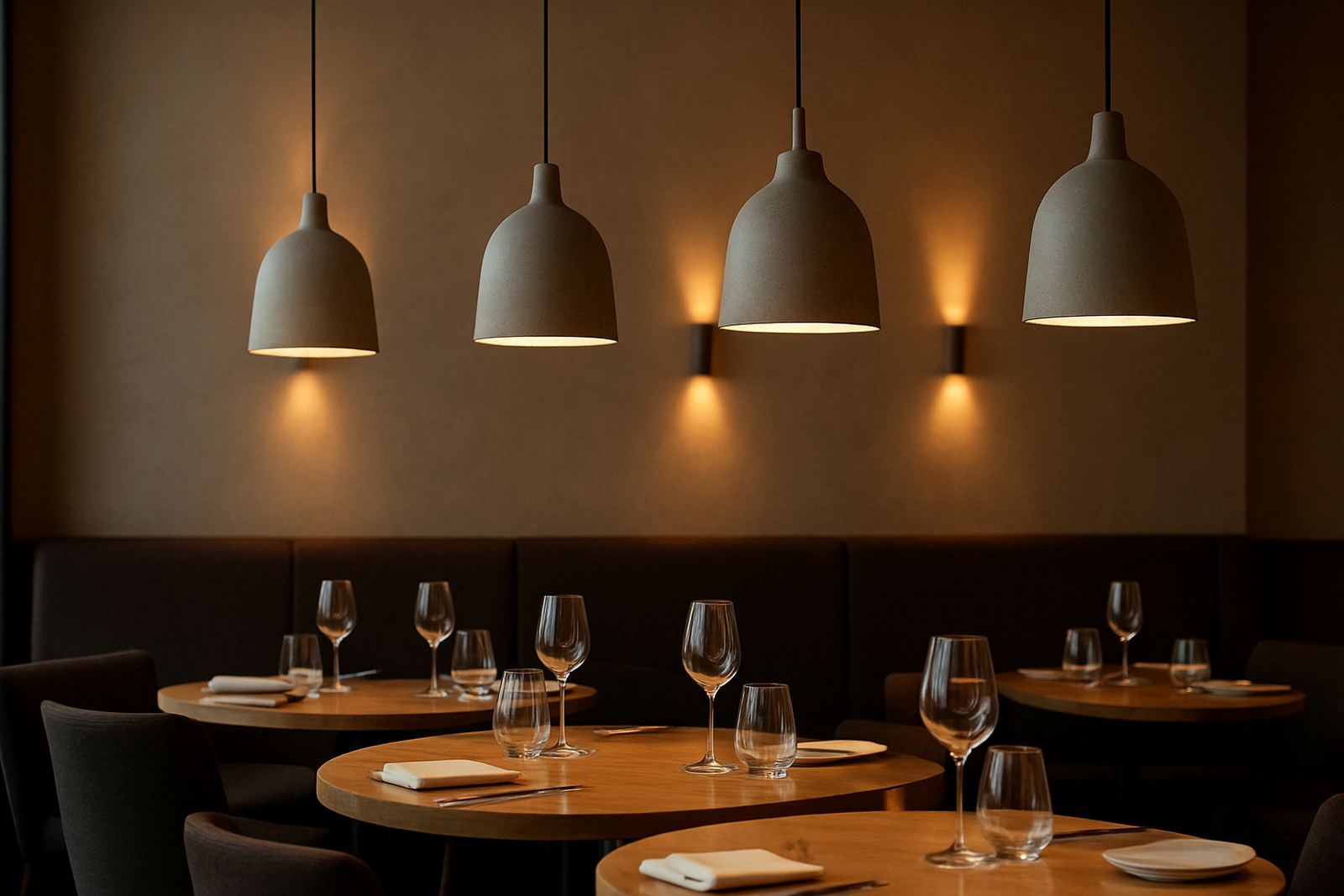
Intimacy in a restaurant starts with controlled contrast. You want enough light for comfortable reading of menus and safe walking, but not so much that every table feels like a meeting room. This balance is often achieved by layering lower ambient light with more focused pools of light over tables and feature areas.
A common mistake is to use one lighting level across the entire venue. That tends to flatten the room. Instead, the bar, waiting area, dining floor and private sections should each have their own intensity. A restuarant that hosts early family meals and later date-night bookings may need separate scenes for each period of service.
- Use dimmable ambient lighting so the room can shift from lunch to dinner service.
- Keep table lighting warm and controlled, usually softer than the general room light.
- Reduce glare from polished tabletops, mirrors and glass partitions.
- Allow staff to work comfortably without spilling light into every guest zone.
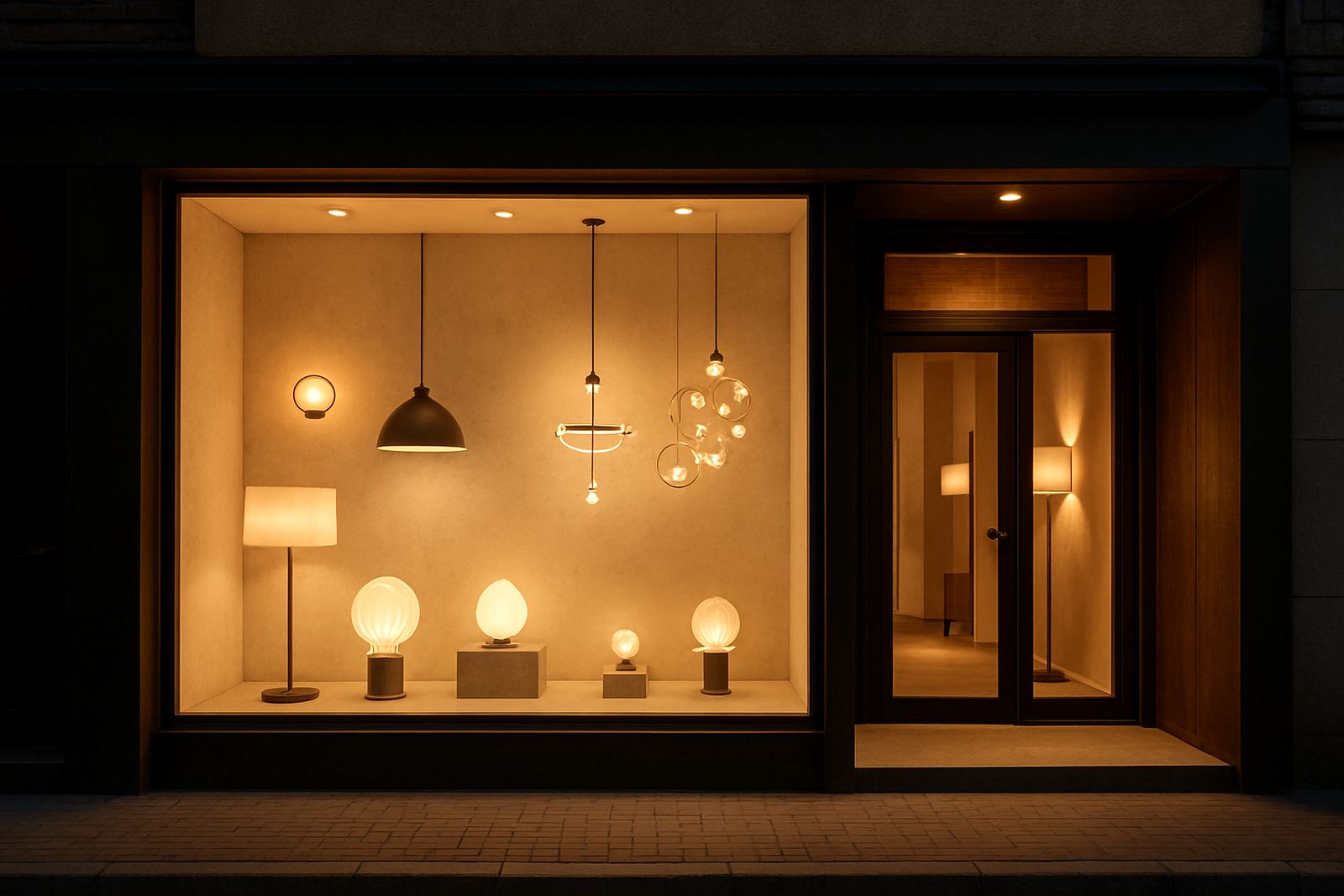
At street level, especially in areas like Sandton or Pretoria where shopfronts are highly visible, the front window should invite passers-by without blasting the interior. That first impression matters, because people often decide in seconds whether a place feels worth entering.
How colour tone affects appetite, skin tone and guest comfort
Colour temperature is one of the most overlooked parts of restaurant lighting. Very cool light can make food look harsh and people look washed out. Very warm light can feel cosy, but if it is overdone the room may seem murky or yellow. The right tone depends on the cuisine, finishes and brand personality, but most dining rooms benefit from a warm to neutral-warm range.
Face lighting matters too. Guests do not want to look tired in their own photos, and staff should be visible without being under a spotlight. Good lighting supports natural skin tone and keeps food looking appetising, especially on darker plates or in venues with deep coloured walls.
In homes converted for private dining, or in boutique restaurants with lower ceilings, the wrong colour tone can quickly make the space feel enclosed. Careful fixture selection and dimming control help avoid that problem. This is where concept design and fixture specification need to work together, not as separate decisions.
For venues in coastal towns like Durban and Umhlanga, humidity can also affect finishes and maintenance over time. Lenses, trims and mounting details should be chosen with cleaning and durability in mind, otherwise the room loses its crispness faster than expected.
Lighting layers that guide guests through the room
Guests should be able to understand a restaurant with their eyes before they settle into the meal. Lighting can lead them from the entrance to the host point, from the bar to the table, and from the table to the toilets without confusion. This does not mean putting bright light everywhere. It means using contrast with purpose.
A well planned layering strategy usually includes ambient light, accent light and task light. Ambient light holds the space together, accent light draws attention to art, bottles, textured walls or a feature counter, and task light supports menus, service stations and circulation areas. When these layers are balanced, the room feels organised and the service feels calmer.
- Highlight the entrance or host point so arrivals are easy to manage.
- Use accent light to make artwork, wine displays or interior finishes stand out.
- Keep service paths clearly lit for staff carrying plates and drinks.
- Separate decorative features from functional lighting so the room does not feel cluttered.
In a compact restaurant in Rosebank, for example, a narrow plan may need wall grazing and table-focused lighting to make the room feel wider. In a larger Cape Town venue, the plan may need stronger zoning so the space does not feel empty between occupied tables.
Controls, scenes and load-shedding planning for South African venues
Restaurant lighting should not be fixed at one setting from opening to close. Different scenes are needed for breakfast, lunch, dinner, private functions and cleaning. Control design allows the team to change the mood quickly without needing to understand the whole electrical setup. That matters when service is busy and the team is stretched.
In South Africa, load-shedding also needs to be considered from the start. Lighting circuits should be planned so essential areas can still work when the power is unstable. That may include backup supply to key routes, bar counters, payment areas and selected table zones. It does not mean every fitting must stay on, but the room must remain usable and safe.
Municipal rules and building conditions can affect what is possible, especially in older premises with existing wiring or shared tenancy constraints. A proper lighting audit helps identify what can be retained, what must be replaced and where extra control hardware is worth the spend.
For owners in Midrand or Sandton where restaurants often operate in mixed-use buildings, this planning can save a lot of trouble later. It also reduces the risk of uneven lighting after a rush refit. The best system is one the team can use confidently night after night.
A Rosebank dinner service example that shows the difference
Imagine a Rosebank bistro preparing for dinner service on a busy Friday. The front glazing catches the traffic outside, the bar is active, and the dining room needs to feel warm without losing clarity. If the ceiling light is too bright, the tables look exposed. If it is too dark, guests strain to read menus and staff struggle to move quickly.
The solution might be a combination of softly dimmed ambient light, focused pendants over key tables, gentle wall light to lift the room edge and a slightly brighter path through the main circulation line. The window treatment can be managed so people outside see a lively interior, but not every face is lit like a showroom. The result is a room that feels considered and efficient at the same time.
That is why post-install focusing is so important. Even a good plan can fall short if the beam angles are not adjusted properly on site. A few degrees can change how comfortable the whole room feels. In hospitality, small changes often have the biggest effect.
Illumin8d works across Johannesburg, Pretoria, Cape Town, Durban and Umhlanga on restaurant lighting that supports brand identity, guest comfort and practical service needs. From concept design and layout plans to installation coordination and final focusing, the aim is simple: help the room feel right when the first guest walks in and keep it working through the last seating.
Choosing the right lighting partner for dining spaces
Restaurant lighting is not only about fixtures. It is about how people move, sit, eat and remember the place afterwards. A good partner should look at the architecture, the menu style, the service rhythm and the operating constraints before making recommendations. That includes fixture specification, mockups and samples, control design and the practical details of installation.
For venue owners, this approach saves time and avoids expensive guesswork. It also helps keep the design consistent between the entrance, dining floor, toilets and outdoor spill areas. When those areas are treated as one experience, the restaurant feels more complete and guests tend to settle in faster.
Lighting can make a dining room feel generous, calm, lively or romantic, sometimes all in the same evening. The trick is knowing how to use it without overworking the space.