
Start With What the Pendant Must Do
Before you mark a ceiling point, decide what the pendant is there to do. Is it lighting a dining table, framing a shopfront window, adding mood over a restaurant counter, or giving a hallway a strong visual centre? The job of the fitting should guide the height first, not the shape of the pendant.
For task areas, the light needs to sit low enough to do useful work without blocking sight lines. For decorative areas, the fitting can hang a little lower because the goal is more about balance and atmosphere. In homes across Johannesburg and Cape Town, we often find that people choose a beautiful fitting first then only later realise it crowds the room or throws light into someone’s eyes.
- Task lighting needs clear working light and less glare.
- Decorative lighting can sit lower if circulation is not affected.
- Shopfront and restaurant pendants must support both style and visibility.
The Table Rule That Actually Works
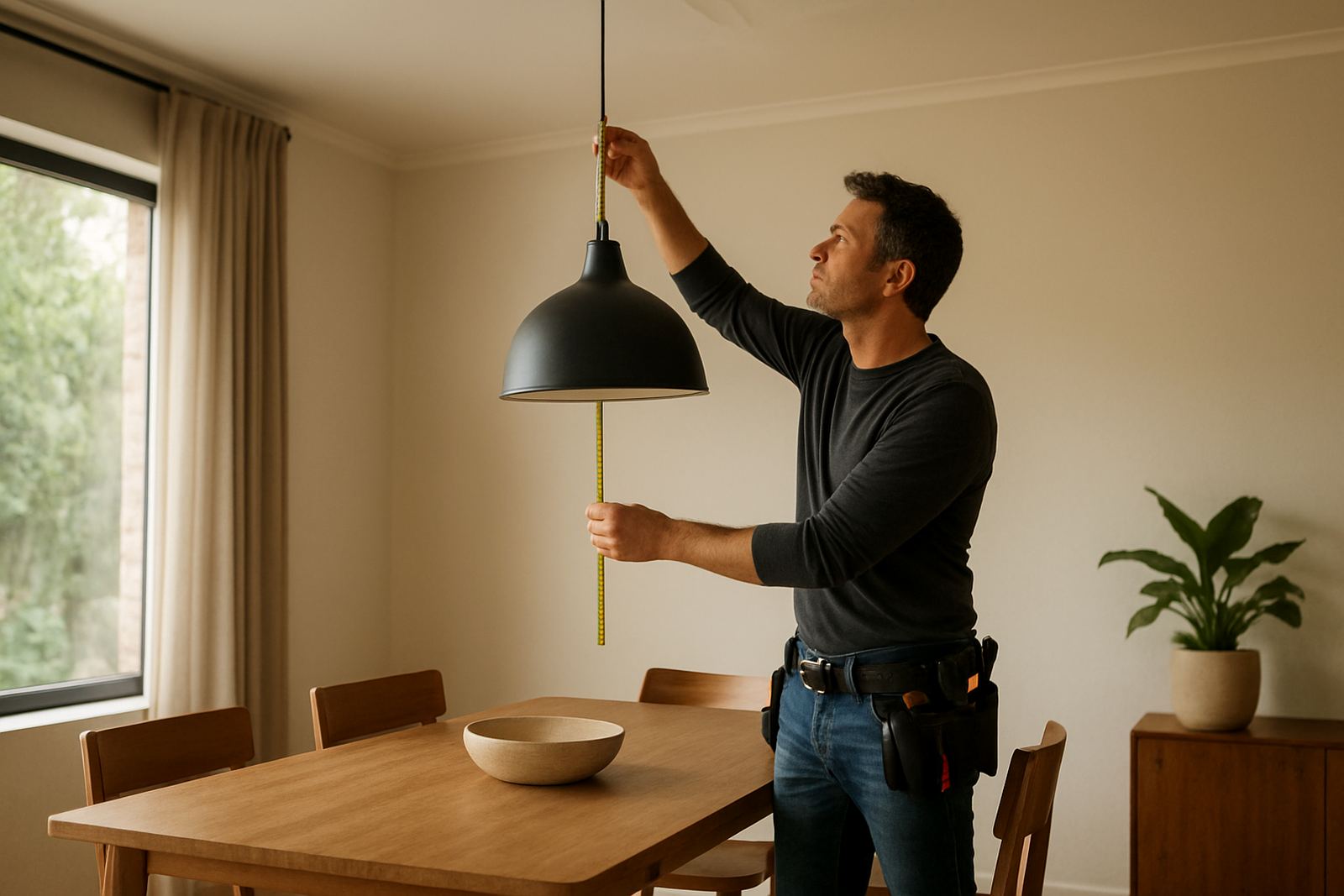
For dining tables, a reliable starting point is 750 mm to 900 mm from the tabletop to the bottom of the pendant. That range usually keeps faces visible across the table and lets the light pool where it should. If the fitting is very wide, the bottom edge may need to sit a little higher so it does not feel heavy over the table.
In open-plan homes, the table is often the visual anchor of the room, so pendant height affects the whole space. If the ceiling is low, keep the fitting closer to 750 mm above the table. If the ceiling is high, a slightly lower hang can bring the room back to human scale. The goal is not just enough light, but the right relationship between ceiling, pendant and furniture.
- Standard starting point: 750 mm to 900 mm above the table.
- Raise it slightly for very large or wide fittings.
- Check the view from seated and standing positions.
Counters, Islands and Hospitality Surfaces Need More Clearance
Kitchen islands, bar counters and restaurant serving points need a different approach. People stand, lean, serve and pass behind those surfaces, so the pendant should be high enough to avoid head bumps but low enough to give intimacy and control. A common range is 700 mm to 850 mm above the worktop, though the exact height depends on the size of the pendant and the ceiling height.
In a restaurant in Rosebank, for example, pendant lights over a long central banquette were set too low during the first trial. Guests loved the look, but staff found they blocked sight lines across the room and made the space feel tighter during busy service. Lifting them by just 120 mm improved the flow straight away. Small adjustments like that can make a big difference, especially in spaces where people move constantly.
- Keep pendants high enough for staff movement and sight lines.
- Use dimming where the same space serves lunch, dinner and drinks.
- Try a mockup before final fixing where possible.
Room Height Changes Everything
Ceiling height has a major effect on pendant placement. A fitting that works beautifully in a 2.4 m ceiling may look lost in a double-volume entrance. As a general guide, the pendant should relate to the occupied level of the room, not just the ceiling plane. In taller spaces, use the fitting to draw the eye down and define a zone.
For ceilings around 2.4 m to 2.7 m, keep pendants modest in drop and avoid oversized shades that dominate the room. For ceilings above 3 m, longer suspension can help, but only if the room can support it visually. In coastal areas like Umhlanga and Durban, we also think about materials and finishes that cope better with humidity and salt air, especially where fittings are near open doors or verandas.
- Low ceilings need tighter drops and cleaner lines.
- High ceilings can handle longer hangs, but proportion still matters.
- Coastal locations may need better material selection for longevity.
Sight Lines, Glare and Daily Comfort
A pendant can look excellent in a photo and still be annoying to live with. If people see the bare lamp from a seated position, or if the diffuser sits at eye level when standing, discomfort soon follows. This matters in homes, but even more in restaurants and shopfronts where guests stay for longer periods and look around the room.
Think about how the fitting reads from each angle. Can someone across the table still make eye contact? Can a customer at the till see the merchandise behind the light? Does the pendant cast shadows where the room needs brightness? These are practical questions and they matter more than a neat height number on its own. Good pendant placement supports the room, it does not fight it.
- Check seated eye level, standing eye level and entry views.
- Use opal or shaded fittings where glare is a risk.
- Balance decorative impact with day-to-day comfort.
A Simple Checklist Before Final Installation
Once the pendant is chosen, use a final site check before the ceiling point is fixed. Measure the furniture, confirm the drop, test the light beam, and look at the fitting from the main approach path. In a home in Pretoria, that might mean checking the view from the lounge to the dining area. In a shopfront in Sandton, it might mean standing outside on the pavement and seeing how the pendant reads through the glass.
If the fitting is part of a group, make sure each one lines up consistently. Uneven drops are noticeable even by a few millimetres. Also allow for practical issues like pendant weight, ceiling fixing points and dimmer compatibility. During load-shedding planning, it is also worth considering how the pendant works with backup lighting so the space still feels usable when the power drops.
- Measure from the finished floor and the finished surface, not just the rough structure.
- Check alignment in daylight and after dark.
- Allow for dimming, controls and any maintenance access.