
Start With the Job a Corridor Has to Do
A corridor is not just a pass-through. It may connect bedrooms, offices, a kitchen or a back entrance, and each use calls for a different light level. In a home, you want enough visibility for evenings and early mornings. In a restaurant or retail space, circulation lighting should help guests move naturally without drawing attention away from the main areas.
The first decision is how bright the space needs to be. Narrow passages usually need less output than wide hotel-style corridors, but dark paint, timber cladding and matt finishes can absorb more light than expected. As a rule, plan for even coverage rather than one bright fitting at the end of the hall. Uneven light makes a corridor feel shorter, and sometimes a bit awkward too.
In South African homes, corridor lighting also has to work with load-shedding. A simple plan that includes battery-backed fittings or low-wattage task lighting can make a big difference when the power drops at 7 pm and people still need to move safely through the house.
Layer Light Instead of Relying on One Ceiling Point
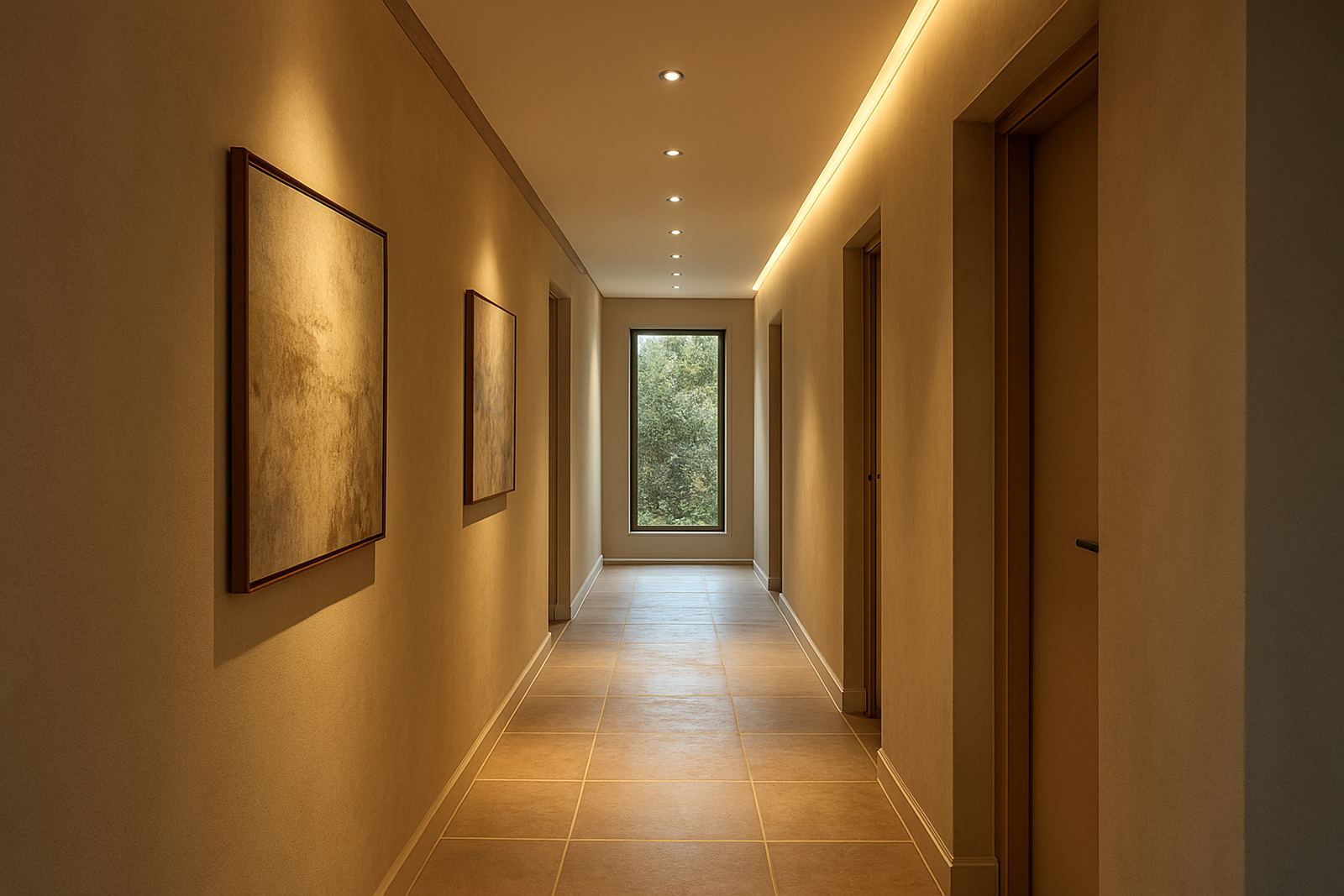
The strongest corridor schemes usually combine three layers: general light, accent light and practical guidance light. General light keeps the passage usable. Accent light can highlight artwork, a textured wall, or a doorway. Guidance light helps people find their way at night without switching on every fitting in the house.
Good layering also reduces glare. A single bare downlight can create a bright pool on the floor with a dark ceiling around it. That may look tidy on paper but it is often hard on the eyes. A better approach is to spread light along the corridor with smaller fittings, wall washers or concealed strips where the architecture allows it.
- Use ceiling fittings for even base light across the full length.
- Add wall lights or recessed details where you want visual interest.
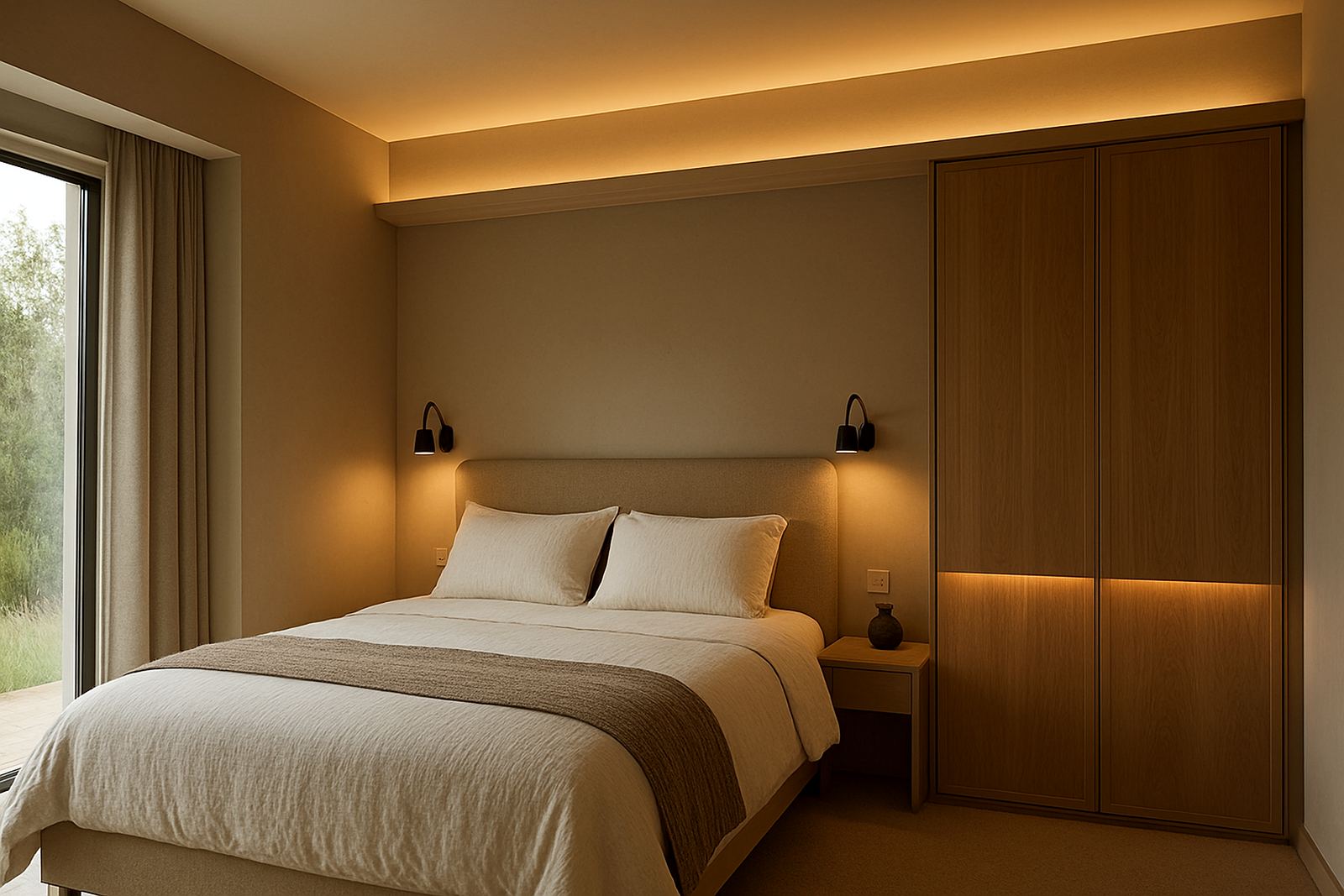
- Include night-friendly low-level lighting for bedrooms, stair landings or family homes with children.
- Keep switches easy to reach at both ends of long passages.
For long Johannesburg corridors in older homes, layering is especially useful because natural light can be limited. In newer apartments, the right mix can also make a tight passage feel less tunnel-like.
Choose the Right Fittings for the Width and Height
Fitting choice should follow the proportions of the corridor. Low ceilings usually suit compact recessed units or slim surface fittings. Higher ceilings can take pendants in selected spots, but only where the passage is wide enough and people will not brush past them. In a narrow hallway, even a small pendant can become a headache.
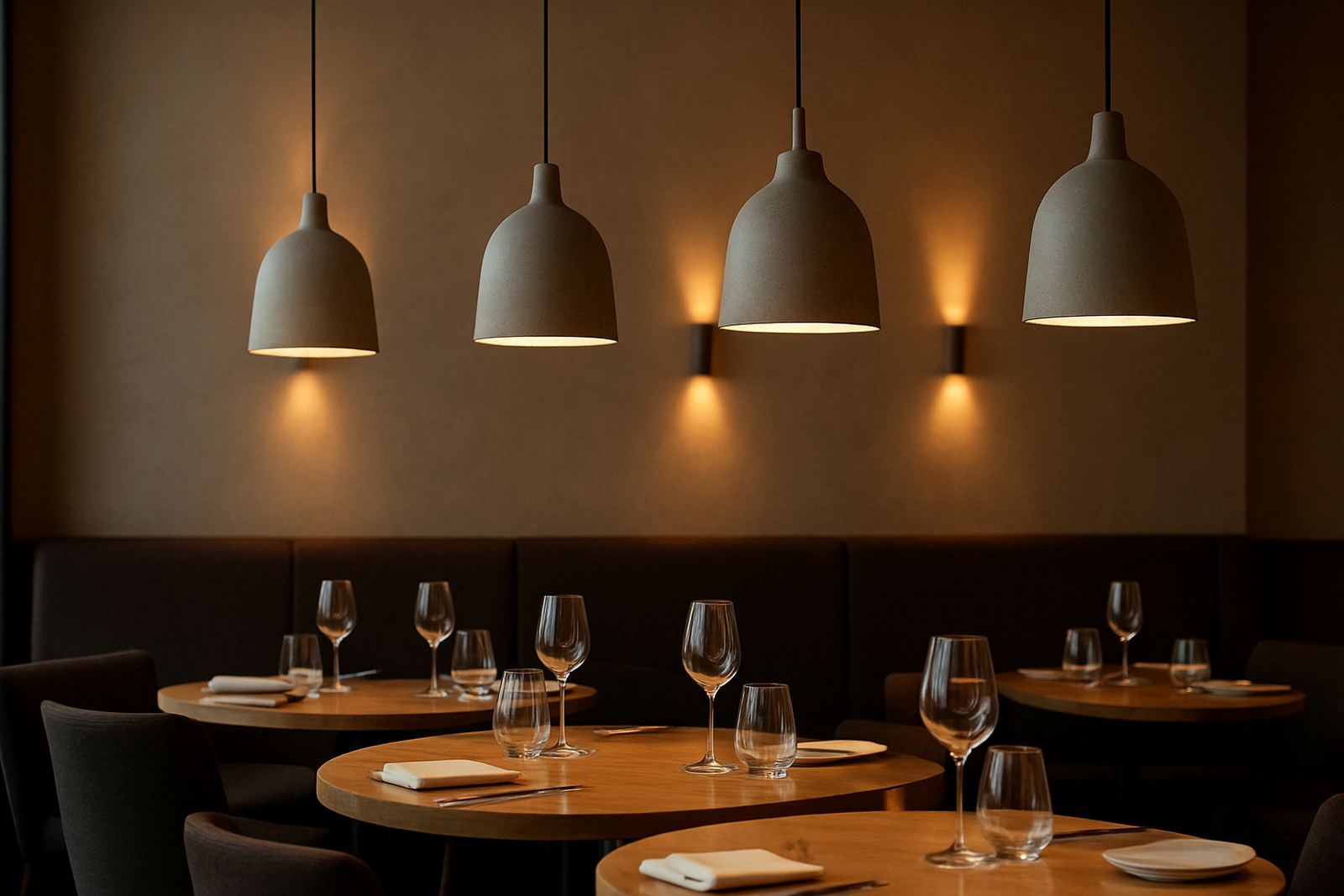
Wall-mounted fittings work well when ceiling space is limited or when you want softer side light. They are useful in homes with plaster detail, hotel corridors and restaurant entrances where a warmer feel is needed. For a clean modern look, recessed linear fittings can give a neat rhythm down the hall while keeping the ceiling uncluttered.
Material selection matters too. Coastal areas such as Durban and Umhlanga need fittings that can cope with humidity and salt in the air. If a corridor gets warm from afternoon sun or near a kitchen, choose finishes and drivers that can handle heat without shortening lamp life.
- Low ceilings: recessed downlights, slim surface mounts, compact wall lights.
- Medium ceilings: linear fittings, decorative wall lights, short pendants in wider passages.
- Coastal homes: corrosion-resistant finishes and sealed components.
- Busy commercial corridors: fittings that are easy to clean and maintain.
Use Colour Temperature to Set the Mood
Warm white light is usually the safer starting point for corridors in homes and hospitality spaces. It feels calm and flattering, and it tends to suit timber floors, painted walls and artwork. Cooler light can work in back-of-house areas, storerooms or modern commercial passages where clear visibility matters more than atmosphere.
A corridor does not have to match every other room exactly, but it should sit comfortably with the spaces around it. If the lounge is warm and relaxed while the hallway is harsh and blue, the transition will feel jarring. A consistent colour temperature, or a carefully planned shift from one zone to another, makes the route through the building feel more natural.
For homes in Pretoria and Midrand where morning and evening routines are busy, many clients prefer warmer lighting with separate night settings. It keeps the passage usable without waking the whole house. Small dimmer adjustments can make the difference between a bright family route and a quiet late-night walkway.
Make the Corridor Useful, Not Just Decorative
Decorative lighting has a place, but a corridor still has to do the practical work first. That means correct placement, safe switching and enough light at door handles, thresholds and floor changes. If there are steps or uneven tiles, highlight them clearly. If there is artwork, place the light so it does not cast distracting shadows on the frame.
In shops and restaurants, corridor lighting can also support brand identity. A soft, patterned glow at the entrance to a dining room can prepare guests for the experience ahead. In a retail back corridor, lighting may need to be simpler and more direct so staff can move stock safely. The best result is when the lighting supports movement without shouting for attention.
We often see corridors where the fittings are pretty but poorly aimed. The wall looks nice and the floor is still too dim. That is where layout plans and careful aiming matter. Post-install focusing is worth doing properly because even a good fitting can underperform if it is pointing the wrong way.
A Local Example From Rosebank to Umhlanga
One practical example is a family home in Rosebank with a long central passage linking bedrooms, a study and the living area. The owners wanted the corridor to feel calmer at night and brighter in the morning, without lighting the whole house every time someone walked through. The solution was a layered scheme with recessed base lighting, small wall lights at intervals and a low-level night circuit near the bedrooms.
The same thinking works in a restaurant corridor in Cape Town or a guest passage in Umhlanga. Guests should know where they are going, staff should be able to move quickly, and the lighting should support the overall feel of the venue. In older buildings around Johannesburg, where corridors can be irregular, a site lighting audit helps identify dark patches, bright hotspots and switch locations that do not suit the way people actually move.
When a corridor is planned properly, it stops being forgotten space and starts doing its job quietly. That is usually the sign of good lighting design. It is practical, comfortable and it does not get in the way of the room at the end of it.
If you are planning a home, shopfront or hospitality project, start by looking at how people move through the space before you choose fittings. The route itself will tell you what the light needs to do.