
Start with a calm base layer for the whole room
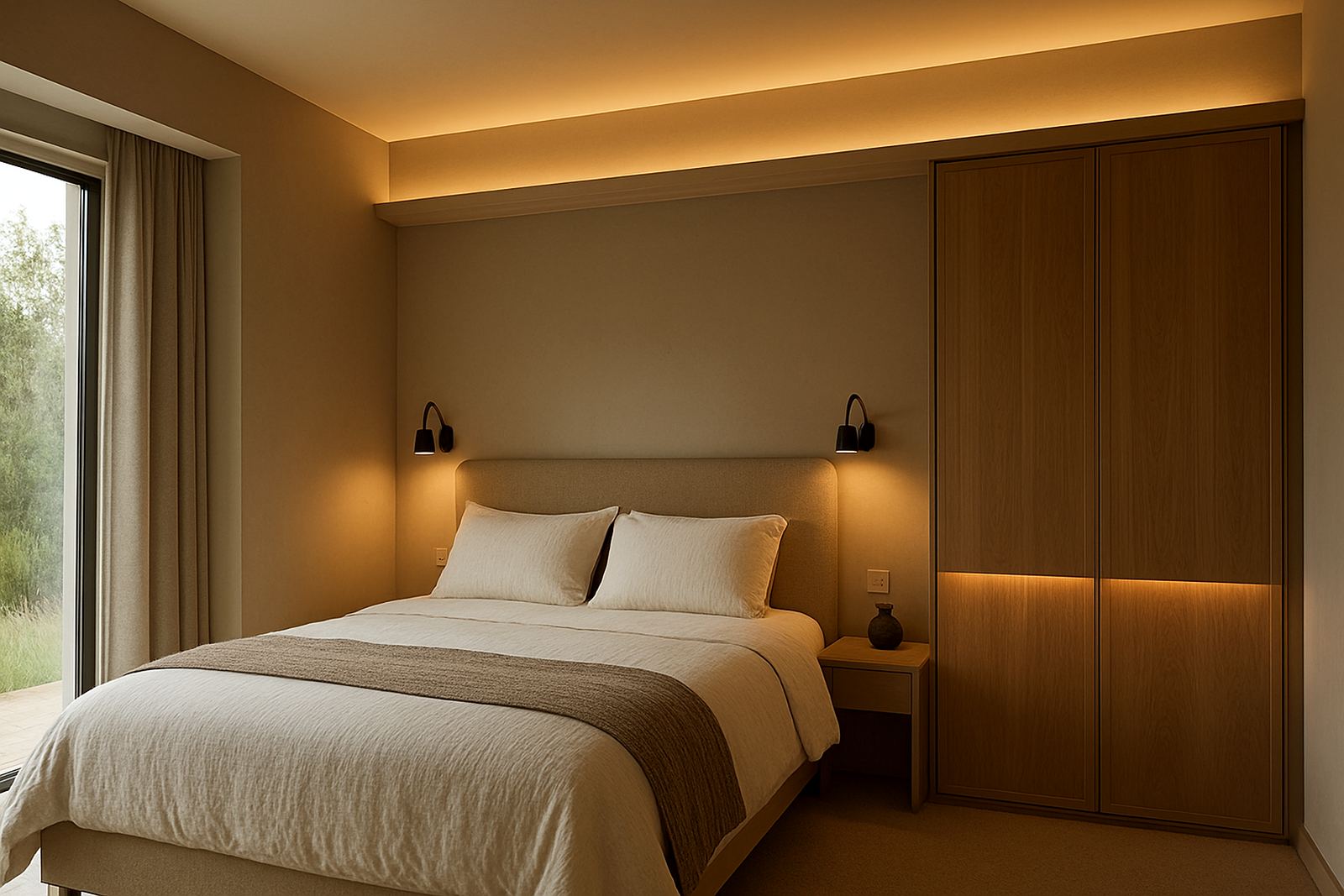
The first job in a bedroom is to create even light that feels easy on the eyes. A soft ceiling light, cove detail or well placed downlights can handle the general wash, but the aim is not to make the room feel like a store room. Keep the ambient layer warm, controlled and dimmable so the room can shift from morning routine to evening rest without harsh glare.
In Johannesburg homes, where many bedrooms have a mix of plaster ceilings, curtain bulkheads and built in cupboards, the base layer needs careful spacing. Too many downlights can leave circles of brightness on the floor and dark patches in the corners. Too few leaves the room gloomy and makes dressing harder on winter mornings.
- Use warm white light around 2700K to 3000K for a restful feel.
- Keep fittings out of direct view from the bed to reduce glare.
- Plan for a dimmer or scene control so the room can move from bright to soft.
- Allow enough light near wardrobes and mirrors without washing the entire room too hard.
A well judged base layer is the difference between a room that feels settled and one that feels busy.
Put bedside lighting where your routine actually happens
Bedside support light is one of the most useful parts of bedroom lighting. It should let you read, check a phone, find a glass of water or get up without waking the whole room. Wall mounted reading lights, slim pendants on either side of the bed or small table lamps all work, as long as they are placed for comfort and not just for looks.
Good bedside light sits low enough for reading, but high enough so the lamp shade or fitting does not block the light. If one person sleeps while the other reads, separate switches are worth the effort. That simple choice keeps couples happy and avoids arguments about the main light going on at midnight.
- Place reading light so the beam falls on the book, not into the eyes of the person beside you.
- Use individual switching on each side of the bed where possible.
- Choose fittings with a small enough footprint for narrow side tables.
- If the bedroom is tight on space, wall mounted fittings save surface area and make cleaning easier.
In apartments around Rosebank and Sandton, where bedrooms can be compact, bedside wall lights also help free up room for storage and moving around the bed.
Add accent light to soften the room and guide the eye
Accent lighting is not only for hotels. In a bedroom it can be used to highlight a headboard, a textured wall, a niche, artwork or a shelf without lighting the whole room. This layer brings depth and helps the space feel finished, especially where the bedroom opens into an ensuite or dressing area.
Keep accent light gentle. The goal is a quiet glow, not a spotlight effect. A hidden strip behind a headboard, a small adjustable fitting on a feature wall or a soft wash over curtains can add interest without disturbing sleep. In coastal homes in Umhlanga or Durban, where humidity can affect some fittings and finishes, it also pays to choose materials that hold up well over time.
Accent layers are also useful for creating a stronger sense of proportion in larger rooms. In a spacious home in Pretoria or a main suite in Cape Town, a little contrast can stop the bedroom from feeling flat. The trick is to use less light more carefully.
Choose controls that make nights easier, not complicated
A bedroom should not require three switches and a second thought every time you walk in. The controls should be clear and well grouped so you can light the room in seconds. This matters even more when load-shedding is part of daily life, because the bedroom may need to shift from normal use to backup lighting quickly.
Simple scene control can make a big difference. One setting for waking up, one for dressing and one for winding down gives the room structure without fuss. If the home uses battery backup or inverter supply, the bedroom lighting should be planned to work sensibly on reduced power too. That means selecting efficient fittings and avoiding unnecessary load on the system.
- Keep the main switch near the door for easy entry and exit.
- Use separate circuits for ambient, bedside and accent lighting where possible.
- Consider emergency or low-power options for late night movement during outages.
- Test the room in both full light and low light before finalising the layout.
Practical control planning often matters more than the fitting itself, because it is what you use every day.
Match the lighting to the furniture and room size
Bedroom lighting works best when it respects the shape of the room. Low ceilings need tighter fittings and careful beam angles. High ceilings can handle pendants or layered ceiling detail. Built in cupboards need clear light at the front edge, while a dressing nook needs stronger task light than the rest of the room.
Furniture layout should guide placement. If the bed sits under a window, the lighting may need to focus more on side walls and storage. If the room is long and narrow, splitting the lighting into zones helps balance the space. In a family home in Midrand, for example, a master bedroom with a king bed, a vanity area and a reading chair should not rely on one central fitting. Each use needs its own layer.
We often find that bedrooms are overlit in the wrong places and underlit where people actually stand. A little planning around cupboard depth, mirror position and bedside height avoids that problem and keeps the room comfortable to use.
What a local bedroom lighting plan should check before installation
Before fittings go in, the room should be checked for ceiling height, natural light, wall colours, furniture positions and the way the room is used at night. That basic survey helps avoid glare, awkward shadows and wasted fittings. In South African homes, it also helps to factor in power interruptions, ceiling access and the quality of natural light through the day.
In a Rosebank apartment with pale walls and large windows, the bedroom may need softer dimming because daylight already does a lot of the work. In a home in Pretoria with a darker painted feature wall, the lighting may need more careful aiming to keep the room from feeling heavy. Each house asks for something slightly different.
- Check where the bed, cupboards and mirrors will sit before final wiring points are set.
- Look at how much daylight enters the room at sunrise and sunset.
- Choose fittings that suit the ceiling height and finish of the room.
- Plan the room so cleaning, changing linen and moving at night are all easy.
That kind of practical setup is what turns bedroom lighting from guesswork into a proper part of the home.