Why bar lighting has to do two jobs at once
In a bar, lighting is doing the work of atmosphere and service at the same time. If the room is too dim, the space may feel intimate but staff struggle to read labels, handle payments and clean spills safely. If it is too bright, the bar can feel cold and every surface shows marks, fingerprints and clutter.
The balance starts with understanding how people move through the venue. Guests arrive, scan for the counter, choose a seat, check the drinks list and then settle in. Staff need clear task light at the bar top, under shelving and at the till point, while the seating areas can stay softer. In South Africa, where load-shedding still shapes operating hours and generator or inverter use matters, every fitting should earn its place by doing a proper job.
Layer light so the bar feels warm, not flat
The best bar schemes use layers instead of one central light source. A narrow beam can highlight bottles, a warm wash can shape the walls, and low-level light can guide people along the floor and between tables. This keeps the venue interesting after sunset without leaving staff in the dark.
- Use brighter light on the bar counter and POS point.
- Keep seating zones one or two steps softer than the service area.
- Use accent light on artwork, shelving or textured finishes.
- Add floor or toe-kick light where patrons need to see steps and edges.
In Rosebank or Sandton, where many bars sit inside mixed-use buildings, layered lighting also helps when natural light fades fast in the afternoon. A well planned scheme still feels calm at 7 pm, even when the weather changes quickly outside.
Choose colour temperature that suits the drinks and the room
Colour temperature has a big effect on how drinks, finishes and skin tones look. Too cool and the bar can feel clinical. Too warm and white surfaces turn yellow, while glass and chrome can lose definition. For most bars, a warm white range works best, with careful use of slightly cooler task light where precision is needed.
For a cocktail bar, warm light usually flatters timber, brass and dark paint. For a sports bar or high-turnover venue, a slightly cleaner tone can help with visibility without killing the mood. The important point is consistency. Mixed temperatures across the same room can make the whole space look untidy, even if the fittings themselves are good.
- Keep colour temperature consistent across visible fittings.
- Test how bottles, glassware and mirrored finishes look at night.
- Check that table light does not clash with daylight from windows.
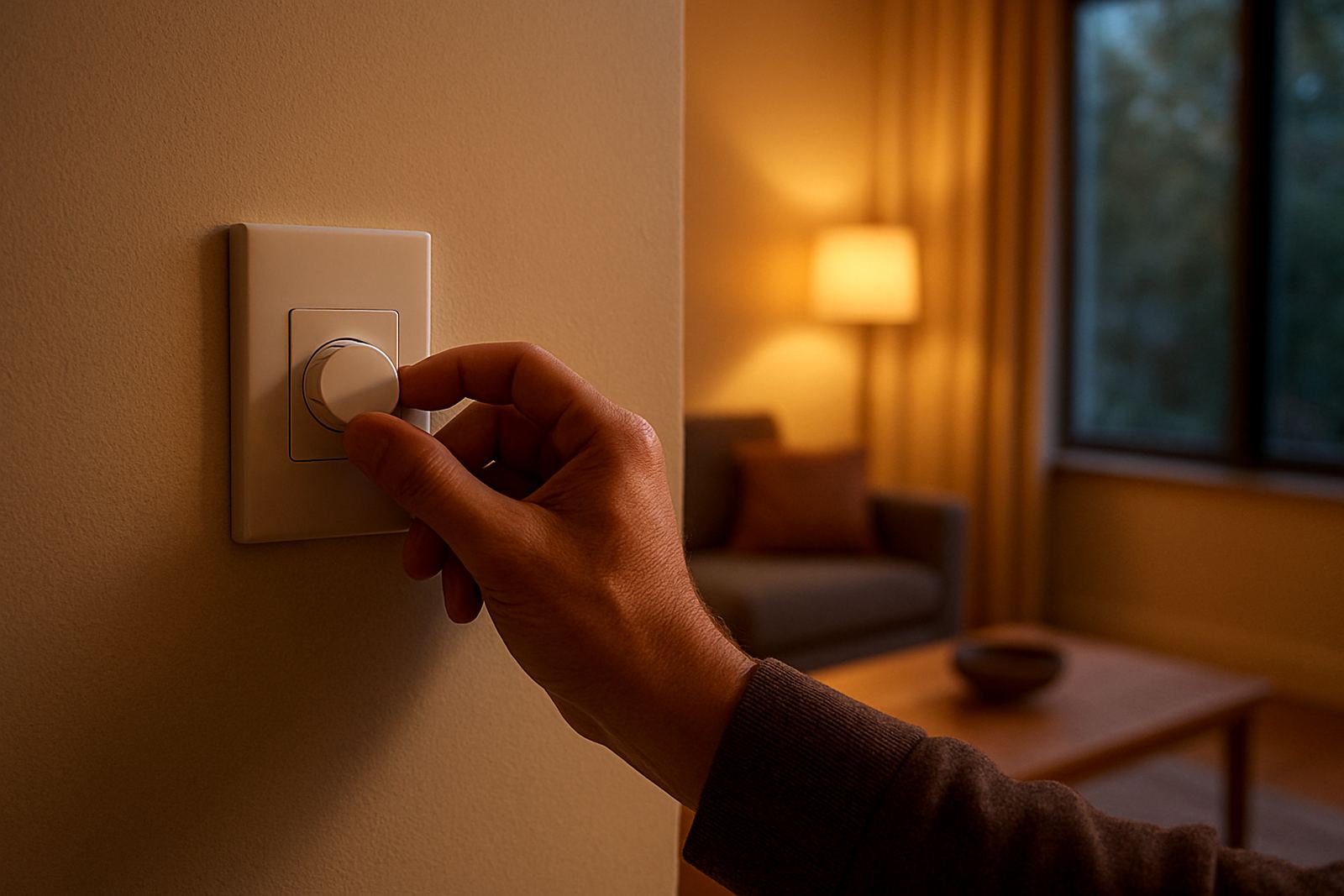
- Use dimming so the room can shift from early trading to late service.
Make the bar functional for staff, not just photogenic
A bar can look beautiful and still be hard to work in. Staff need to see spirit labels, wash glasses, count stock and move safely behind the counter. That means lighting must support speed and accuracy, especially during peak trading on Friday and Saturday nights. If the counter is deep, add light to the back edge and under shelves so bottles do not disappear into shadow.
Good control design matters here. Separate circuits let the venue dim guest areas while keeping the service zone brighter. Motion sensors are not always suitable behind a bar, but timed scenes and manual controls can help staff adjust the room during quieter periods. In coastal places like Umhlanga and Durban, fittings also need to cope with humidity, salt in the air and regular cleaning. Choosing the right finish now saves trouble later.
A Johannesburg example: a compact bar in a mixed-use building
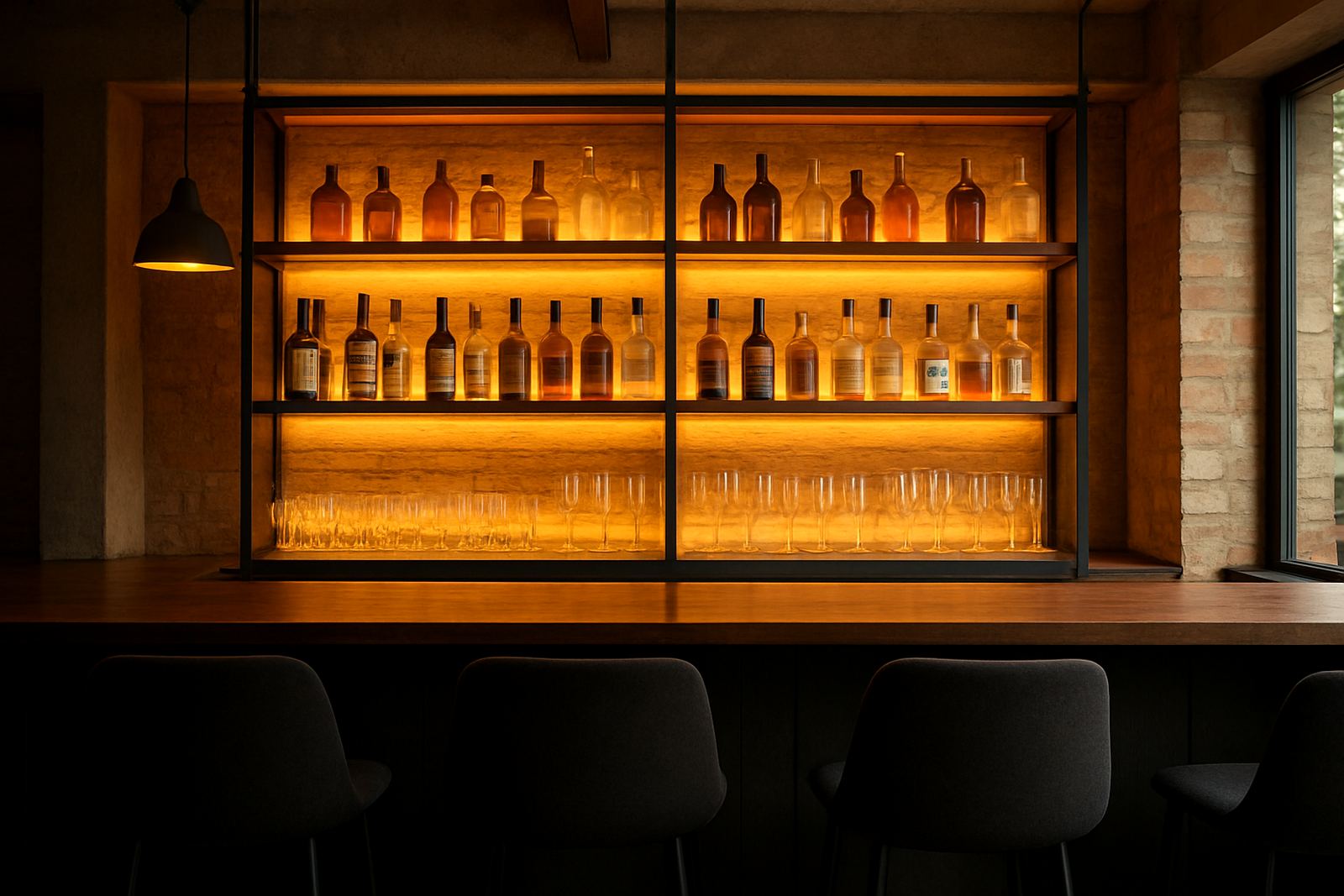
For a compact bar in Rosebank, the challenge is usually sightlines. The venue may have a narrow frontage, a deep plan and neighbouring buildings close by, so the lighting has to pull people inward without blasting the street. One effective approach is to use a lit bar face, a subtle glow behind bottle shelves and focused pendants over the counter. That gives the front of house enough presence without lighting the whole room at full brightness.
In that kind of setting, the back bar can carry the visual identity while the seating area stays low and calm. A good site lighting audit will also check reflections from glass and polished stone, because a bright patch in the wrong place can make the room feel smaller not bigger. The result should feel intentional, with every fitting doing a job.
Plan for maintenance, not just opening night
Bars live hard. Glasses get moved, fittings gather dust, and certain spots are exposed to steam, smoke and constant finger marks. That means the design must be practical enough to maintain week after week. If a lamp needs a ladder every time it fails, or a fitting is hard to clean, it will become a problem quickly.
- Specify fittings that can be cleaned without dismantling half the bar.
- Keep spare lamps or modules on hand for busy venues.
- Allow access for maintenance above ceilings and behind shelving.
- Use durable finishes where customers and staff touch surfaces often.
For bars in Cape Town, Pretoria or Johannesburg, the right maintenance plan matters just as much as the first lighting layout. A scheme that is easy to service is usually more reliable, and less likely to disrupt trade on a busy night.