
Why glare is so common in modern interiors
Glare usually shows up when a bright source sits in the wrong place, points straight into the eye, or reflects off shiny surfaces at the wrong angle. In homes and hospitality spaces this often happens with open ceilings, polished floors, glass tabletops, mirror finishes and bare lamps near eye level. The room can still be well lit, but people feel strained, squint and move around less comfortably.
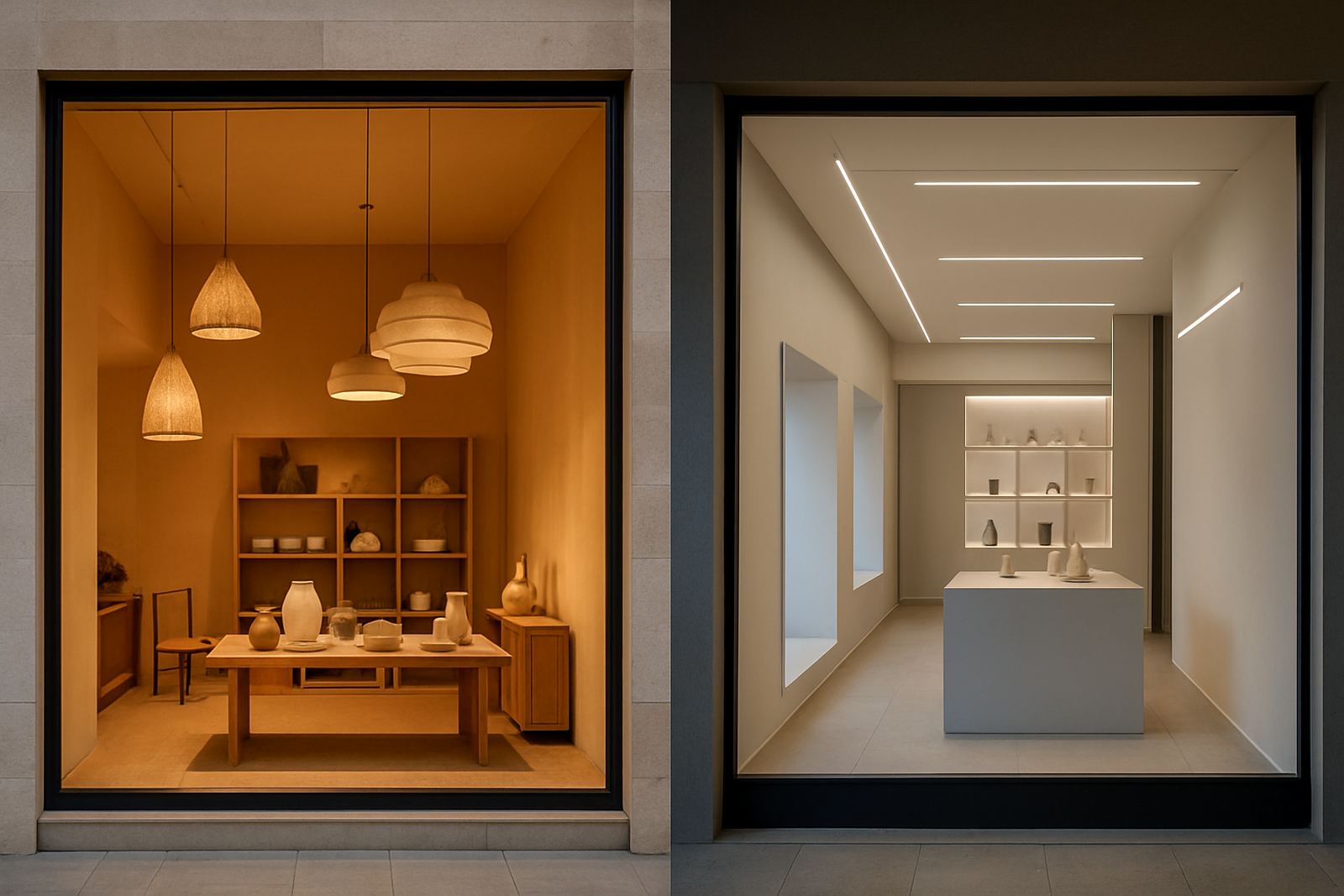
In South African projects, we see glare most often in restaurants with exposed ceilings, double volume living rooms and shopfronts where the street-facing display needs to work after dark. The fix is rarely just “less light”. It is better control of where the light lands, how bright it is at eye level and how the fitting is shielded.
Start with the viewing height, not only the ceiling plan
Good glare control begins with how people experience the space. A standing customer in a shopfront sees different angles from a seated diner or someone relaxing on a couch. That means the same fitting can be acceptable in one zone and harsh in another. We look at sightlines from doorways, service counters, seating areas, circulation routes and reflective surfaces before settling on a layout.
For practical planning, it helps to think in layers:
- Ambient light for general comfort
- Task light for reading, serving and product display
- Accent light for features, art and textured surfaces
- Control zones so the brightness can be adjusted by time of day
When these layers are balanced, the eye is not forced to adapt to one intense source all the time. That makes a room feel calmer and more useable.
Choose fittings that hide the source, not the effect
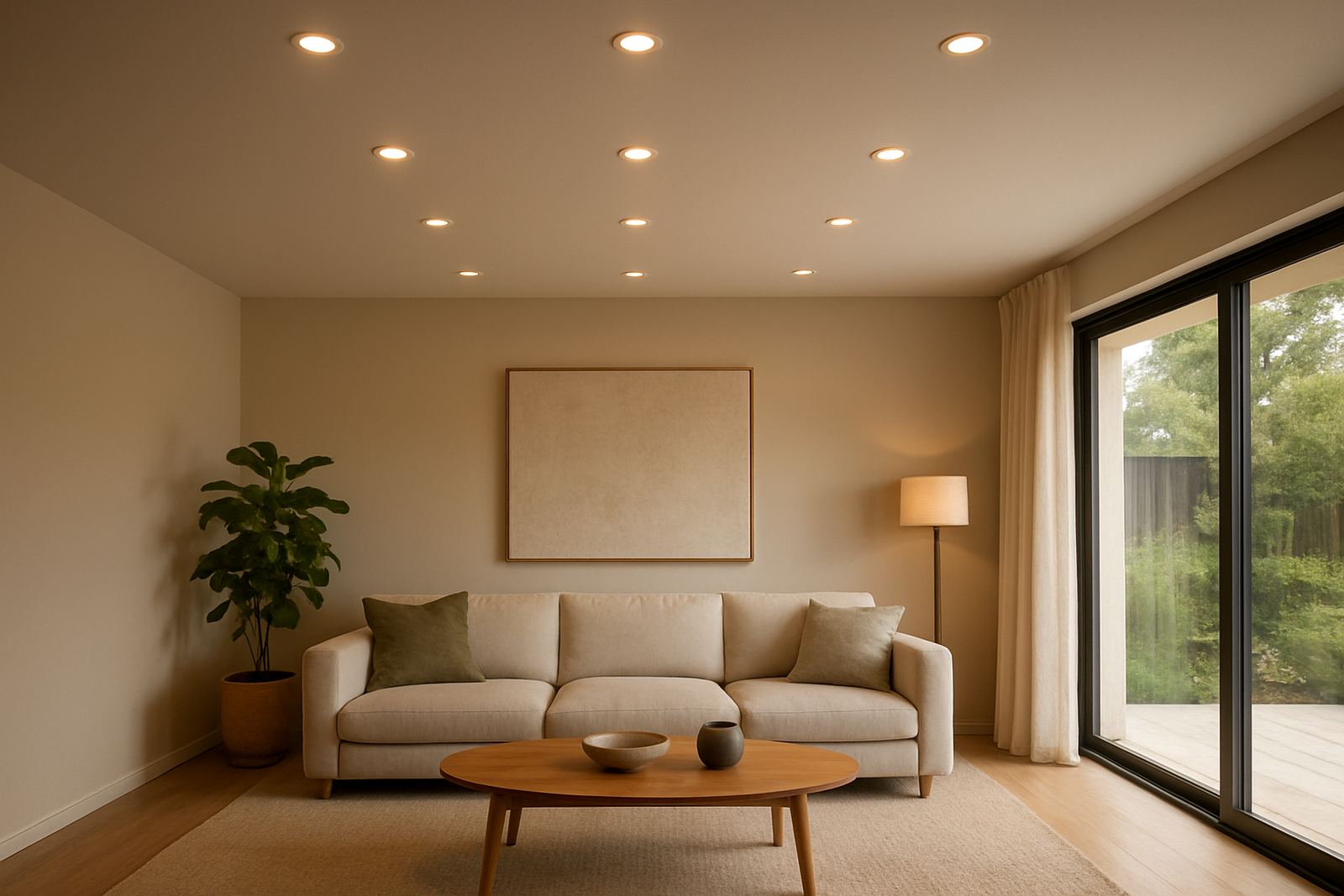
Many glare problems come from seeing the lamp directly instead of seeing the light on the surface. Deep recesses, baffles, louvres and carefully placed shades can soften the view of the source while still giving enough output. In decorative interiors, the fitting itself must also suit the room, because a beautiful fitting that throws light straight into the eye is still a problem.
For shopfronts and restaurants, aim for fittings with good shielding where people naturally look up. In homes, bedside areas, passageways and seating clusters need particular care. Wall washers, indirect strips and concealed coves can add brightness without making the room feel harsh. On coastal projects in Cape Town and Umhlanga, we also pay attention to finishes that cope better with humidity and salt air, because degraded surfaces can start reflecting light unevenly over time.
- Use deeper set light sources where people face the fitting
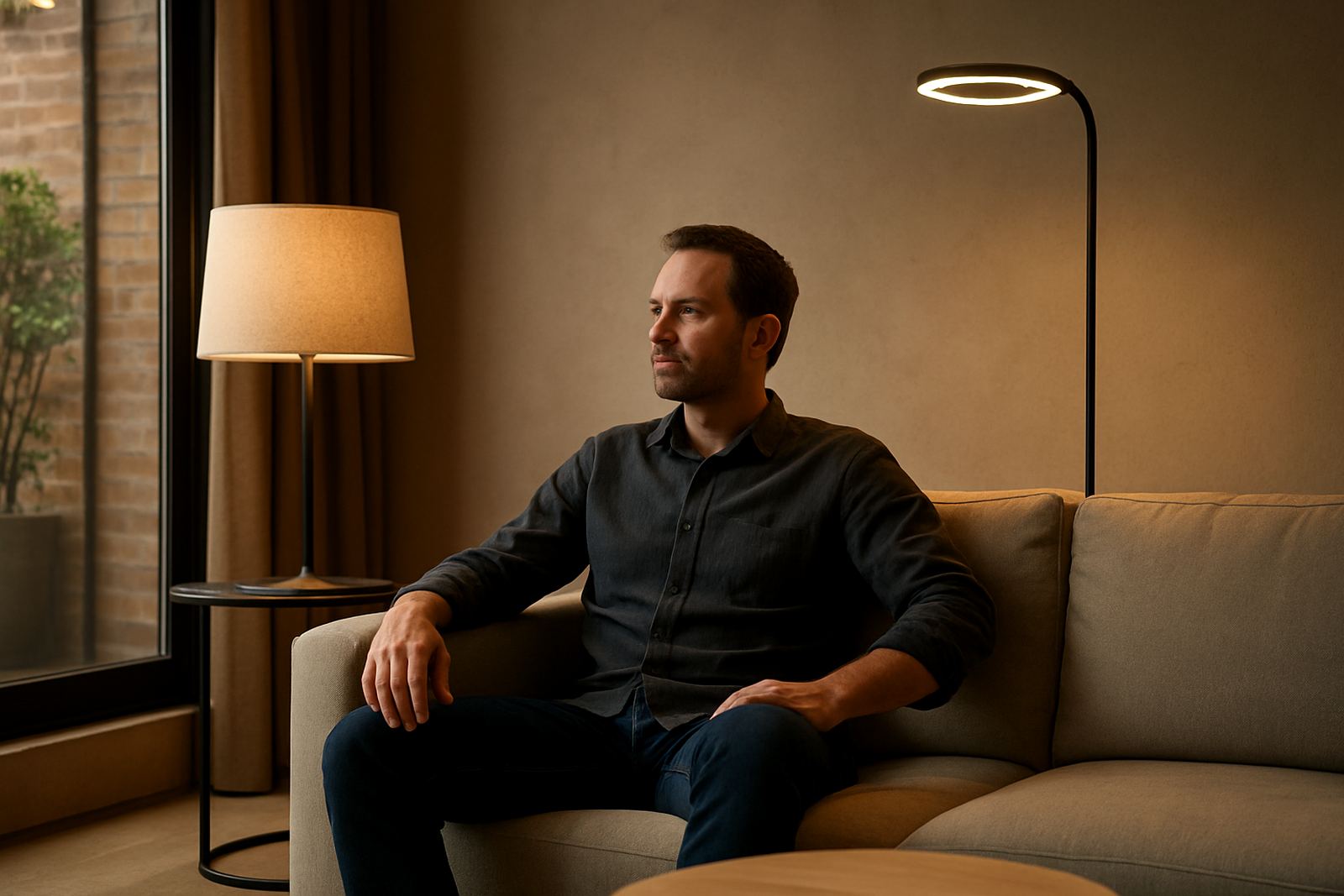
- Keep bright lamps out of direct eye level when seated
- Prefer indirect or reflected light in relaxation areas
- Check for shiny trims that can create small but irritating hot spots
Treat reflective surfaces as part of the lighting design
Glare is not only about the fitting itself. Gloss tiles, polished stone, glass partitions and high sheen paint can bounce light back into the room in sharp patches. A layout that looks perfect on paper may become uncomfortable once the fixtures are switched on and reflections start to move across the field of view.
We often reduce this by changing the beam angle, shifting the mounting position or choosing a different finish for nearby surfaces. Even a small adjustment of a few degrees can help. In a restaurant, for example, the goal is to keep tabletops bright enough for menus and food presentation while avoiding reflections that wash across the eyes of seated guests. In retail, the same principle helps customers focus on the merchandise rather than the lamp behind it.
A simple site audit usually reveals where the trouble starts. Standing in the room at different times of day, and again after dark, gives a far more accurate picture than a ceiling plan alone.
Use controls to match the light to the moment
One of the best ways to reduce glare is to stop running every fitting at full output all the time. Dimming, scene setting and zoning let you lower brightness when the room does not need maximum light. That matters in homes where evening use is more relaxed, and in restaurants where lunch, supper and private functions all ask for different moods.
Controls are also useful during load shedding recovery and unstable power periods, because lights often come back on in a way that feels too abrupt. A good control setup can help the space recover in stages instead of hitting guests with sudden brightness. For businesses in Johannesburg, Pretoria and Durban, that can make a real difference to how the space feels when trading resumes.
- Dim down feature lighting after sunset
- Create separate scenes for cleaning, trading and evening use
- Balance display brightness against the surrounding room light
- Test the control settings from the actual seating and standing positions
A Rosebank example: softer light for a busy street-facing interior
In Rosebank, a street-facing restaurant with glass along the front had a familiar problem. The interior looked impressive from the outside, but diners near the window kept moving their chairs because the downlights were too direct and the reflections on the tables were distracting. The room needed to stay bright enough for menus and service, yet not feel like a waiting area under hard light.
The solution was a revised layout with more indirect light at the perimeter, a lower output in the seating zone and tighter beam control over the feature surfaces. The front glazing still worked well for the street view, but the seating area became much easier on the eye. Guests stayed longer, the finishes read better in photographs and the staff had fewer complaints about harsh light near the windows. Small changes, but they changed how the room worked.
How Illumin8d approaches glare from concept to handover
At Illumin8d, glare control starts early in the concept design stage and continues through fixture specification, layout plans, control design and post install focusing. That process matters because glare is usually a combination of angle, height, output and finish, not just one bad fitting. When the design is checked properly on site, the final result is much easier to live with.
We work on shopfronts, restaurants and homes across Johannesburg, Pretoria, Cape Town, Durban and Umhlanga, with projects coordinated from Rosebank. If you are planning a new interior or trying to fix a space that feels too bright in the wrong places, the safest step is to assess it before more fittings are added. A few careful adjustments now can save a lot of frustration later.
Clients can reach us through the enquiry form on our contact page when they need help with site lighting audits, 3D lighting visuals, mockups and samples, installation coordination or a full lighting review. Good lighting should be comfortable first, then beautiful.