
Why the first 10 metres after dark matter
When a person slows outside a property, they are already making a judgement. Is the entrance clear, does the frontage feel safe, and can they see what the place is about? That split-second response matters for a restaurant on a busy street in Rosebank, a townhouse in Pretoria, or a shopfront in Umhlanga where evening traffic can be constant.
Exterior lighting should support the architecture, not fight it. Good design brings out the shape of a canopy, the texture of brick or stone, and the rhythm of windows and signage. It also helps staff, customers and residents move around without glare. In South Africa, that means thinking about load-shedding, coastal humidity, dust, and how much light a municipal area will allow near the street.
- Use light to guide movement, not just to make things bright.
- Highlight the building's strongest features first, then add practical light at doors and steps.
- Keep glare away from motorists, neighbours, and people standing at the entrance.
Shopfronts that look open, even after trading hours
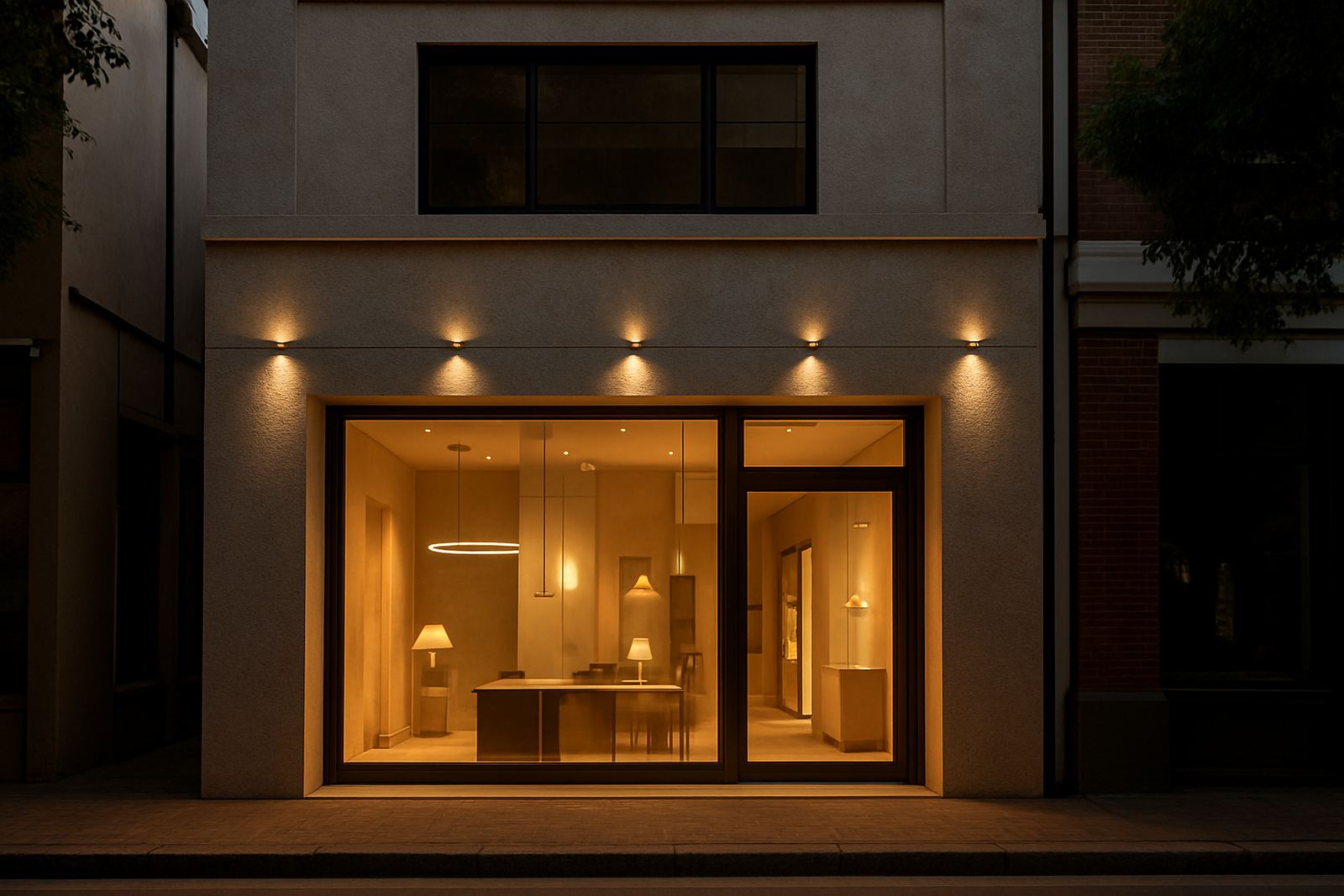
A well-lit shopfront does more than advertise trading hours. It tells passers-by that the business is active, orderly and easy to approach. For retail streets in Sandton, Midrand or central Johannesburg, that can be the difference between people walking on or stopping to take a look.
For shopfronts, the aim is usually a balance of visibility and control. Facades often need a softer wash of light, while doors, logos and display windows need more accurate emphasis. If the frontage has deep overhangs or a reflective finish, the fixture choice and beam angle become very important. Too much output and the glass throws back hard reflections, too little and the signage disappears.
- Keep lighting even across the main frontage so one corner does not drop into shadow.
- Use focused light on branding, entry points and window displays.
- Plan for after-hours operation with timers or scene control, so the frontage does not stay fully lit all night.
Restaurants need atmosphere before the first table is set
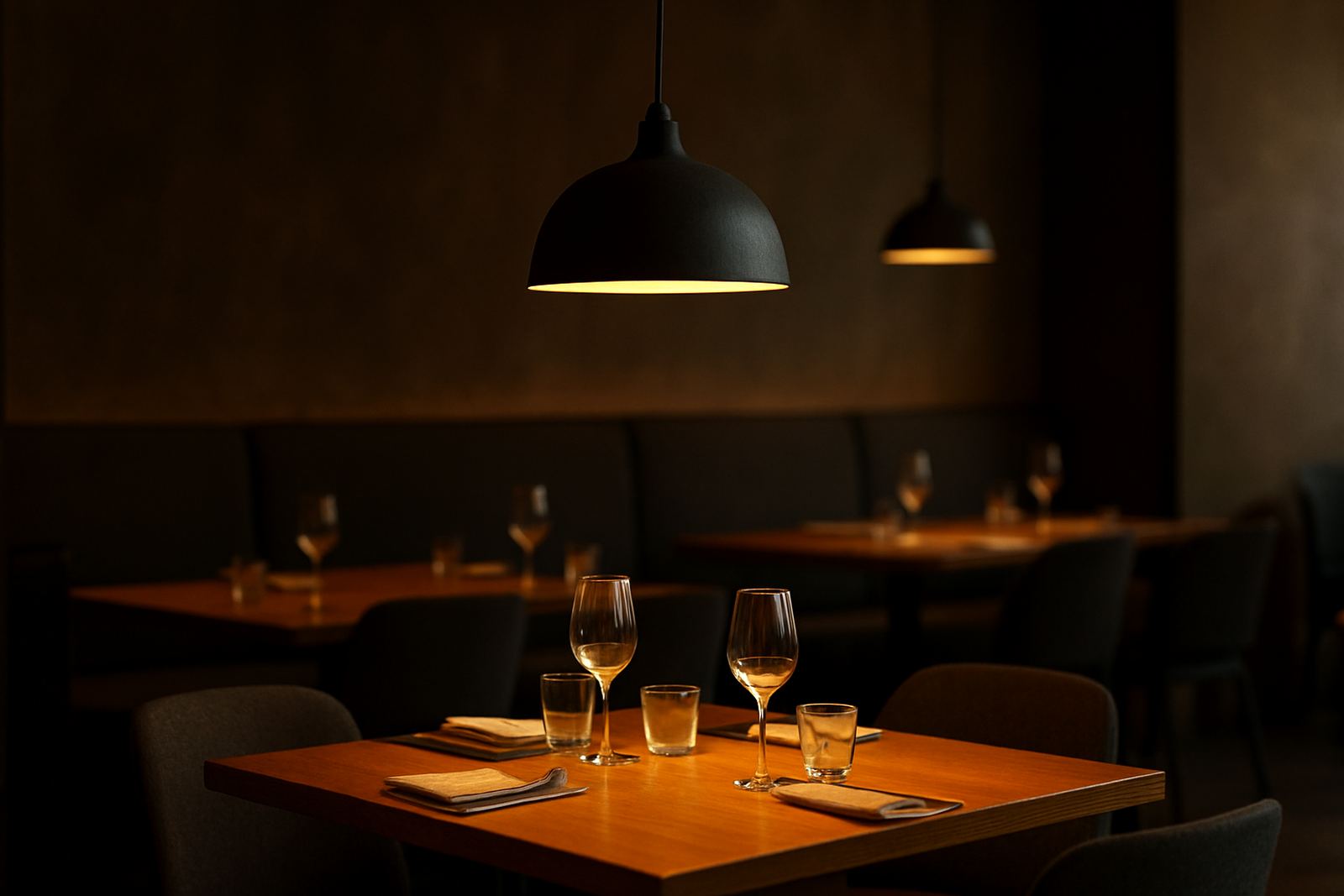
Restaurant lighting has a slightly different job. It must create enough drama to attract people from the street, while still feeling comfortable once they step inside or onto the terrace. In Cape Town and Durban especially, where evening dining often extends later, the outside layer of lighting needs to support the mood from dusk to closing time.
Facade lighting works best when it is tied to the dining experience. Warm tones can make timber, plaster and warm paint colours feel richer. Accent lighting at the entrance can make the door easy to find, while path lights and wall fittings help with safety. The trick is to avoid over-lighting the front so the restaurant loses its character. A calm frontage usually feels more inviting than a bright one.
For sites near busy roads or mixed-use buildings, fixture placement should also limit spill light into neighbouring units. That matters in estates, shared centres and apartment ground floors where residents may object to light entering windows late at night.
Homes: curb appeal that still feels private
At home, exterior lighting should make the house look intentional without turning it into a floodlit object. Many homeowners want the front gate, driveway and main entrance to feel safe after dark, but still prefer the property to keep its privacy. That is common in Johannesburg suburbs, Pretoria estates, and coastal homes in Umhlanga where salt air and security walls shape the layout.
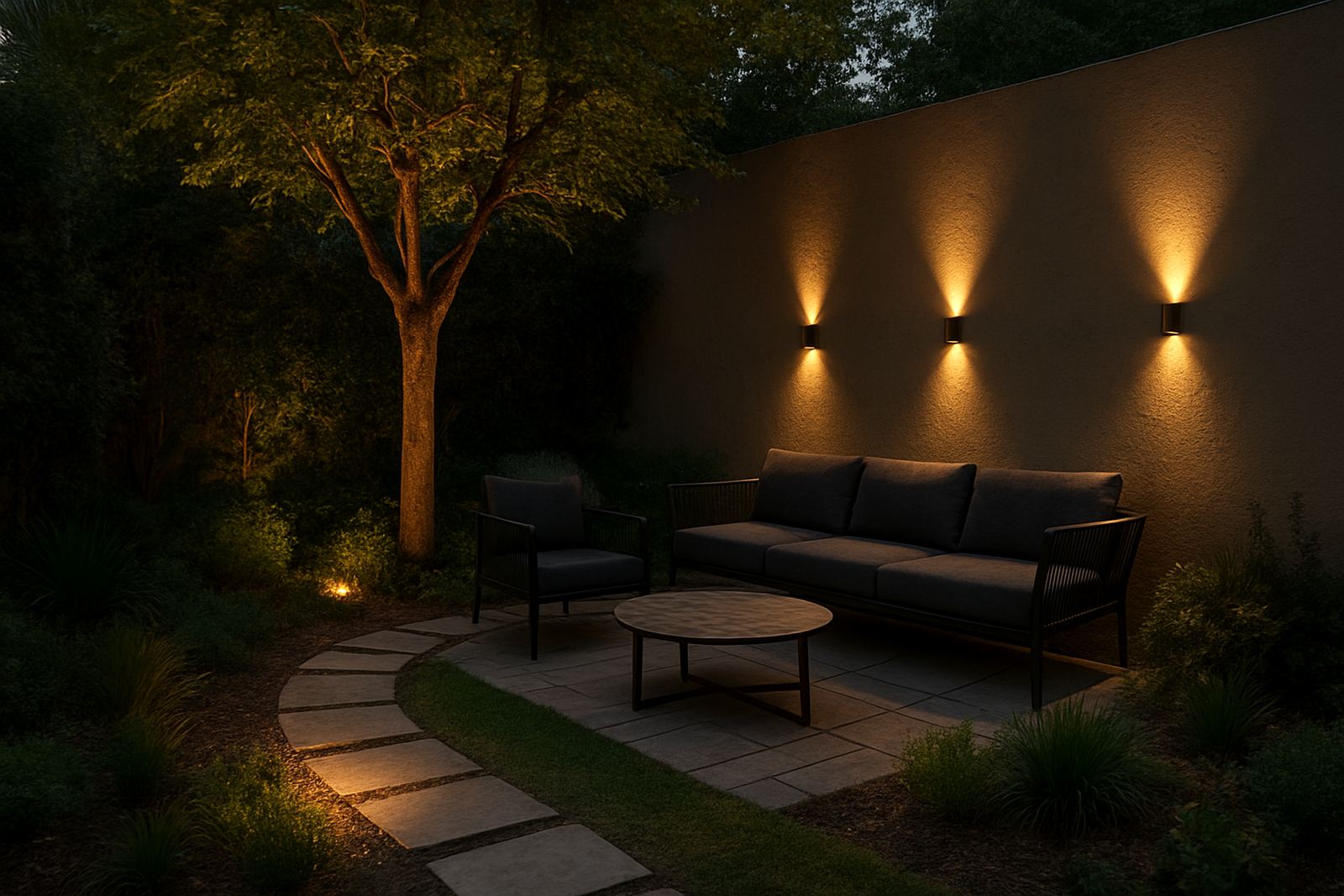
A practical home scheme usually starts at the gate, then moves to the driveway, steps, veranda and main door. If there is a garden wall or textured façade, a grazing effect can add depth without needing high output. For double-storey homes, a small amount of upper-level light often helps the front read better from the street. The key is consistency, not overkill.
Homes also need equipment that suits local conditions. Coastal properties need fittings that handle corrosion better, while inland homes may need more attention to dust and heat. And with regular power interruptions, some owners choose to separate essential exterior circuits so the entrance still works during load-shedding.
- Keep the front gate and pedestrian path easy to recognise from the street.
- Use separate scenes for daily use, entertaining, and security after hours.
- Choose finishes and mounting positions that suit wind, dust and moisture.
What a proper lighting design considers on site
Exterior lighting is rarely solved by adding more fittings. A proper site review looks at the façade material, height, viewing distance, surrounding trees, nearby streetlights and how people actually use the property. A shop in Rosebank with a narrow pavement needs a different solution from a restaurant in Umhlanga with an open frontage and late-night foot traffic.
During a lighting audit, the design team should check where glare is likely to appear, which areas need task light, and where decorative features can be picked out with less output. Fixture specification matters as much as layout. The wrong beam spread can flatten a building, while the right one can make the same façade feel cleaner and more inviting. Control design matters too, because a frontage that works at 7 pm may be too bright at midnight.
- Measure viewing angles from the street, not only from inside the property.
- Check how the façade looks with neighbouring lights on and off.
- Allow for maintenance access, because exterior fittings do need cleaning and occasional re-aiming.
A local example from Rosebank to the coast
Consider a mixed-use block in Rosebank with a café at ground level and apartments above. The owner wants the café to stand out after dark, but the residents upstairs do not want light spilling into bedrooms. A good outcome might use a modest wash on the café frontage, focused light on signage, low-level path lights at the entrance, and tighter shielding on all fittings facing upward. That keeps the street presence clear while reducing unwanted light above.
Now compare that with a home in Durban near the coast. Salt air means fittings must be chosen with care, and the terrace may need softer light that does not reflect off the pool or glass too strongly. In both cases, the design process is about more than looks. It is about practical use, long-term maintenance and making sure the lighting still works when the weather changes or the power does not.
Illumin8d works from Rosebank and supports projects across Johannesburg, Pretoria, Cape Town, Durban and Umhlanga. The process can include concept design, site lighting audits, fixture specification, layout plans, control design, mockups, installation coordination and post-install focusing, all shaped to suit the property and the people who use it.