What a site lighting audit covers
A lighting audit is a practical on-site review of your existing fittings, controls and light levels. We check how the space performs in day and night conditions, note failed or flickering fittings, and identify where the current setup is costing more than it should in power or maintenance.
For shopfronts, restaurants and homes, the aim is simple: improve visibility, comfort and presentation without changing more than needed. We look at beam spread, colour temperature, glare, mounting heights, switching logic and whether the present fittings suit the space or if they are fighting it.
- Measure current light output and identify dim zones
- Check fitting condition, wiring access and mounting points
- Review control systems, timers, dimmers and day/night switching
- Note overheating, ingress issues and poor cable management
- List upgrade options by priority, from quick fixes to full relamp plans
How we carry out the audit on site
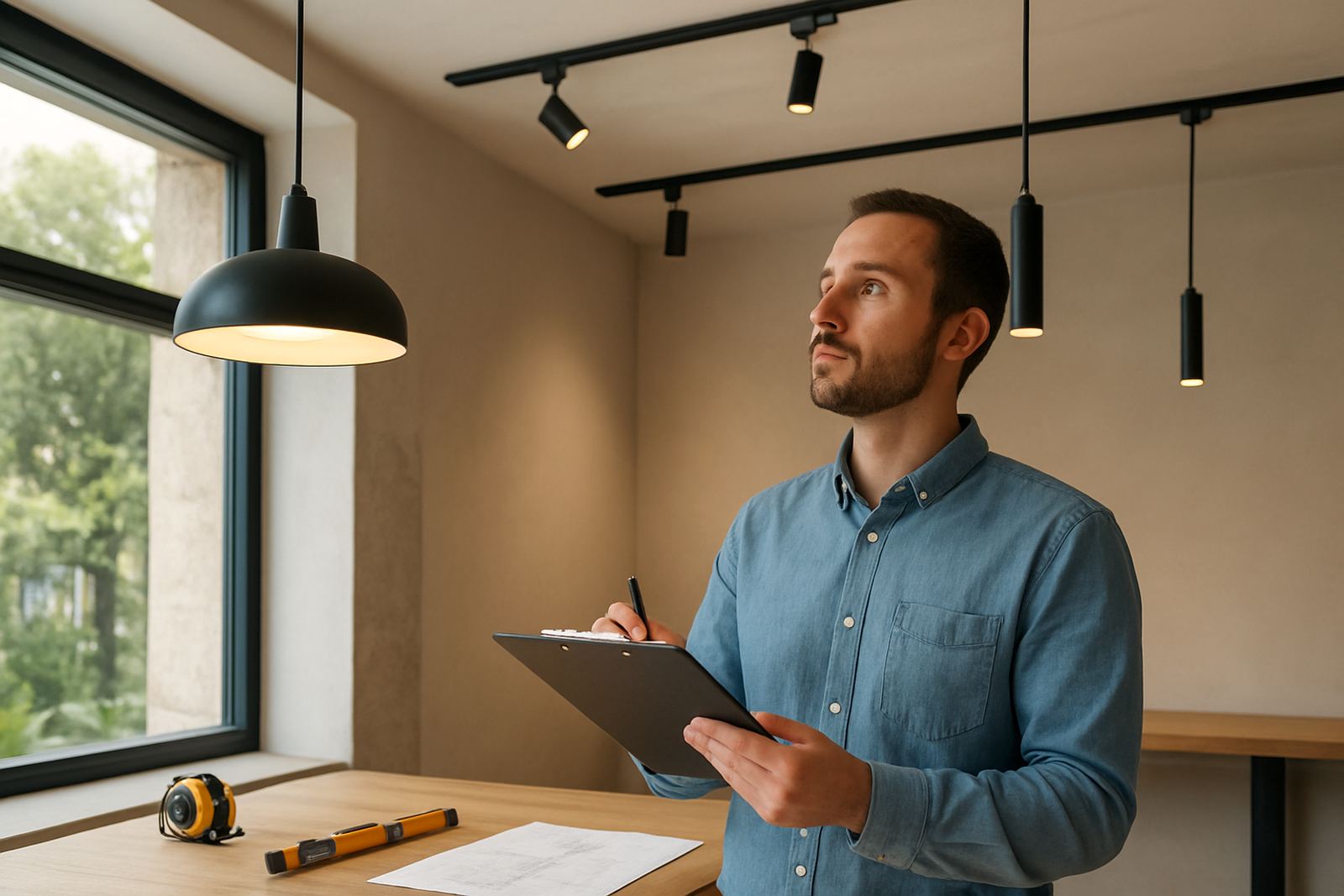
Every audit starts with a walk-through and a short discussion about how the space is used. A restaurant in Rosebank needs different lighting at 11am than at 7pm, while a shopfront in Sandton may need stronger window visibility after load-shedding or in winter evenings. We take that usage into account before recommending any changes.
Our team records the layout, fitting positions and control points, then checks whether the lighting levels suit the task at hand. Where needed, we test dimming response, inspect damaged fittings and note any maintenance risks such as loose brackets, exposed drivers or signs of moisture entry in coastal areas like Umhlanga.
- Initial briefing with the client or manager
- On-site inspection of all key lighting zones
- Photographic record and room-by-room notes
- Review of supply points, switching and backup behaviour
- Preliminary findings shared before the final report is issued
What you receive after the audit
After the site visit, we compile a clear findings report with practical recommendations. This is not a generic checklist. It shows where the current installation is underperforming, which fittings can be retained, and which areas should be upgraded first to get the best result for the Rand spent.
The report can include suggested lumen output, beam angles, colour temperature ranges and control options suited to the space. If the site is a restaurant, we may recommend warmer tones for dining areas and higher output for kitchens or service zones. For homes, the report can separate ambient, task and accent lighting so the result feels more balanced and usable.
- Summary of current lighting performance
- Priority list of repairs and upgrades
- Suggested fitting types and technical ranges
- Control and dimming recommendations
- Budget notes for staged implementation
Turnaround and pricing approach
Most audits are completed within 3 to 7 working days from the time we inspect the site, depending on size and complexity. A small home or single shopfront in Midrand can be turned around quickly, while a larger hospitality space or multi-level premises may need more time for detailed reporting and lighting calculations.
Pricing is based on the scope of the premises, travel requirements and the amount of technical work needed. We price audits fairly and transparently, with no guesswork. If the site is straightforward, we keep the scope lean. If there are multiple circuits, emergency lights, external areas or control systems to review, we allow for that properly. A proper audit often saves money later by avoiding unnecessary replacement work.
Maintenance intervals that make sense
Lighting does not need the same attention every month, but it should not be left until something fails either. For most commercial spaces, we recommend a review every 6 to 12 months. Homes can usually be checked annually, while restaurants, retail sites and coastal properties may benefit from more frequent inspections because of dust, heat, humidity or long operating hours.
Regular maintenance helps catch failed drivers, loose connections and dirty lenses before they affect the whole space. In areas with load-shedding, backup lighting should also be tested on a schedule so the system is ready when needed. A short seasonal check can make a big difference, especially where the same fittings run for long hours each evening.
- Retail and hospitality sites: every 6 months
- Homes: once a year, or after any major room change
- Coastal or high-use sites: every 3 to 6 months
- Emergency and backup lighting: monthly function test and annual full review
Where our audit work is used
We work across Johannesburg, Pretoria, Cape Town, Durban and Umhlanga, with clients in Rosebank, Sandton, Midrand and other nearby areas. The same audit method can be applied to a shopfront, a compact restaurant or a family home, but the recommendations are always shaped around the site itself and how people use it day to day.
Because lighting affects safety, presentation and running cost, the audit is often the first step before any redesign or relamping. It gives you a clear view of what can stay, what must go and what should be improved in stages. That makes it easier to plan around trading hours, tenant rules, municipal requirements and practical limits on site.
Key facts
| Service type | On-site lighting audit with written findings |
|---|---|
| Typical turnaround | 3 to 7 working days after inspection |
| Recommended maintenance interval | 6 to 12 months, depending on site use |
| Technical checks | Light levels, glare, colour temperature, controls, condition, access and mounting |
| Best suited for | Shopfronts, restaurants, homes and mixed-use spaces |
| Coverage area | Johannesburg, Pretoria, Cape Town, Durban and Umhlanga |