Why coordinated installation matters on live sites
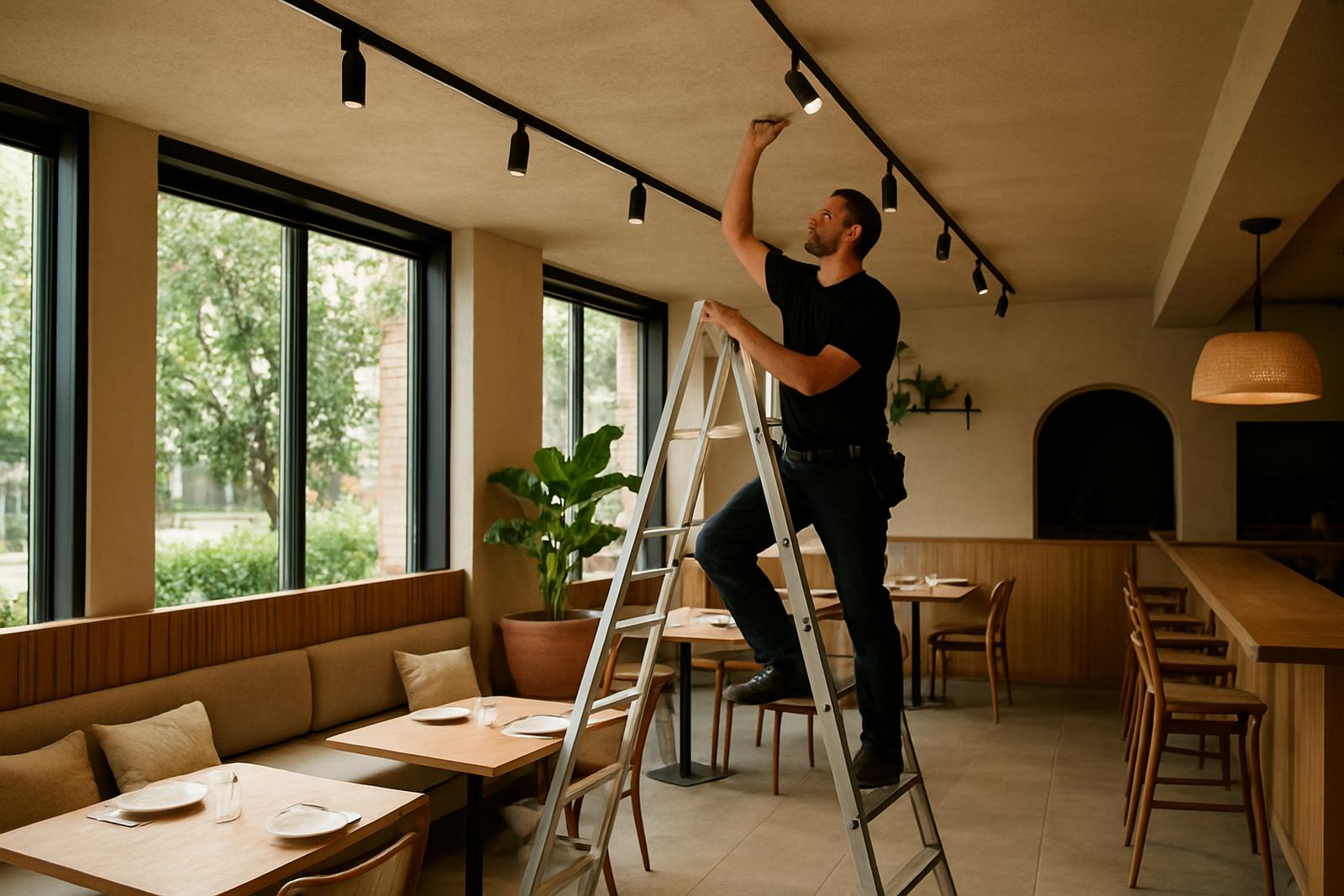
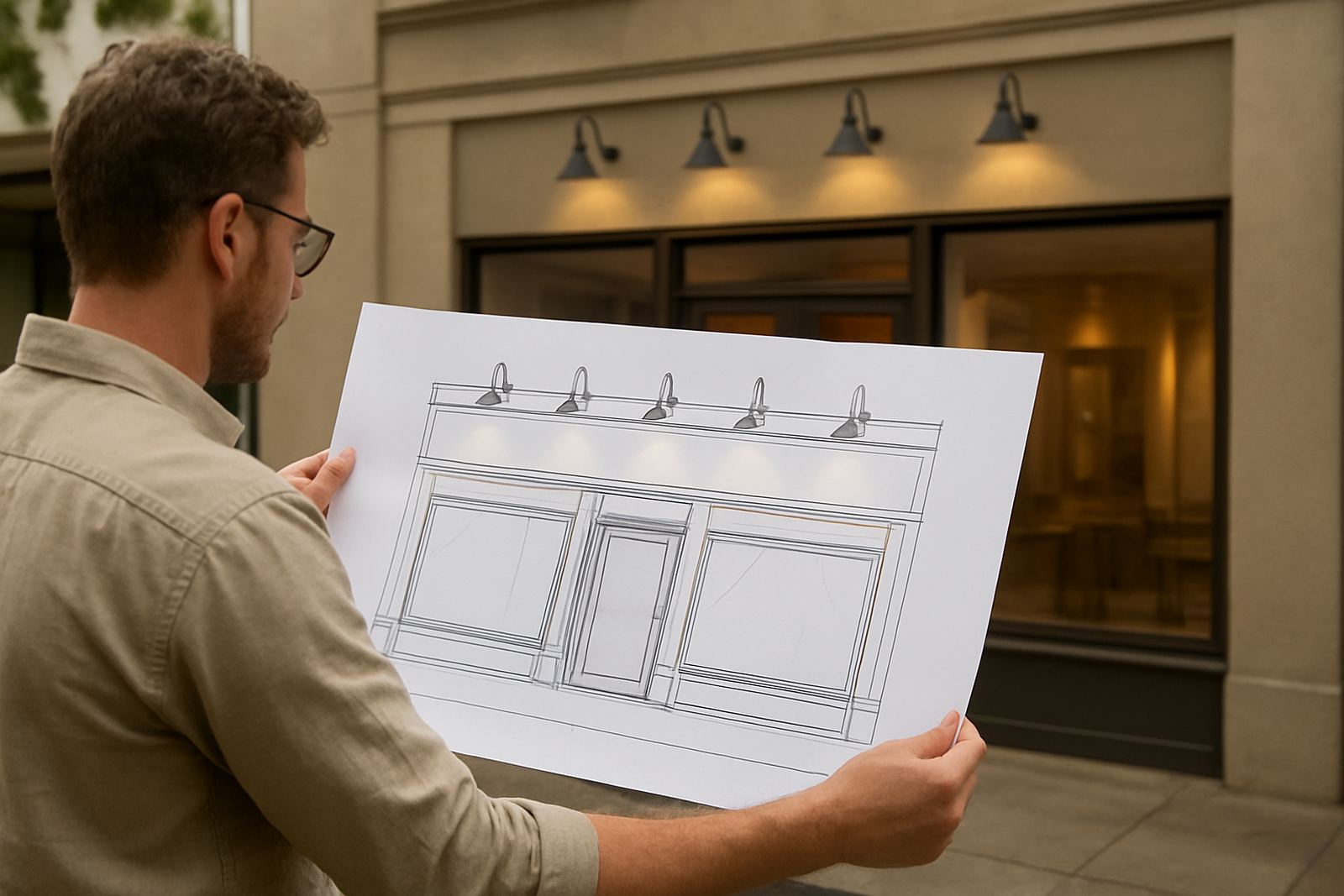
Lighting projects fail most often at the point of install, not on the drawing board. A neat layout still needs the right ceiling openings, cable routes, fixing points, dimmer compatibility and a site team that understands the sequence. We coordinate the moving parts so your shopfront, restaurant or home is not left waiting on one trade while another has already packed up.
In South African projects this matters even more because of load-shedding, mixed site access hours, strata rules in sectional title buildings, and coastal humidity in places like Durban and Umhlanga. We plan for what the electrician needs, what the supplier must deliver, and what the installer can realistically complete on site. That includes checking transformer loads, circuit grouping, IP ratings for damp areas and the practical tolerance needed when ceilings, joinery and signage are built by different teams.
What is included in our installation coordination service
Our role is to keep the lighting package moving from approval to switch-on. We do not just pass along drawings and hope for the best. We work through the key details before site work starts, then stay involved until fittings are mounted, aimed and tested.
- Pre-install review of approved lighting layouts, fixture schedules and control notes
- Coordination with electricians, shopfitters, joiners, ceiling contractors and suppliers
- Site checks for set-out, ceiling heights, fixing points and service access
- Confirmation of lead times, delivery dates and on-site sequence
- Review of dimming systems, drivers, emergency fittings and switching zones
- Support during install, snagging and final focusing where needed
We also flag issues that can hold a job up, such as incorrect ceiling allowances, missing pre-wiring, poor access for maintenance or fittings that are not suitable for the local environment. A small miss in the early stages can become a costly delay later.
How we run the coordination process
Every project starts with a brief that sets the scope, dates and site conditions. From there we confirm who is responsible for each part of the install, what needs to happen first, and what cannot be left for the last day. For a Rosebank restaurant fitout, that might mean working around a kitchen handover and signage install. For a home in Sandton or Pretoria, it may mean coordinating with the builder and electrician before ceilings close.
The process is practical and structured:
- Review the lighting design, schedule and site programme
- Confirm product specifications and any substitutions before procurement
- Check rough-in points, circuiting, control gear locations and mounting details
- Align delivery windows with site access and storage limits
- Attend or coordinate key site milestones, including first fix and second fix
- Oversee testing, aiming and final adjustments after installation
Where needed, we issue installation notes that show spacing, trim details, suspension lengths and the expected finish level. This helps reduce confusion on site, especially when multiple contractors are working in the same area.
Specification checks that prevent site problems
Good coordination depends on correct specification. We verify that each fitting suits the application, the circuit and the environment. That includes lumen output, beam spread, colour temperature, ingress protection and control compatibility. In practical terms, a restaurant dining area needs different light levels from a shopfront display window or a covered patio at the coast.
Typical checks include 3000K to 4000K colour temperature selection, CRI 90 or higher for retail and hospitality spaces, IP44 to IP65 where moisture is a factor, and driver or dimmer matching for stable operation. For homes, we also consider glare control, trim details and whether the ceiling can handle recessed or surface mounted fittings without extra patching. If a project has backup lighting requirements during outages, we coordinate the emergency circuit layout so it is simple to maintain later.
We keep an eye on maintenance access as well. A fitting that looks perfect on day one but cannot be reached for lamp changes or cleaning becomes a problem within months.
Turnaround time and site support
Coordination time depends on project size and how far along the build already is. A small residential upgrade may need only a few days of checks and supplier follow-up, while a multi-zone restaurant or shopfront rollout can run across several weeks. We usually set the pace according to procurement dates, rough-in completion and how quickly the site team can confirm access.
For active sites, we generally build in support before delivery, during installation and after switch-on. If the job is in Cape Town or Durban where weather can affect access and storage, we plan for those delays instead of pretending they will not happen. That keeps the programme realistic and avoids last minute scrambling.
Where required, we can coordinate with the main contractor to fit around municipal inspection timing or sectional title rules for after-hours work. It is better to plan a clean install window than to force trades to work around one another at the wrong time.
Pricing and maintenance after handover
Pricing is based on project scope, number of fittings, site visits needed, complexity of controls, and whether the install is a single visit or phased over time. Smaller homes are usually priced as a fixed coordination fee, while larger commercial work may be quoted by phase or by project. We are clear upfront about what is included, so there is no confusion once the site is active.
After handover, we recommend maintenance intervals that match the property use. For busy restaurants and shopfronts, a check every 6 months helps keep beams aligned, lenses clean and drivers performing as expected. For homes, an annual review is usually enough unless there is coastal exposure, high dust or frequent load-shedding related switching. Maintenance visits can include relamping, cleaning, re-aiming and a quick check of dimming or control issues.
- Commercial spaces: 6 month intervals for inspection and focusing
- Homes: 12 month intervals or after major interior changes
- Coastal sites: more frequent checks for corrosion and lens cleaning
- High-use areas: follow-up after the first few weeks of operation
Good coordination does not stop when the lights come on. It keeps the system usable and tidy over time.
Key facts
| Service area | Rosebank, Sandton, Pretoria, Midrand, Johannesburg, Cape Town, Durban and Umhlanga |
|---|---|
| Project types | Shopfronts, restaurants and homes |
| Typical colour temperature | 3000K to 4000K depending on use |
| Colour rendering | CRI 90+ for retail and hospitality where accurate colour matters |
| Ingress protection | IP44 to IP65 for damp or coastal locations |
| Maintenance interval | 6 months for commercial sites, 12 months for homes, with extra checks after install |