
Shopfront lighting that works from the pavement up
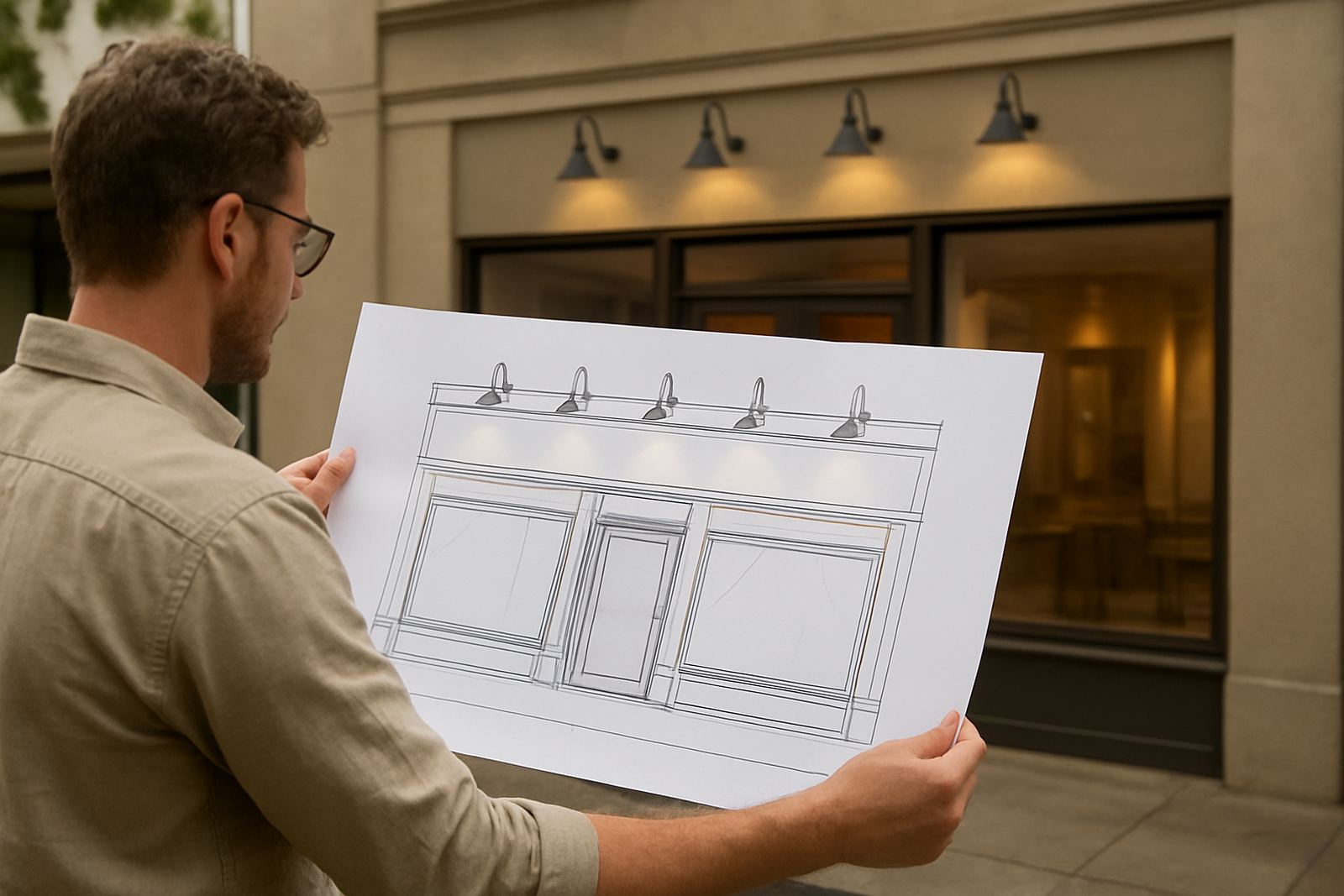
Shopfront schemes improve kerb appeal, visibility and brand expression from the street. We plan lighting for glass fronts, signage, reveals, canopies, entries and display zones so the building reads well in daylight and after dark. The aim is simple: make the frontage easy to find, attractive to approach, and clear enough for customers to understand where to go.
For Rosebank, Sandton and other busy urban areas, that often means controlled light levels that stand out without spilling into neighbouring tenants or creating glare on glass. For coastal sites in Cape Town, Durban and Umhlanga, we also consider corrosion resistance, sealing, and fittings that cope better with humidity and salt in the air. Every shopfront is different, but the approach stays practical.
- Entrance lighting for doors, thresholds and security grilles
- Sign illumination for lettering, logos and fascia panels
- Window and display lighting for stock visibility at night
- Wall washing and accent lighting for textures, trims and recesses
- Low-glare fittings suited to pedestrian viewing from 2 to 15 metres
What is included in a shopfront design package
A typical shopfront design package starts with a site review and ends with a coordinated lighting plan ready for pricing and installation. We work with the architecture of the frontage, the trading hours, the tenant fit-out rules and the brand identity. Where needed, we also factor in municipal sign-off requirements and landlord conditions for multi-tenant centres.
The deliverables usually include layout drawings, fixture specifications, control notes and visual guidance. We can also prepare mockups and samples for key fittings, especially where the client wants to compare beam spread, colour temperature or how a finish looks against the facade. For projects with tighter budgets, we can phase the design so the most important front-of-house areas are addressed first.
- Concept design based on the frontage, brand and trading use
- Site lighting audit with measurements and daylight checks
- Fixture specification with mounting heights and beam angles
- Layout plans showing positions, spacing and aiming direction
- Control design for timers, photocells, dimming or zoning
- Installation coordination and post-install focusing where required
How we design for visibility, safety and brand expression
Good shopfront lighting needs balance. Too little light and the store disappears after sunset. Too much and the frontage looks harsh or uninviting. We set the lighting around what customers see first: the sign, the entrance, the glass line and the display area closest to the street. If the brand needs a premium look, we use cleaner colour temperatures and tighter beam control. If the space needs warmth and activity, we soften the scheme with layered light and more texture.
We usually work with colour temperatures between 2700K and 4000K, depending on the brand and the materials on the facade. For glass-heavy fronts, we pay attention to reflections and glare. For deeper shopfronts, we often use a mix of wall washers, accent spots and concealed linear light to carry the eye inward. On roads with heavy traffic, the frontage must be readable at speed too, not only at walking pace.
Where load-shedding backup is planned, we can split critical circuits so the sign and entry stay on longer than the decorative elements. That helps with trading continuity and security during outages, especially in centres and standalone sites where the store still needs to be recognisable at night.
From first brief to final focus on site
Our process is straightforward and suited to both single stores and roll-out work across branches. We begin with the brief, the floor plan and photographs of the existing frontage. If needed, we visit the site to measure the fascia, assess mounting points and check for practical issues such as service access, power positions, glazing and weather exposure.
Once the layout is set, we prepare the lighting direction and align it with the electrician or shopfitter. For projects in Johannesburg, Pretoria and Midrand, we often coordinate with tight landlord schedules and trading hours. In Cape Town, Durban and Umhlanga, site timing may also depend on coastal weather and access rules in the centre or precinct.
- Brief and site review
- Concept sketches and lighting intent
- Fixture selection and performance checks
- Layout drawings and control notes
- Installation coordination with the site team
- Post-install focusing and fine-tuning
Turnaround times and pricing approach
Turnaround depends on the size of the frontage and how much detail is needed. A simple shopfront with a clear brief can often move from review to design within 5 to 10 working days. More complex projects, or multi-branch work with mockups and approval rounds, usually take longer. If a landlord or centre manager needs drawings in a specific format, we factor that into the programme from the start.
Pricing is based on scope, site complexity and the level of documentation required. A one-off frontage is priced differently from a chain rollout or a project that includes control design and installation support. We quote after understanding the site and the deliverables, so the client knows exactly what is included. If the project needs value engineering, we can adjust the fixture mix while keeping the design intent intact.
For clients comparing options, we can separate the cost of concept work, technical detailing and site support. That makes it easier to prioritise the parts that matter most for trade and presentation.
Keeping the frontage looking right after opening
Once the shopfront is live, maintenance matters. Lamps, LEDs and control gear all age differently, and dusty roads, coastal air and regular trading wear can affect the final look. We recommend a maintenance check every 6 to 12 months, with shorter intervals for busy stores or exposed facades. If the site is near the coast, or the frontage is under trees and collects dust, quarterly checks can be worthwhile.
Typical maintenance includes cleaning lenses, checking fixings, confirming beam aim, testing timers and reviewing any failed drivers or fittings. A small shift in angle can change how the whole frontage reads from the street. We also suggest checking signage lighting before key trading periods, especially in centres where trading hours are long and the shopfront carries the first impression for new customers.
- 6-month review for high-traffic or premium frontages
- 12-month review for standard retail fronts
- Quarterly checks for coastal or high-dust sites
- Re-aiming after repairs, repainting or fascia changes
Key facts
| Design type | Shopfront lighting for retail facades, entrances and window displays |
|---|---|
| Typical colour temperature | 2700K to 4000K depending on brand feel and materials |
| Beam control | Narrow, medium and wide beam options with glare control |
| Mounting height range | Usually 2.2 m to 6 m, depending on fascia and canopy height |
| Control options | Photocell, timer, dimming and zoned switching for trading hours and load-shedding planning |
| Maintenance interval | Every 6 to 12 months, with more frequent checks for coastal or dusty sites |