Lighting that lets the product do the talking
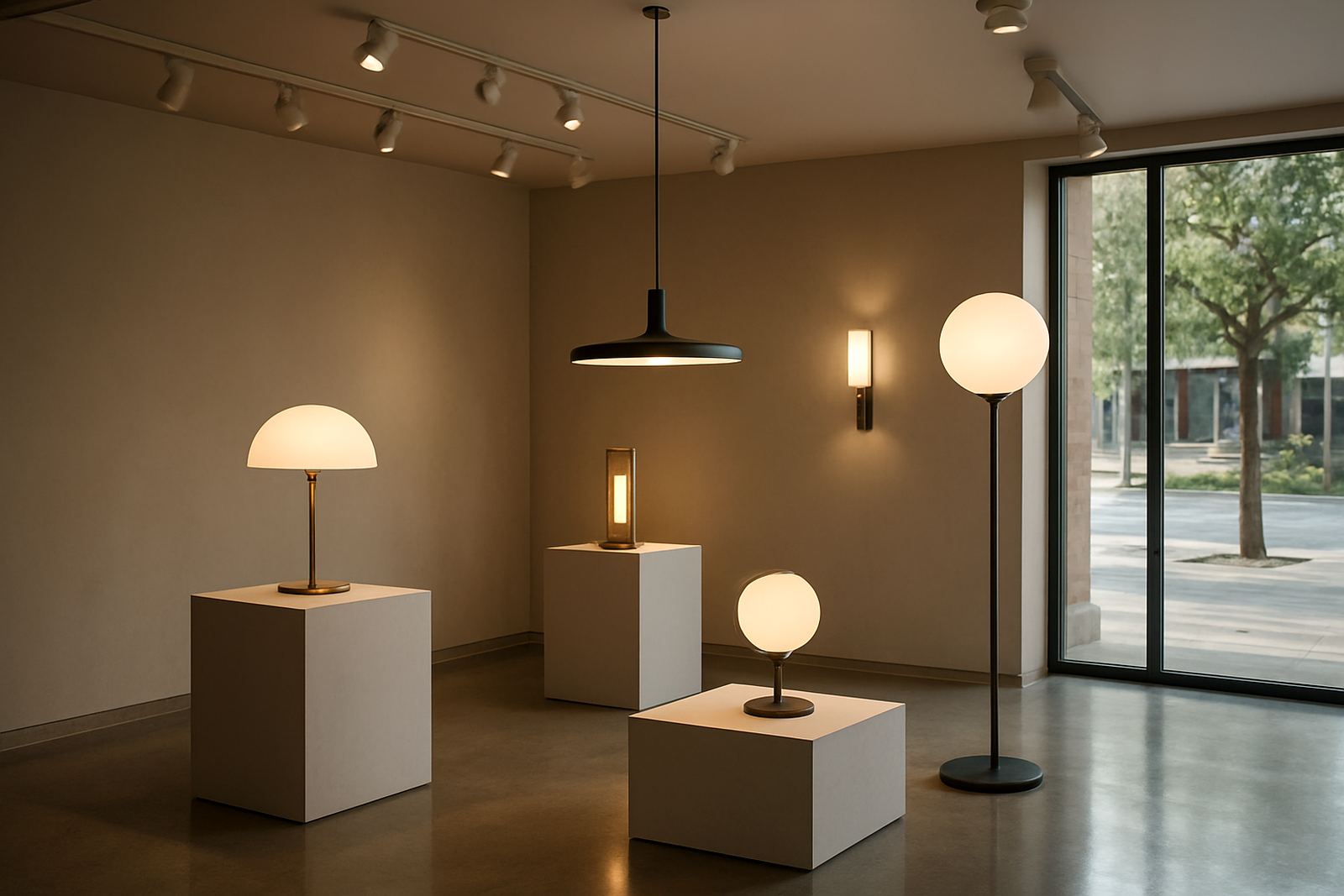
A showroom is not only about brightness. If the fittings are too harsh, too flat or badly spaced, colour shifts and reflections can make furniture, clothing, fittings or finishes look wrong. We start by looking at what is being sold, how customers move through the room and where attention should land first. That usually means a stronger welcome at the entrance, controlled accent over hero displays and softer background light where staff need to speak to customers without glare in their eyes.
In Rosebank, Sandton and Pretoria we often see mixed daylight, reflective floors and glass frontages all working against the display. The answer is not simply more light. It is the right beam angle, the right colour temperature and careful aiming. For many showrooms, 3000K to 4000K works well, but the final choice depends on the merchandise and the finish on the walls, floors and shelving.
Typical fittings used in showroom schemes
A good showroom usually combines several types of fittings rather than relying on one general light source. Track-mounted spotlights are common because they can be adjusted as stock changes. Linear profiles help define circulation routes and give the space a cleaner order. Recessed downlights can fill in darker areas, while wall washers help bring texture to branded feature walls or sample displays. In some spaces, suspended fittings are used over counters or consultation points to give a stronger sense of place.
For larger retail showrooms, we also look at emergency lighting, cleaning access and whether the ceiling can take the fixing points without future movement. In coastal areas like Umhlanga and Durban, we are careful with corrosion resistance and component choice because humidity can shorten the life of poor-quality fittings. Where load-shedding is a concern, battery backup for essential areas or selected circuits may be worth considering.
- Adjustable spotlights for product accents and seasonal changes
- Linear light channels for circulation, shelving and feature lines
- Downlights for general ambient light and task support
- Wall washers for texture, signage and brand panels
- Control gear that allows dimming, zoning and scene changes
Planning the layout before the first fitting goes up
Showroom lighting works best when it is planned with the floor layout, not added after the fixtures arrive. We normally begin with a site lighting audit, then prepare layout plans showing beam spread, mounting heights and the position of each circuit. This helps avoid dark patches between display bays and stops the front of the shop from becoming brighter than the rear. If the showroom has mirrors, polished stone or glass cabinets, the aiming must be checked early or the reflections will cause problems later.
For high-value products, we often prepare 3D lighting visuals or mockups and samples so the client can see how the space will feel before installation. That is especially useful for brand owners who need a consistent look across branches in Johannesburg, Midrand, Cape Town or Durban. A well planned layout also makes maintenance easier, because fittings can be reached without disrupting trading for half a day.
- Map the customer journey from entrance to point of sale
- Separate general light from accent light and task light
- Check ceiling height, service access and beam overlap
- Allow for future display changes without redoing the whole system
- Coordinate with ceiling, joinery and signage contractors early
Common mistakes that weaken the showroom effect
One of the biggest mistakes is overlighting everything evenly. That removes contrast and makes the showroom feel like a warehouse. Another mistake is using one colour temperature throughout without thinking about what is being sold. Warm timber finishes, white ceramics and brushed metals do not always respond the same way under the same source. Incorrect spacing is another issue, because even a small gap in the pattern can leave a display looking flat and uninviting.
We also see poor control design quite often. If every fitting is on one switch, the staff cannot change the mood for different times of day or evening viewings. In South African conditions, this matters more than people think. Power interruptions, strong sunlight and changing trade hours all affect how a showroom should be lit. A good system gives flexibility, so the team can work around trading patterns instead of fighting them.
What a realistic budget looks like in Rand
Budget depends on floor area, ceiling condition, number of feature zones and whether the project is a simple refresh or a full fit-out. For a small showroom, a basic concept with fixture specification and layout plans may start from around R12 000 to R25 000, depending on the complexity of the site. A more complete lighting package, including 3D visuals, mockups, controls and installation coordination, can range from about R35 000 to R90 000 for a modest space.
For larger showroom interiors or multi-zone retail spaces, lighting supply and installation can move into the R120 000 to R350 000 range or more, especially where there are feature walls, track systems, custom profiles and layered controls. These figures vary a lot because the final cost is tied to ceiling work, cable routes, access, after-hours installation and the type of finish expected. It is often better to spend properly on the right optics and controls than to buy more fittings and still end up with weak results.
How Illumin8d approaches showroom projects
We work from Rosebank, Johannesburg and support showroom projects across South Africa, including Sandton, Pretoria, Midrand, Cape Town, Durban and Umhlanga. The process normally starts with a site visit or lighting audit, followed by concept design, fixture specification, layout plans and control design. From there we coordinate installation and complete post-install focusing so the finished result matches the intended look.
The team includes Mandla Ndlovu, Ayesha Patel, Johan van Wyk, Lerato Mokoena, Sibusiso Dlamini and Nokuthula Khumalo, so the project is handled from first brief to final handover with one line of communication. If the showroom needs a sharper brand presence, better product visibility or a cleaner customer path, the lighting should be part of the strategy from the start not an afterthought.