
First impressions start at the driveway and front door
At a guest house, the arrival experience matters as much as the room itself. Good lighting guides guests from the street or parking area to reception with no confusion, and it should make the property feel cared for after dark. In Rosebank, Sandton or Cape Town, that often means balancing security, wayfinding and a softer decorative look so the building feels inviting rather than harsh.
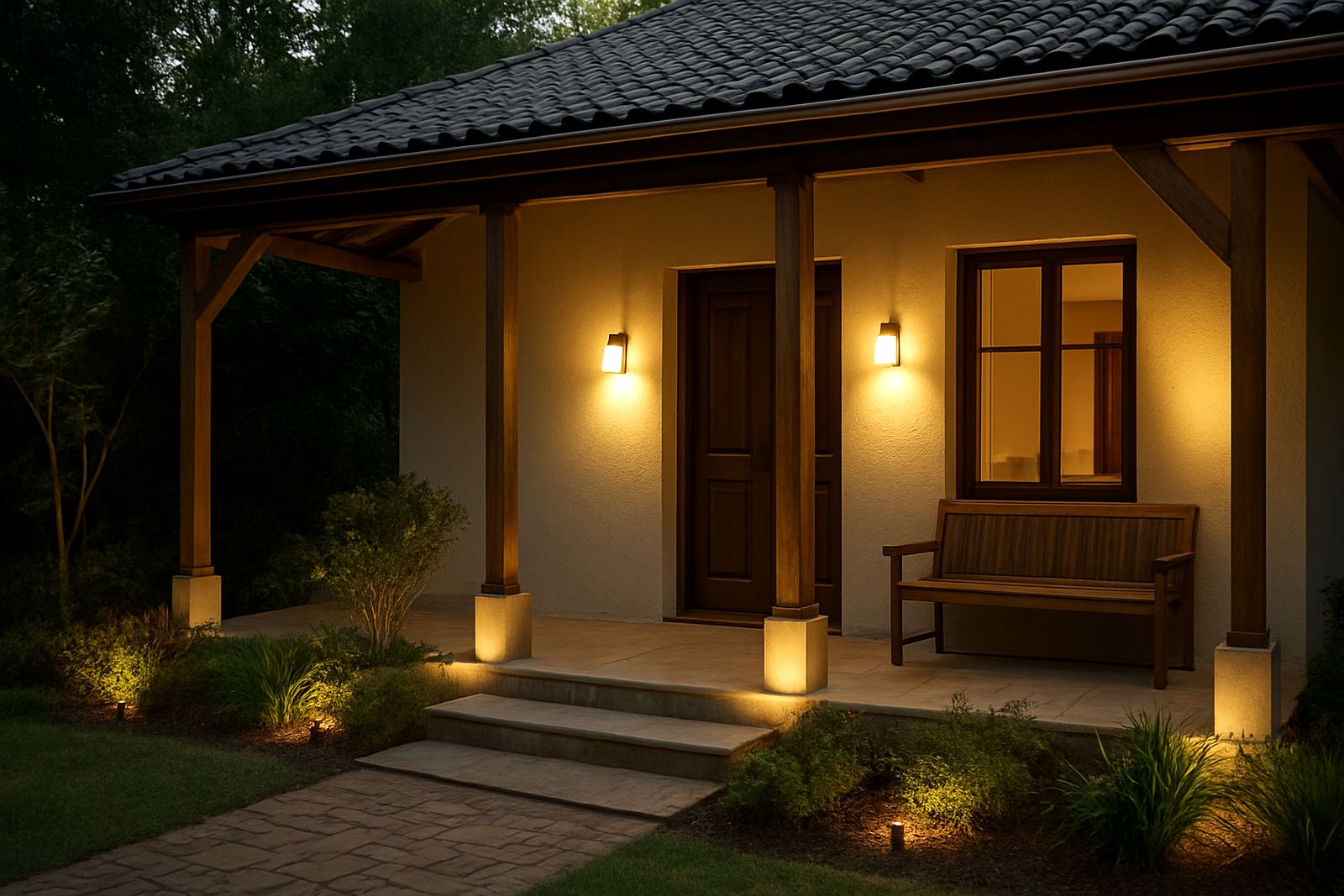
We usually start with the outside path, gate, parking bay edges and the front entrance. Downlights under canopies, wall lights beside the door and low level path lighting all help with safe movement. On coastal sites in Durban or Umhlanga, fittings need proper corrosion resistance because salty air can shorten the life of cheap metal finishes very quickly.
- Entrance canopy downlights for clear arrival light
- Wall lights at doors and passages to avoid dark corners
- Low path lights for steps, paving and garden edges
- Sensor or time based control for after hours use
Rooms need quiet, flexible light that guests can actually use
Guest rooms work best when the light can shift from practical to calm. A single bright ceiling fitting is not enough. Guests need light for unpacking, reading, getting ready and resting, so the room should have layered lighting with separate switching where possible. This is where many properties fall short, especially older guest houses that were fitted out room by room over time.
For bedrooms we often specify a combination of downlights, bedside reading lights, mirror light in the bathroom and a soft feature pendant or wall light if the room can take it. Warm white colour temperature usually suits hospitality spaces, but the exact choice depends on the wall colours, ceiling height and natural light. In rooms facing west in Johannesburg, glare control becomes important in the late afternoon, so beam angle and fitting position must be planned properly.
- Bedside reading lights with easy reach switching
- Indirect or dimmable feature light for a calmer feel
- Bathroom vanity lighting with even face lighting
- Blackout curtains paired with controllable night light options
Shared spaces should guide people without feeling overlit
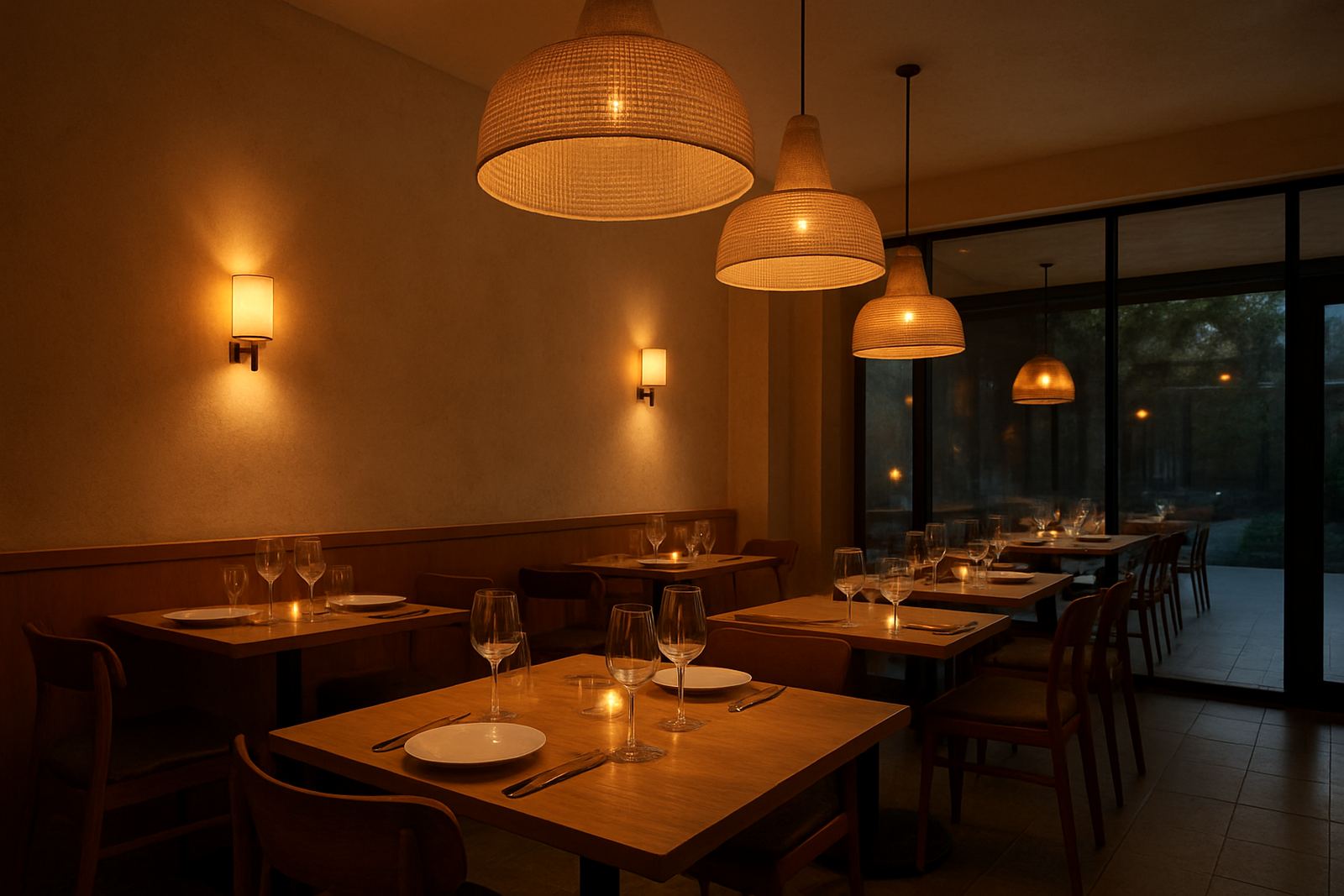
Lounges, breakfast rooms, reception areas and passageways carry the identity of the property. These spaces need enough light for safety and housekeeping, but they also need atmosphere. A guest house can feel cold if every light is on at full output all evening, so control zoning matters. Separate circuits for reception, dining, corridor and feature areas make daily operation much easier.
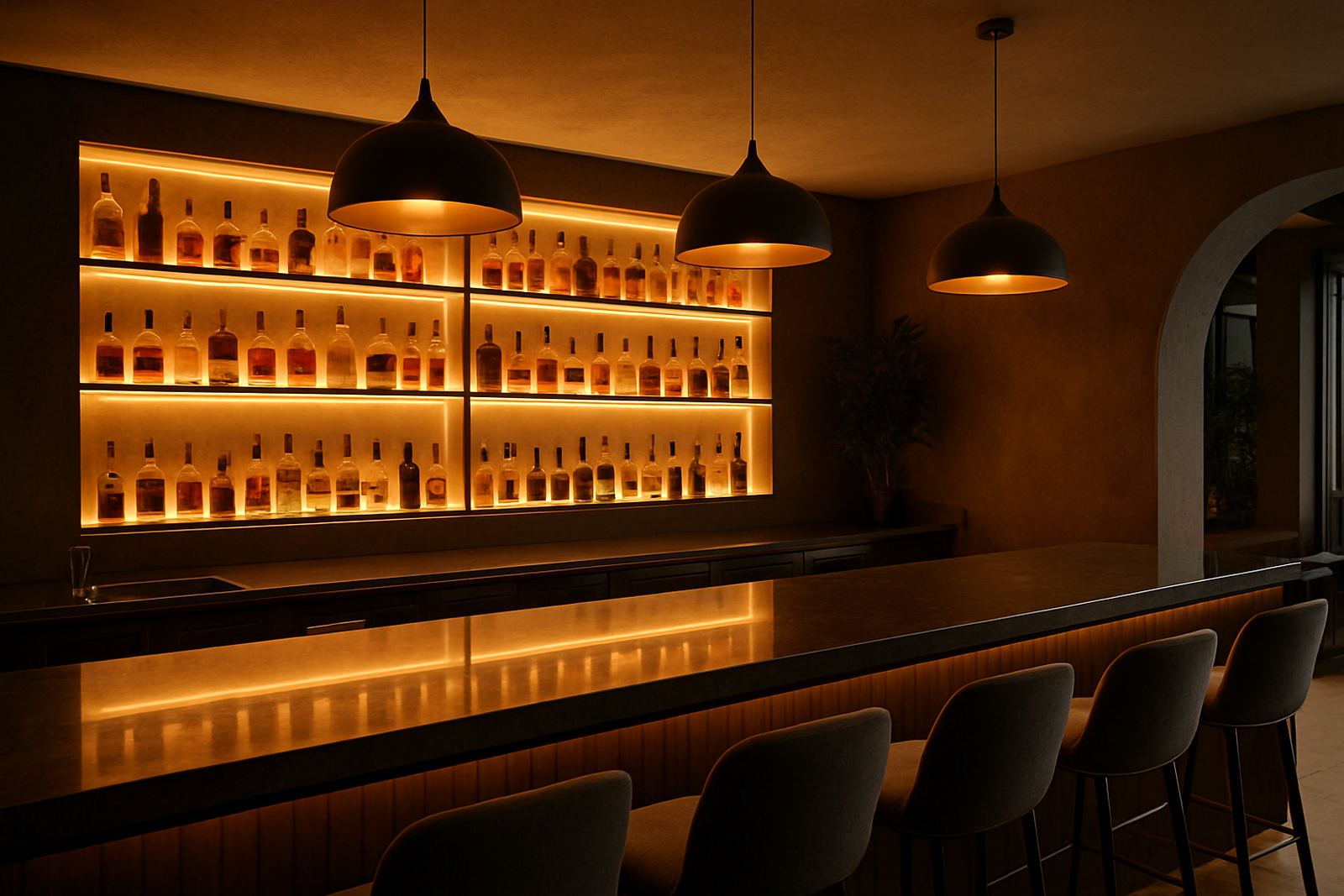
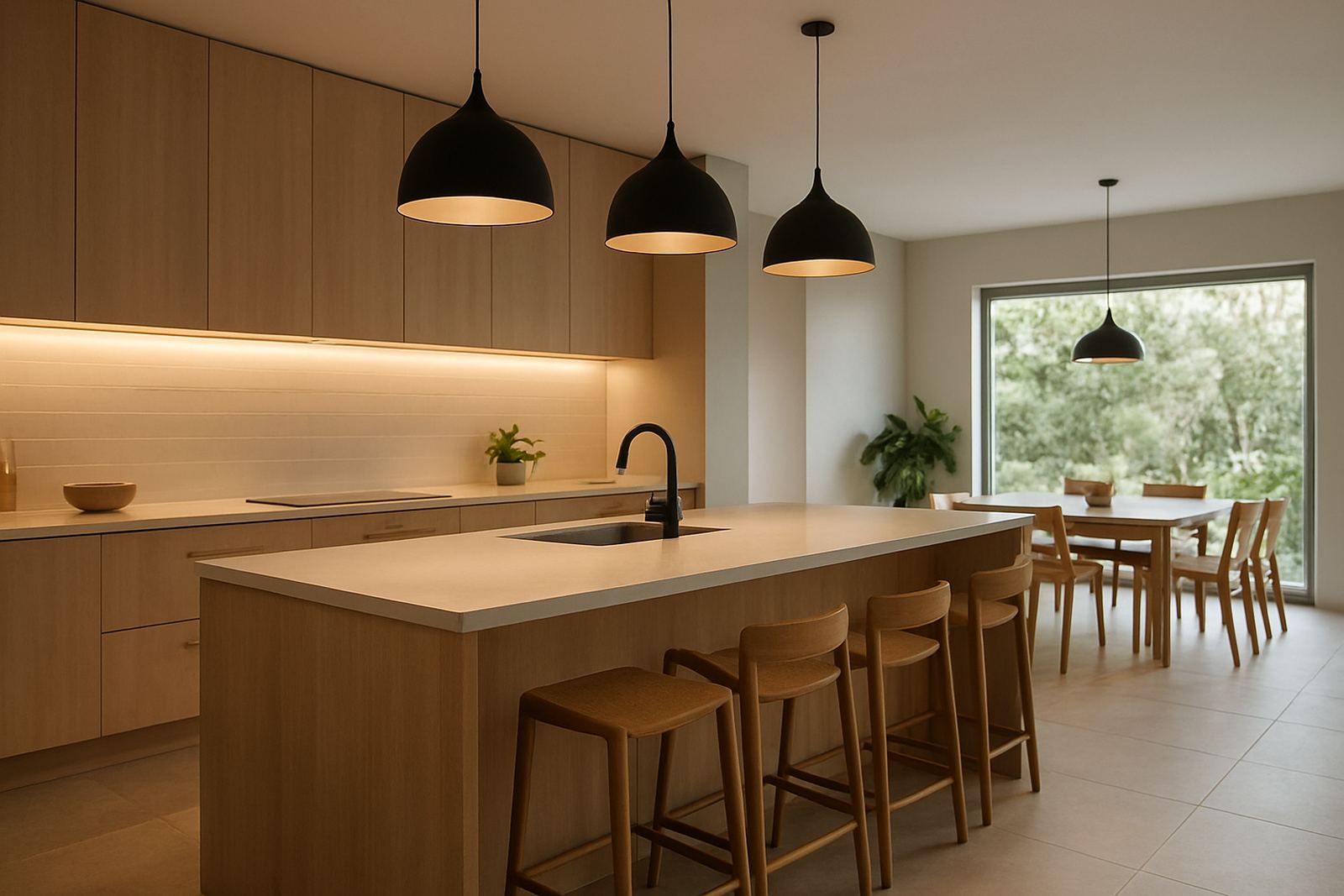
For shared areas we often use a mix of recessed fittings, decorative pendants, wall washers and accent lighting for art, shelves or textured walls. In smaller properties in Pretoria or Midrand, this approach helps a room feel larger and more premium without major building work. Mockups and sample fittings are useful here because colour, beam spread and finish can look very different once installed in real light.
- Dimmer controls for evening mood and breakfast setup
- Accent lights for artwork, feature walls or plants
- Clear passage lighting for housekeeping and guest movement
- Lighting zones that can be switched separately by staff
Practical planning for load-shedding and lower running costs
South African guest houses have to deal with load-shedding, rising electricity costs and sometimes uneven municipal supply. Lighting plans need to be efficient from the start. LED fittings with good colour rendering, sensible wattage and the right control gear can cut running costs while still giving a warm result. In many cases, the best solution is not more fittings, but better placed fittings.
Backup supply should be planned for the most important areas first: entrance, reception, passages, staircases and key guest rooms. Not every light must run on backup power. It is far better to keep the essentials on, then reduce non critical fittings. That keeps batteries smaller and more affordable. A proper site lighting audit helps identify what should stay on, what can switch off and where the property is wasting energy.
For a small guest house, a lighting upgrade can start from about R35 000 for selected public areas and basic room improvements. A more complete plan with controls, external lighting and custom specification can sit between R85 000 and R250 000. Larger properties, or sites needing new wiring and specialist feature work, can go beyond that, especialy if outdoor areas and multiple room types are included.
Common mistakes that make guest houses feel less comfortable
One of the biggest mistakes is using the same fitting everywhere. A room, hallway and dining area all have different needs. Another common issue is placing downlights directly above beds or mirror positions, which creates glare. Too much cool white light can also make a guest house feel clinical, while poor bathroom lighting leads to complaints from guests who cannot see themselves properly.
We also see problems where outdoor lights are too bright and shine into bedrooms, or where fittings are chosen only for appearance and not for maintenance. In a hospitality setting, lamps should be easy to replace, surfaces should be simple to clean and controls should be clear for staff. If a guest has to hunt for switches, the lighting plan has failed at a basic level.
- Do not mix too many colour temperatures in one area
- Do not ignore cleaning access around fittings and shades
- Do not place bright fittings where guests lie or sit directly underneath them
- Do not forget outdoor glare spill onto windows and neighbouring units
How Illumin8d approaches guest house projects
Illumin8d works on guest house lighting from concept through to installation coordination and post install focusing. That means we look at the building flow, the guest experience and the technical side together. We also consider local conditions such as coastal humidity in Durban and Umhlanga, long summer evenings in Johannesburg, and the need for reliable outdoor lighting in parking and access areas.
Depending on the project, the process may include concept design, site lighting audits, fixture specification, layout plans, control design, 3D lighting visuals and sample review. For guest houses with multiple room types, this helps keep the lighting consistent while still giving each room a distinct feel. If the property is being refreshed in stages, we can plan in phases so the owner does not have to close rooms all at once.
Good guest house lighting is not about making every surface bright. It is about creating a place where people feel safe, rested and looked after from the minute they arrive.