
Why stair lighting should do more than just show the steps
Staircases are one of the most used transition points in any building, yet they are often left with a single ceiling fitting that throws light where it is least needed. That creates glare on the treads, dark patches near the nosings and shadows that make the stair feel smaller than it is. In homes, that is a nuisance. In restaurants, offices and retail spaces, it is a liability.
The best stair lighting does two jobs at the same time. It guides movement clearly and it gives the stair a sense of shape, depth and rhythm. When planned properly, the stair becomes part of the interior design rather than a utility space that people hurry through. For clients in Johannesburg, Pretoria, Cape Town, Durban and Umhlanga, that balance matters because the stair often sits at the centre of the visual first impression.
Where to place light so people read the stair correctly
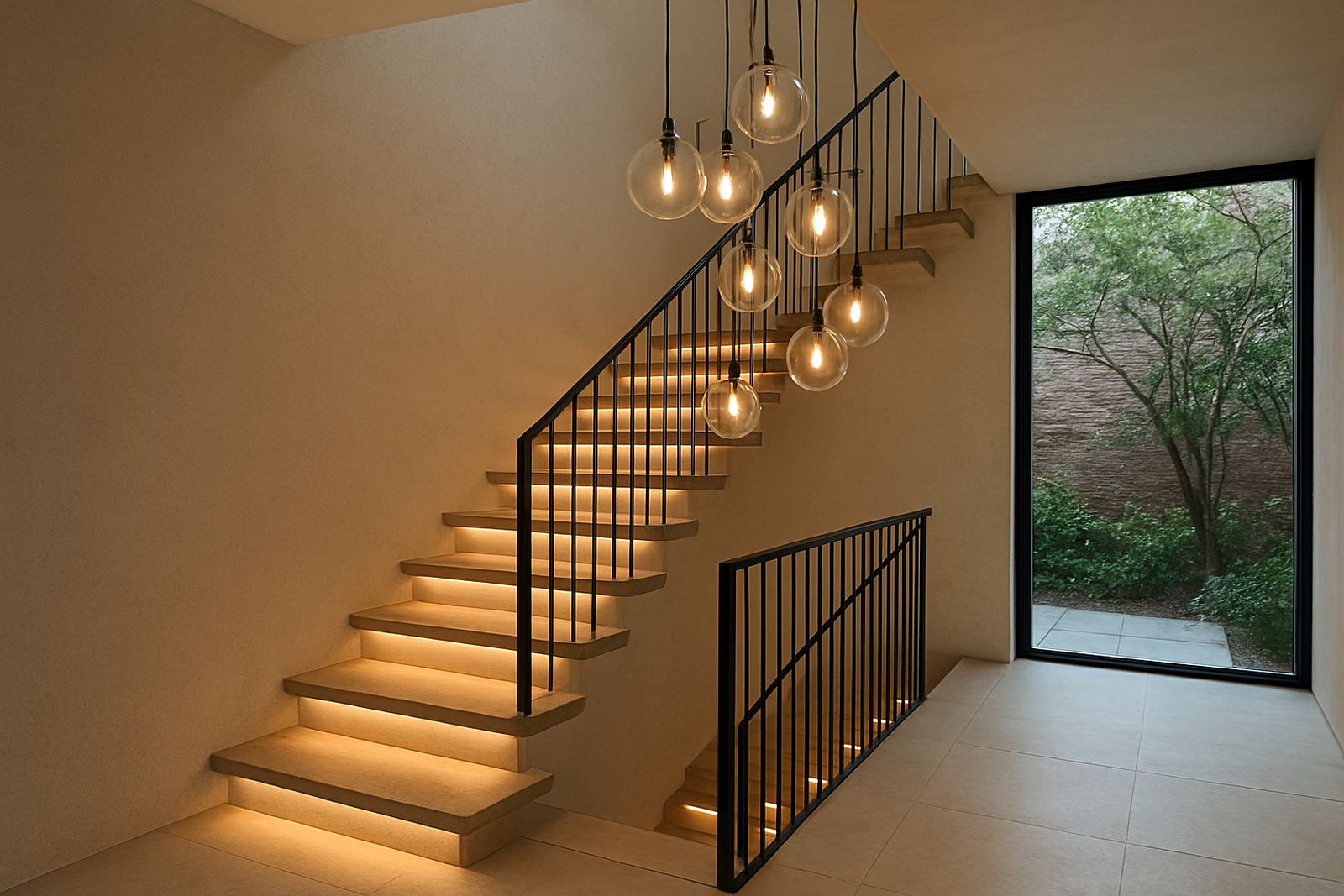
The first rule is simple: light the walking surface, not the eyes. You want each step to read clearly without forcing anyone to squint. Low level lighting is often the most effective because it shows the edge of the tread and creates a clean path. Wall mounted fittings can work well when they are spaced evenly and aimed carefully. In double volume spaces, suspended fittings may be used but they must be placed so they do not cause glare when people look up or down the flight.
A practical stair lighting plan usually combines more than one source. That might include concealed step lights, wall grazers, handrail lighting or small directional fittings tucked into the side walls. The right mix depends on stair width, ceiling height, finishes and how the space is used after dark. A glossy stone stair in Sandton needs a different approach to a timber stair in a coastal home in Umhlanga, where salt air and humidity can affect materials over time.
- Keep the brightest point off the eye line.
- Show the tread edge clearly on every step.
- Use even spacing so the stair reads as one sequence.
- Choose fittings that suit indoor humidity and cleaning routines.
Safety details that make a real difference
Good stair lighting is about more than general brightness. It must support safe movement during load shedding, late service hours and busy family traffic. This means planning for emergency supply, reliable controls and fittings that stay consistent when power returns. In commercial spaces, the stair should remain legible even when the rest of the building is dimmed for after hours cleaning or low-energy operation.
When we review stairs, we look at contrast, shadows and points where people hesitate. Corners, landings and changes in level need special attention. If the staircase has open risers, polished finishes or dark carpet, the lighting design has to be adjusted so the eye can still judge depth properly. A small mistake here can create a stumble point.
- Check landings separately from the main flight.
- Test the stair at night, not only in daytime.
- Include backup lighting for load shedding or emergency use.
- Make sure switches and sensors are easy to find, even in a dark foyer.
Turning the stair into a feature without making it noisy
There is a fine line between striking and overdone. Staircase lighting should add drama through control, not through excess. If every surface is lit hard, the stair loses its calm. If the light is too faint, the feature disappears. The strongest results usually come from restraint, with one clear visual idea repeated from top to bottom.
That could mean a soft vertical wash on a textured wall, a line of concealed light under each tread, or a sequence of small points that create a steady visual pace. In a restaurant, this can support the mood of the room and make the stair feel more like part of the guest journey. In a home, it can turn an otherwise ordinary passage into a highlight that people notice as soon as they walk in. The trick is to let the architecture speak rather than competing with it.
A Rosebank example: a narrow stair that needed calm and clarity
In Rosebank, a client with a split-level townhouse wanted the staircase to feel more elegant after dark without making the passage too bright at night. The stair was narrow, with painted walls and a polished finish that caught reflections from nearby fittings. The first problem was glare from a single ceiling point, which made the upper landing feel harsh and the lower steps disappear into shadow.
The solution was a layered plan using low level step lighting, a discreet wall wash and improved control on the landing. We also adjusted the spacing so the light stayed consistent from one end to the other, instead of pooling in the middle. The result was safer movement and a cleaner visual line from the entrance up to the first floor. It also changed the mood of the whole house, because the stair now works as part of the interior rather than a corridor to be ignored.
That kind of result is common in Johannesburg homes where stairs are often part of compact urban layouts. The space must work hard and still look refined. In smaller homes, good stair lighting can make the stair feel lighter and less intrusive, which matters when floor area is limited.
What to check before you choose fittings and controls
Before anything is specified, the stair needs to be measured properly. Tread depth, rise height, wall finishes, ceiling height and handrail position all affect the lighting outcome. A fitting that looks ideal on paper may be wrong once the stair geometry is understood on site. That is why a site lighting audit matters, especially on remodels where the original wiring may not suit the new layout.
Controls matter just as much as fittings. Stair lighting should be easy to dim, switch and maintain. In a home, you may want low level night lighting that stays on at a reduced output. In a restaurant or shopfront, the stair may need different scenes for opening hours, evening service and cleaning. The control design should make those changes simple rather than fiddly.
- Confirm the stair dimensions before selecting fittings.
- Match the light output to the finish of the walls and floor.
- Allow for maintenance access, especially on narrow stairs.
- Use controls that suit daily use, not just special occasions.
Why stair lighting deserves specialist planning
A staircase is one of the few places in a building where safety and atmosphere meet so closely. Get the lighting right and people move with confidence while the stair adds depth to the whole interior. Get it wrong and even a beautiful staircase can feel awkward or unsafe. The difference usually lies in careful concept work, sensible fixture choices and proper post install focusing, not in adding more light.
For shops, restaurants and homes across South Africa, the aim is the same: clear movement, controlled glare and a finish that suits the space. Stair lighting drama should feel calm once the lights are on. That is where good planning pays off, because the best stair is the one people trust without even thinking about it.